Guide to Paddling Ichetucknee Springs State Park (2026)
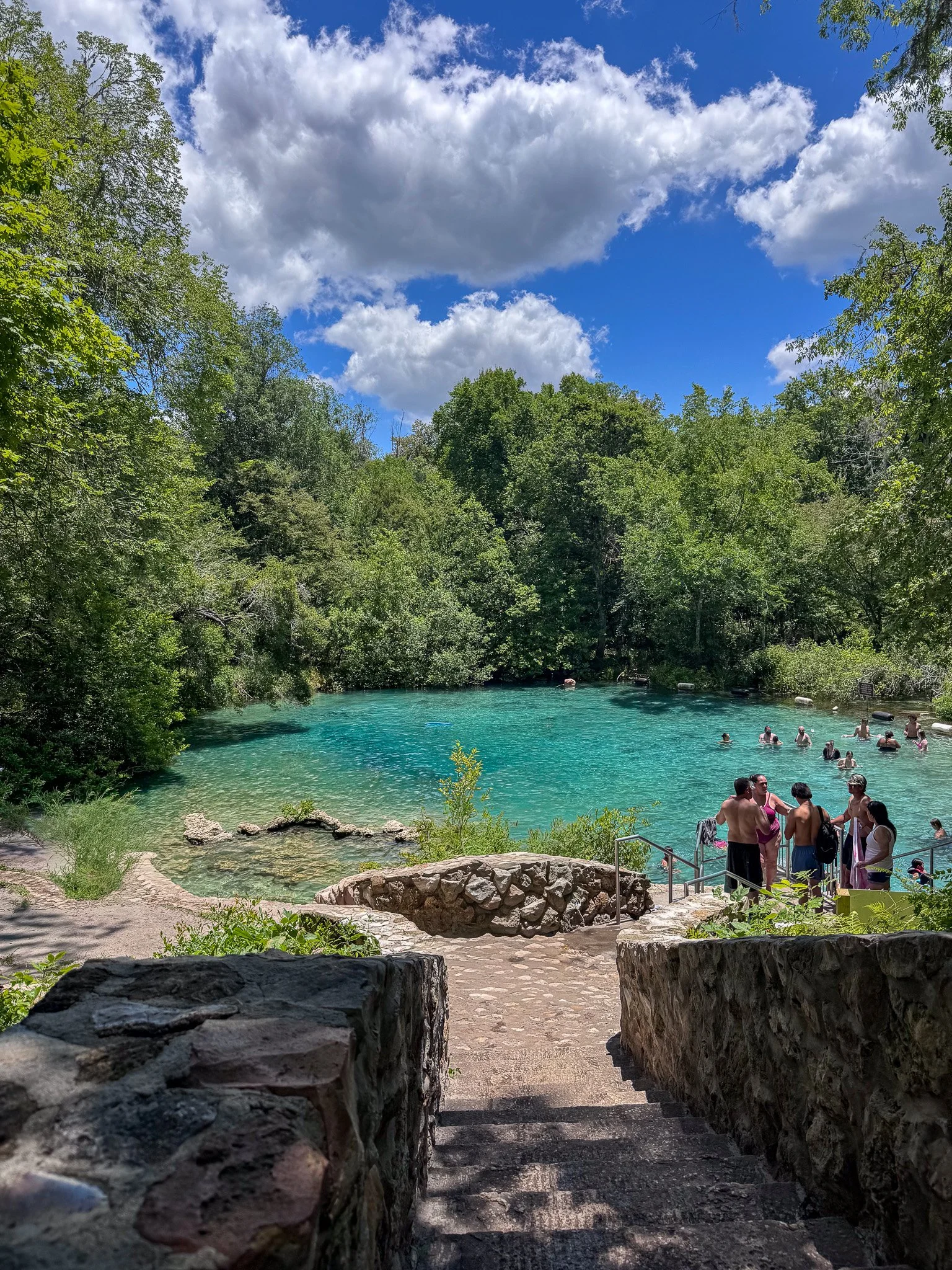
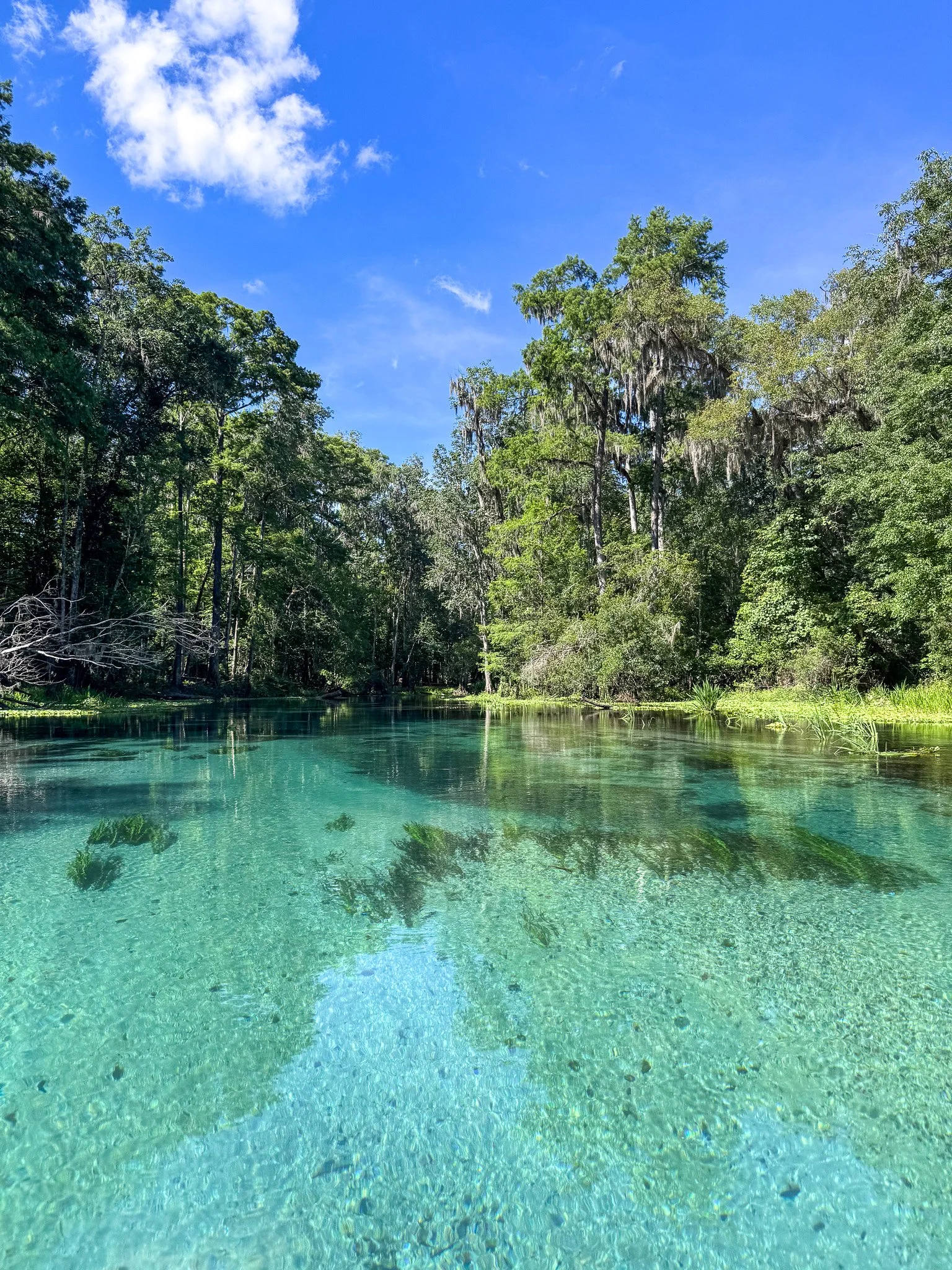
Ichetucknee Springs - Head Spring
We visit Florida springs at least once a year when we make a trip to Cedar Key. Typically, we dive in these crystal clear waters, but with our gear in the shop, we decided to try something new: paddling the Ichetucknee River. So we loaded up our kayaks and planned a day adventure at Ichetucknee Springs State Park—and, like every Florida springs trip, learned some valuable lessons we'll carry into our next visit.
About Ichetucknee Springs State Park
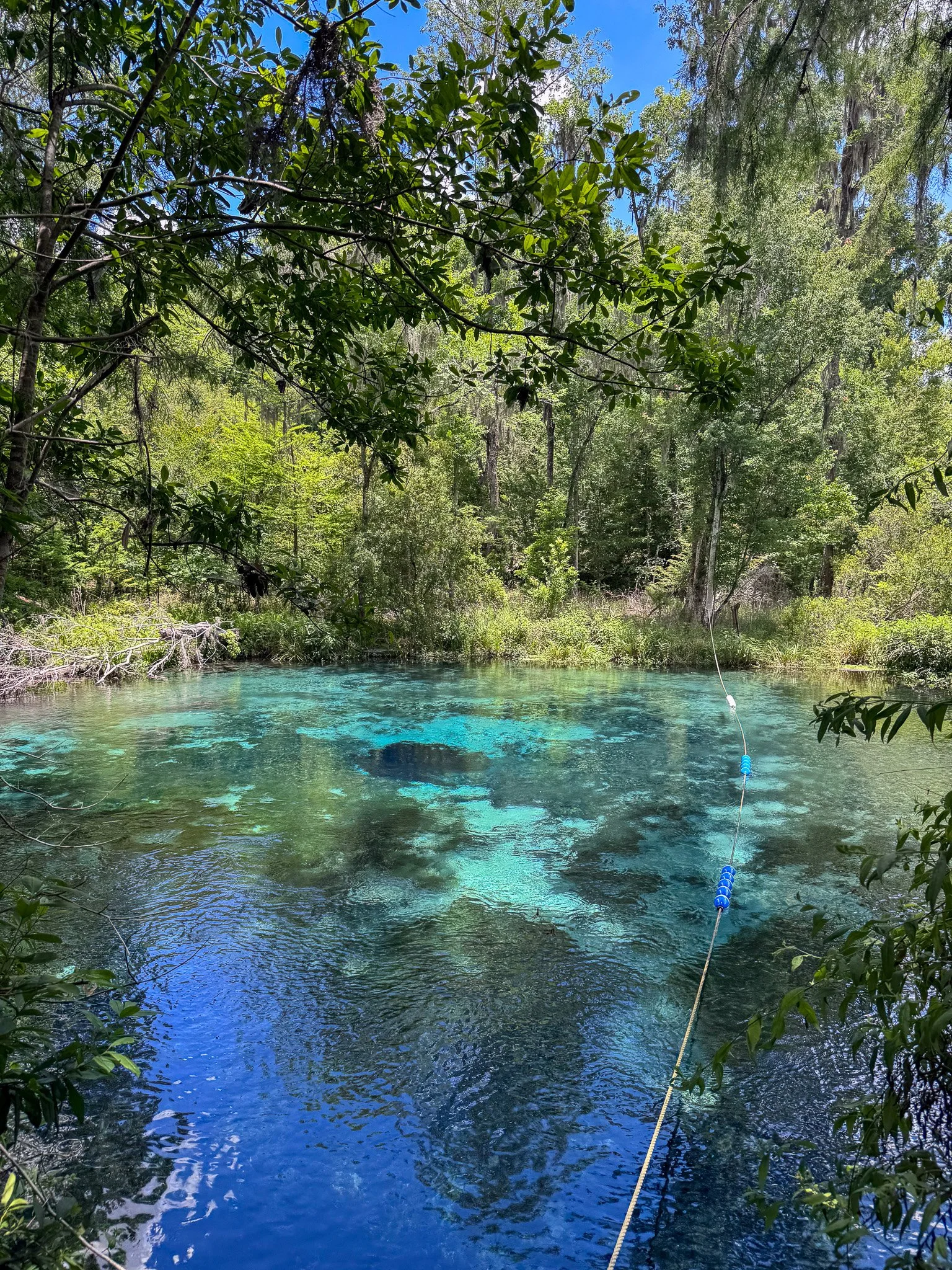
Blue Hole Spring
Ichetucknee Springs State Park is home to one of Florida's most pristine freshwater ecosystems. The park protects 3.5 miles of the Ichetucknee river, designated as a National Natural Landmark in 1971, as well as its major springs and numerous seeps. The clear, cool spring water of the Ichetucknee River continues downstream beyond the park before meeting the darker, tannic Santa Fe River.
Ichetucknee Springs State Park offers multiple ways to experience the water, from swimming and snorkeling to paddling adventures and tubing, making it an ideal destination for all types of travelers.
The Spring System: Where the Water Comes From
The Ichetucknee River runs for six miles from the head spring to its confluence with the Santa Fe River, with several named and unnamed springs along the waterway contributing close to 200 million gallons of spring water daily to the system. This high volume of fresh, clean water is what gives the river its characteristic crystal clear appearance.
The Ichetucknee Head Spring is a popular spot for families to swim and snorkel, offering shallow edges and cool water perfect for a hot Florida summer day.
Situated slightly down river, and approximately a 0.5mi walk away is the Blue Hole Spring, a first magnitude spring, discharging approximately 67 million gallons of water daily and maintaining a constant 72-degree temperature year-round. The force of water surging upward from the spring head is something you can feel when swimming above it. Swimmers and snorkelers can view the cave system that starts approximately 40 feet below the surface. For the more adventurous, cavern and cave certified divers can descend into the depths to explore a complex cave system with nearly 600 feet of twisting passages.
Without any shallow edges, the Blue Hole Spring is best suited for confident swimmers.
Our Paddling Experience at Ichetucknee Springs State Park
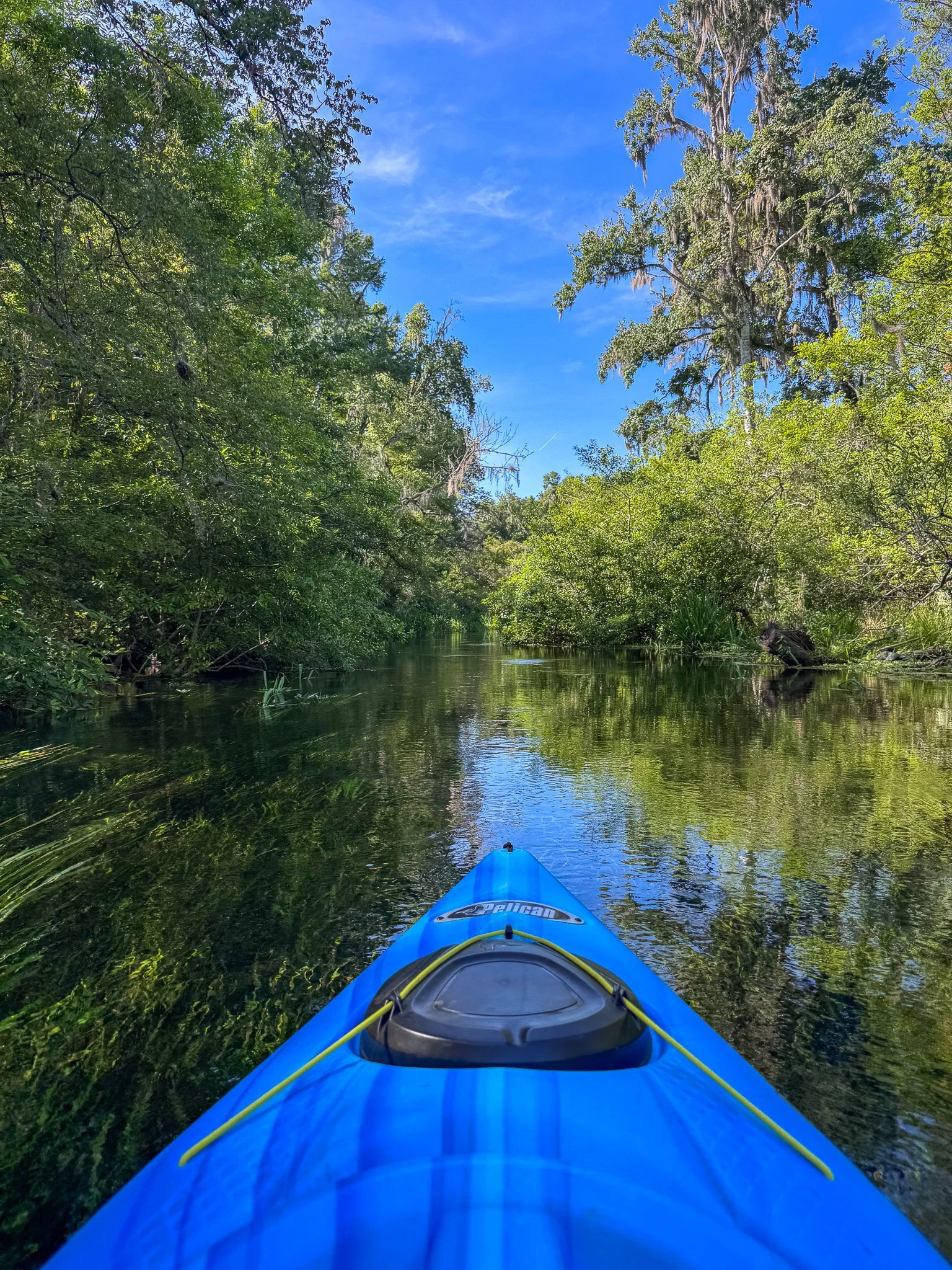
This was our first time paddling at this state park, and it was definitely a learning experience. With the spring system as a backdrop, here's how our actual day on the water played out.
We started our day by arriving at the South Entrance just after 8 a.m. on a Friday morning in June. The timing worked in our favor—there wasn't a line at the ranger station or at the check-in stations for tubing and kayaking. However, when we left around 1 p.m., the parking area was significantly busier and lines were forming at the ranger station.
We used the shuttle service to reach the north launch dock at the north entrance of the park. The facilities impressed us: a wide ramp down to the river bank, an accessible put-in for those with mobility considerations, as well as stairs that make it easy for anyone to load and unload your kayak. It couldn't have been easier to get on the water. From the north end put-in to the last takeout, the paddle was just over 3 miles and took about 1.5 hours — we primarily let the current carry us and paddled minimally, just enough to navigate the river.
Wildlife and Scenery
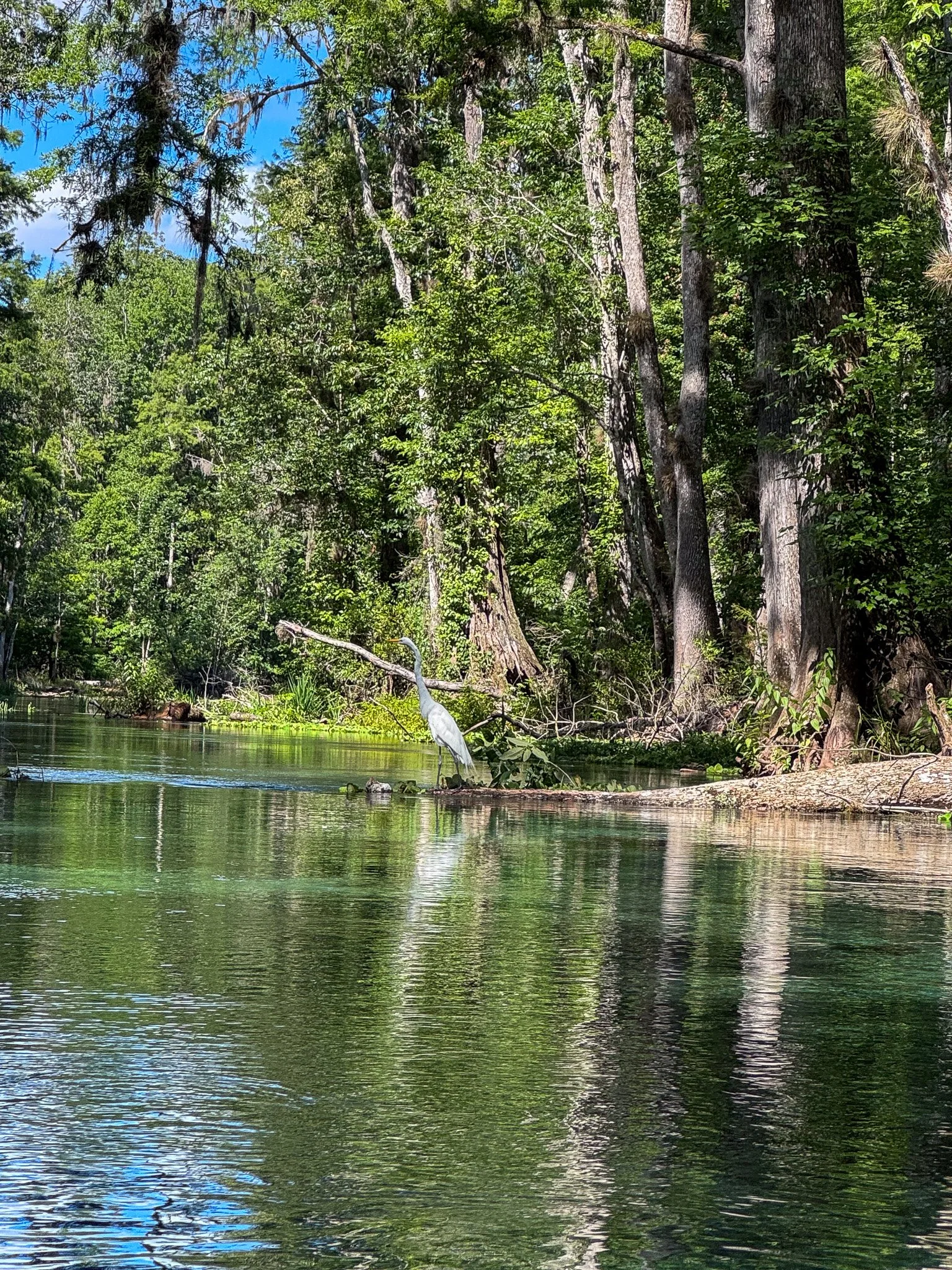
The Ichetucknee River itself exceeded our expectations. The water is as crystal clear as advertised, and the river bank was beautifully lined with cypress trees—creating both stunning scenery and much appreciated shade. We especially love the first 2-ish miles of the river where we saw a variety of birds throughout our paddle, including wild turkey, snowy egrets, wood ducks, and cranes. Schools of fish swam below our boats, turtles basked on logs, and spotted gar drifted beneath the surface.
That said, the final section, where tubers are permitted, approximately the last mile, can be challenging. We were there on what the staff called a light day, and even then found the volume of tubes made that section feel crowded. If you're seeking solitude or prioritizing wildlife viewing, this is definitely worth considering for your planning.
Key Lessons: What We Learned
1. Paddling with Tubers Is Challenging
The section of river used for tubing is busy and crowded, even on lighter days. If possible, we'd skip this section on future visits.
2. Shuttle Logistics Require Planning
The shuttle service from the South Entrance to the North put-in (and back) saves you from needing a second vehicle, but it comes with time and cost considerations. A shuttle ticket costs $32 per person (for both you and your boat). If you have a light weight or inflatable watercraft (like an inflatable paddle board), you could skip the shuttle entirely by incorporating an upstream paddle into your day.
3. Bring More Water Than You Think You'll Need
On a sunny day of paddling, hydration is critical. My water bottle was smaller than ideal, and I wished I'd brought a larger, reusable container. Plan accordingly.
How to Plan Your Paddle: Best Routes Based on Your Equipment
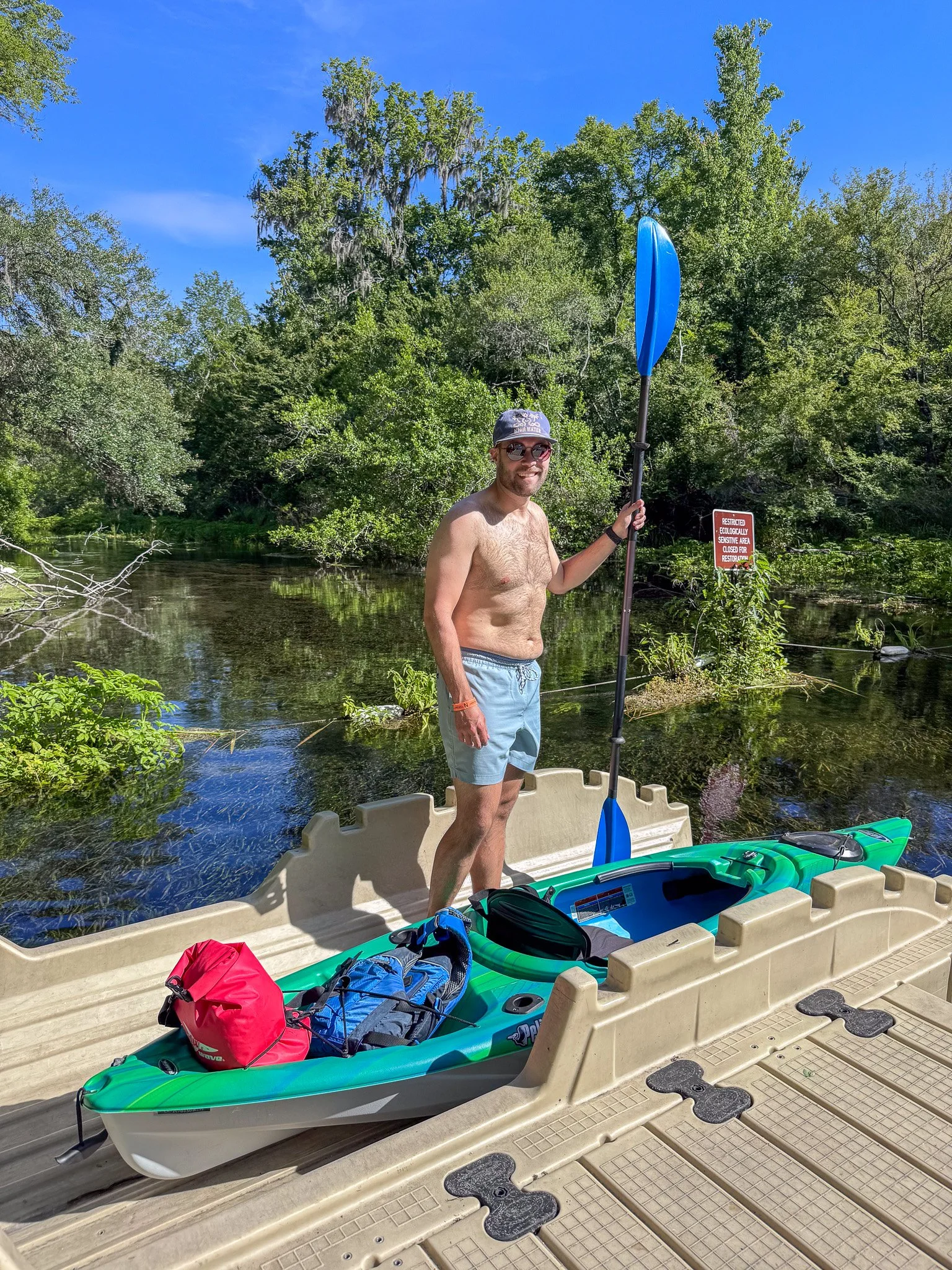
The beauty of paddling Ichetucknee is flexibility. Your best route depends on your boat type and vehicle situation.
Option 1: Hard-Sided Kayak, One Vehicle
Park at the North Entrance and plan to paddle back up river (yes, against the current). Enjoy a refreshing swim in the Head Spring or Blue Hole Spring as your reward when you're done paddling. You'll avoid the shuttle fee ($32/person + boat), dodge the busy tubing section, and have a satisfying workout. This option gives you flexibility to adjust your distance to your liking - go as far down river as you feel like before turning around and paddling back.
Option 2: Lightweight Inflatable Vessel, eg. Paddle Board, One Vehicle
Park at the South Entrance and put in at Dampier's Landing. Paddle upstream for as long as you wish, then enjoy the leisurely float back downstream to Dampier's Landing. It's only a quarter-mile walk from the launch to the parking lot—far less hassle than dealing with shuttles. And, as tubers currently put in at Dampier's Landing you also skip the crowded tubing section of river. This is our preferred approach if we return with a lighter vessel.
Option 3: Hard Sided boat, Two Vehicles
While a second vehicle sounds convenient, I don't recommend it. You'd still need to arrange a shuttle or accept a 20+ minute walk from the final take-out back to the South Entrance parking lot. The logistical advantage doesn't justify the complexity.
Option 4: Shuttle with or without rentals
Park at the South Entrance and utilize the park shuttle system for transport to the north boat launch. This is perfect for paddlers who don't want any upstream paddling in their day, however, it does come with increase costs.
Why I Recommend Options 1 & 2 For Visitors With Their Own Boats
1. Cost Savings: Options 1 & 2 eliminate the shuttle fee—a savings of $32 per person + boat. In our case, avoiding the shuttle would have also saved us over an hour of waiting for a return ride to the South Entrance parking area from the south takeout.
2. Avoid Tubing Section of the River: Options 1 & 2 naturally keep you away from the busiest section of the river with tubers, allowing you to focus on wildlife viewing and enjoy a more peaceful experience on the water.
* The Midpoint launch was closed on our visit, so I'm not providing any recommendations utilizing that option.
Practical Tips for Visiting Ichetucknee Springs State Park
Before You Go
Arrive early, especially on summer weekends and holidays. The park will close once capacity is reached
Park entry is $6 per standard passenger vehicle. Your single payment grants access to both the north and south entrances, so you can explore both areas of the park
Advance reservations are recommended if you plan to rent equipment (kayaks, paddleboards, tubes), but they do not guarantee entry to the park
Coolers, food, and beverages in disposable containers are not permitted on the river
Snorkels are not permitted on the river, but are permitted in the springs
Plan for at least a half-day
Fees and Services
Park Entry: $6 per vehicle
Shuttle ticket: $16 per person + $16 per boat ($32 total for a person with a boat) - transports guests from South Entrance to North put-in, and South takeout to South Entrance
Tube Tram: $7.50 per person - transports guests from the South takeout to the South entrance parking area
Tube Rental: Rates vary based on tube style
Kayak & Paddle Board Rentals: Rates vary based on boat type
Paddling Adventures is the third-party concessionaire operating tube rentals, watercraft rentals, shuttles, the general store, and cafe. For current pricing, cancellation policies and other terms, visit the Ichetucknee Springs website.
Important Note on Park Facilities
The midpoint launch is currently closed due to ongoing storm damage repairs. Plan your paddle using the north and Dampier's Landing launch options only.
You cannot reach the opposite ends of the park from within - you must exit the park and drive to the other entrance to enjoy those facilities. If you only plan to swim, go to the north entrance. If you only plan to tube, go to the south entrance.
What To Bring:
What to Leave at the Car:
For boaters & tubers - snorkels and masks, coolers, disposable drink containers
Fishing gear
Speakers
A full list of prohibited items can be found on the state park website.
FAQs
What is the closest town to Ichetucknee Springs?
Fort White is the closest town, located just a few miles from the park. If you're traveling from the Gainesville area, it's roughly a 45-minute drive to Ichetucknee Springs State Park.
Can I bring my own kayak or paddle board?
Yes, absolutely. If you have your own kayak or paddle board, you're welcome to bring it. This is actually a great way to save money on rentals and use equipment you're comfortable with.
Can I bring my own tube?
Yes, it must be less than 60" wide.
Does Ichetucknee Springs State Park rent kayaks or paddle boards?
Yes, cost varies depending on vessel type and paddle route. Rentals include life jackets and paddles. For pricing breakdown, visit the Ichetucknee Springs website.
What is a first magnitude spring?
A first magnitude spring is defined as a spring that discharges at least 65 million gallons of water per day. Florida has more first magnitude springs than any other state in the U.S.
Is Ichetucknee Springs State Park open year-round?
Yes, the park is open year-round. However, peak season is summer and weekends. Consider visiting during off-season months (fall and winter) for a more peaceful experience with fewer crowds.
How many park entrances does Ichetucknee Springs have?
There are two park entrances:
North Entrance: Provides access to the Head Spring, Blue Hole Spring for swimming and snorkeling, nature trails, cafe, and the north boat launch dock.
South Entrance: Provides access to tubing rentals and launch, the shuttle for paddlers, and the general store.
You cannot travel between entrances from within the park, you'll need to exit and re-enter at each entrance. Day use fees include access at both entrances regardless of where you originally entered.
Is Ichetucknee Springs Accessible?
Based on my observations, they have made efforts to make these natural resources as accessible as is feasible. The North Entrance put-in includes an accessible ramp and stairs designed for a range of mobility needs, which we noted while launching. Additionally, there is a chair lift to assist guests in to the Head Spring. Beyond these accommodations, accessibility on a natural river system will vary by feature — for a full breakdown, visit the Florida State Parks website.
Where Can I Stay Near Ichetucknee Springs?
Ichetucknee Springs Campground - is a privately owned campground located near the north entrance of the park.
The bearest hotels are located in Lake City or Alachua about 30 minutes from the park. Alternatively, you could stay in Gainesville.
There are ample vacation rentals throughout the Suwannee River area as well.
Planning Your Broader Trip: Adding Ichetucknee to Your Itinerary
Ichetucknee Springs State Park makes an excellent addition to a larger Florida springs adventure. If you're based in or traveling near Gainesville, consider these complementary experiences:
• Day trips from Gainesville: Ichetucknee is perfectly positioned as a half-day or full-day outing from Gainesville, with other springs like Ginnie Springs and Devil's Den also within driving distance.
• Weekend in Cedar Key: Pair your Ichetucknee paddle with a longer trip in nearby Cedar Key, a charming coastal town with its own dining and lodging options.
• Explore other springs: Compare your experience here with diving or paddling at Ginnie Springs or Devil's Den for a fuller picture of Florida's spring ecosystem.
Final Thoughts
Paddling Ichetucknee Springs State Park offers a unique way to experience Florida's crystal clear spring waters and pristine natural environment. Whether you're a seasoned kayaker or trying paddling for the first time, the park accommodates all skill levels and provides options for every type of boat and visitor situation. By planning strategically—choosing your route based on your equipment, arriving early, and understanding the busy sections—you'll maximize your enjoyment and minimize frustration.
Planning a trip to the Florida springs? I'm here to help with customized recommendations!

Hi, I’m Jess
I’m here to help you plan epic adventures. If you’re looking for authentic travel guides that mix luxe lodging and incredible dining with out of this world hikes and adventures, you’re in the right place.



Your complete guide to the best time to visit the Isle of Skye