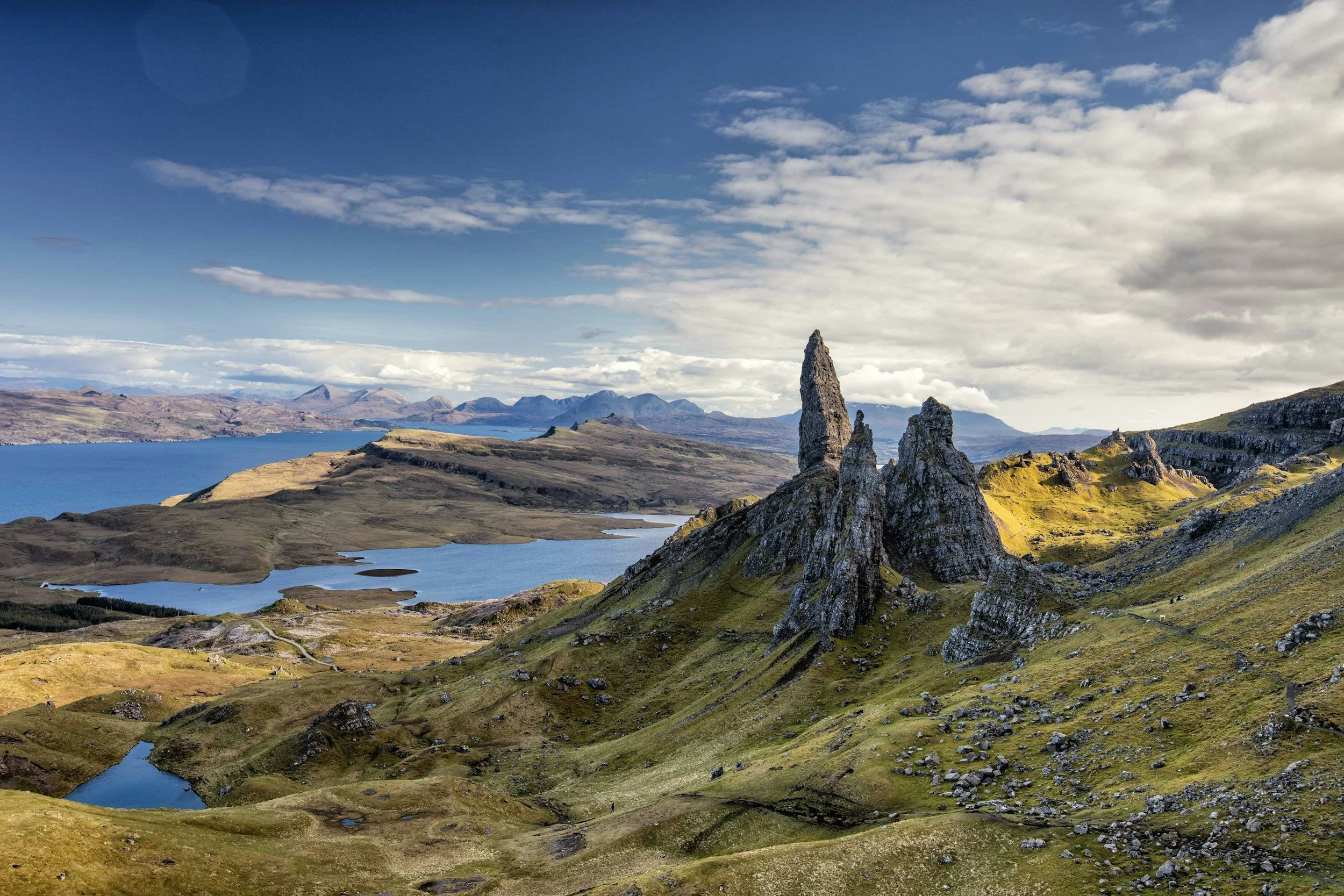
The Isle of Skye, located off the west coast of Scotland is known for its dramatic landscapes, wildlife and beautiful scenery. Perhaps not so much for its gorgeous weather... but if you plan your trip right, you can find the sweet spot and the best chance for sunny days — especially if hiking in the rain is a hard pass for you. This small, remote island's weather, crowds and even which roads feel driveable can shift from month to month. One week (or in some cases, one day, or hour) you'll get golden light bouncing off the Old Man of Storr; the next, that same viewpoint is shrouded in mist and rain.
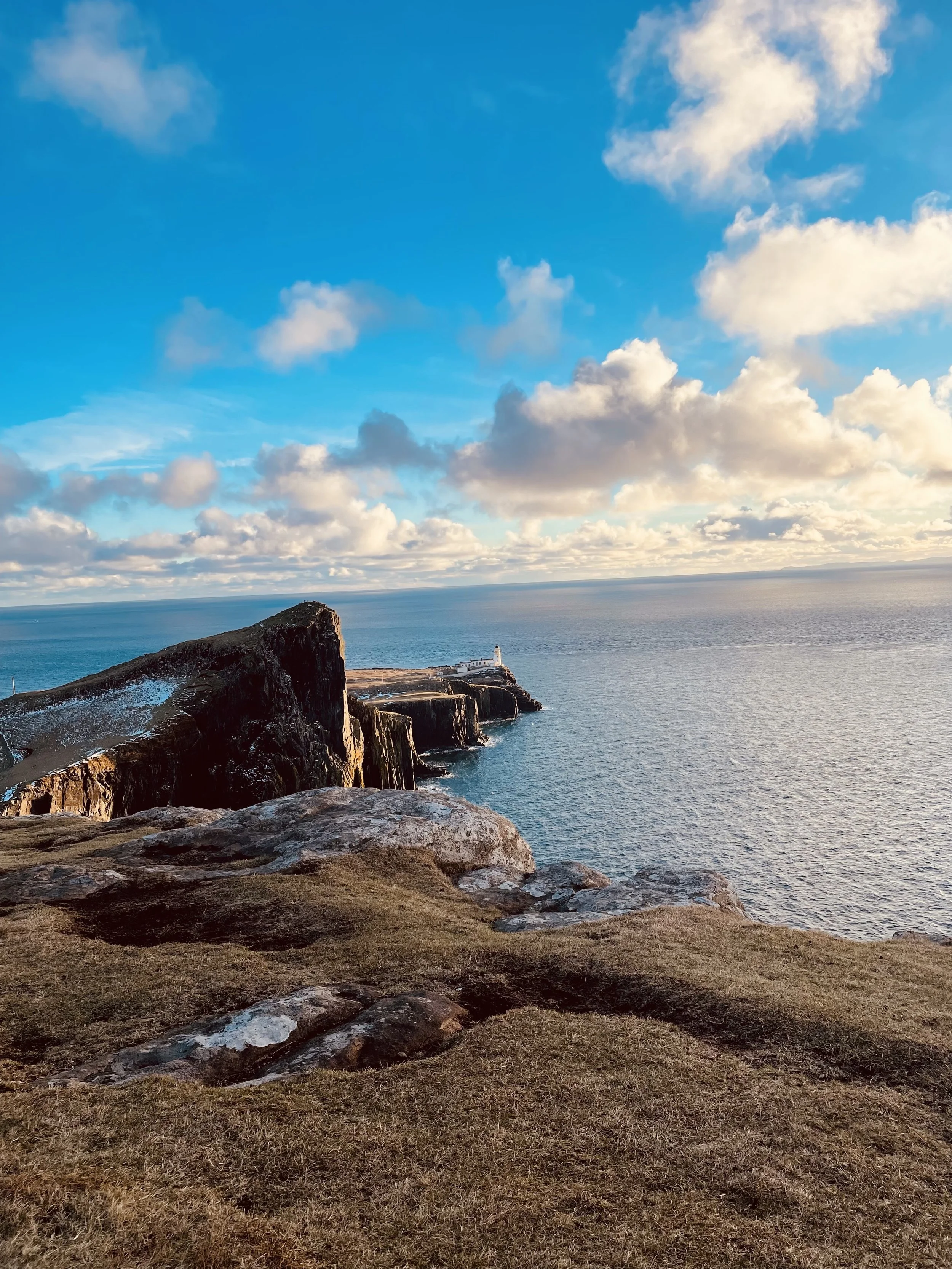
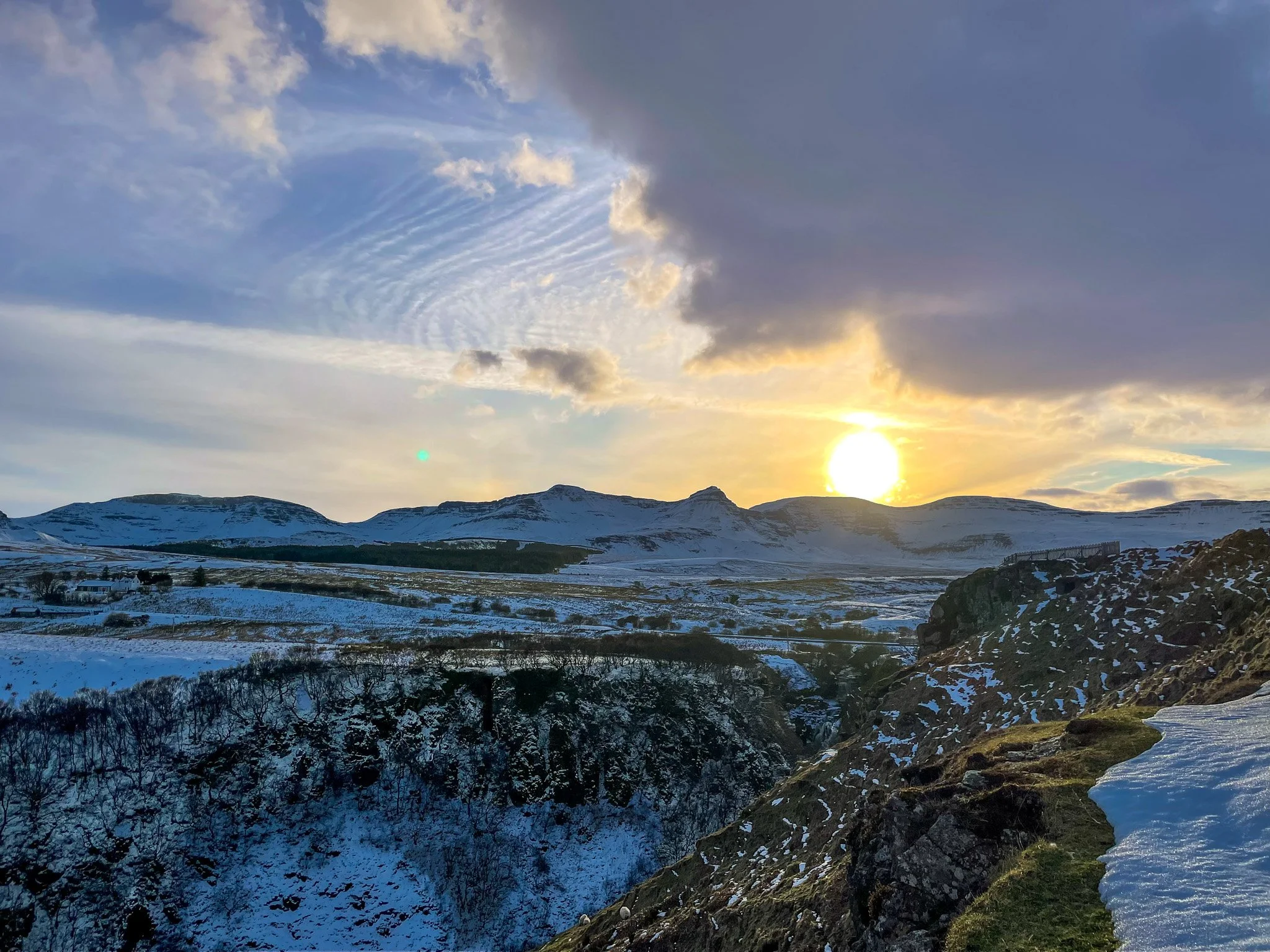
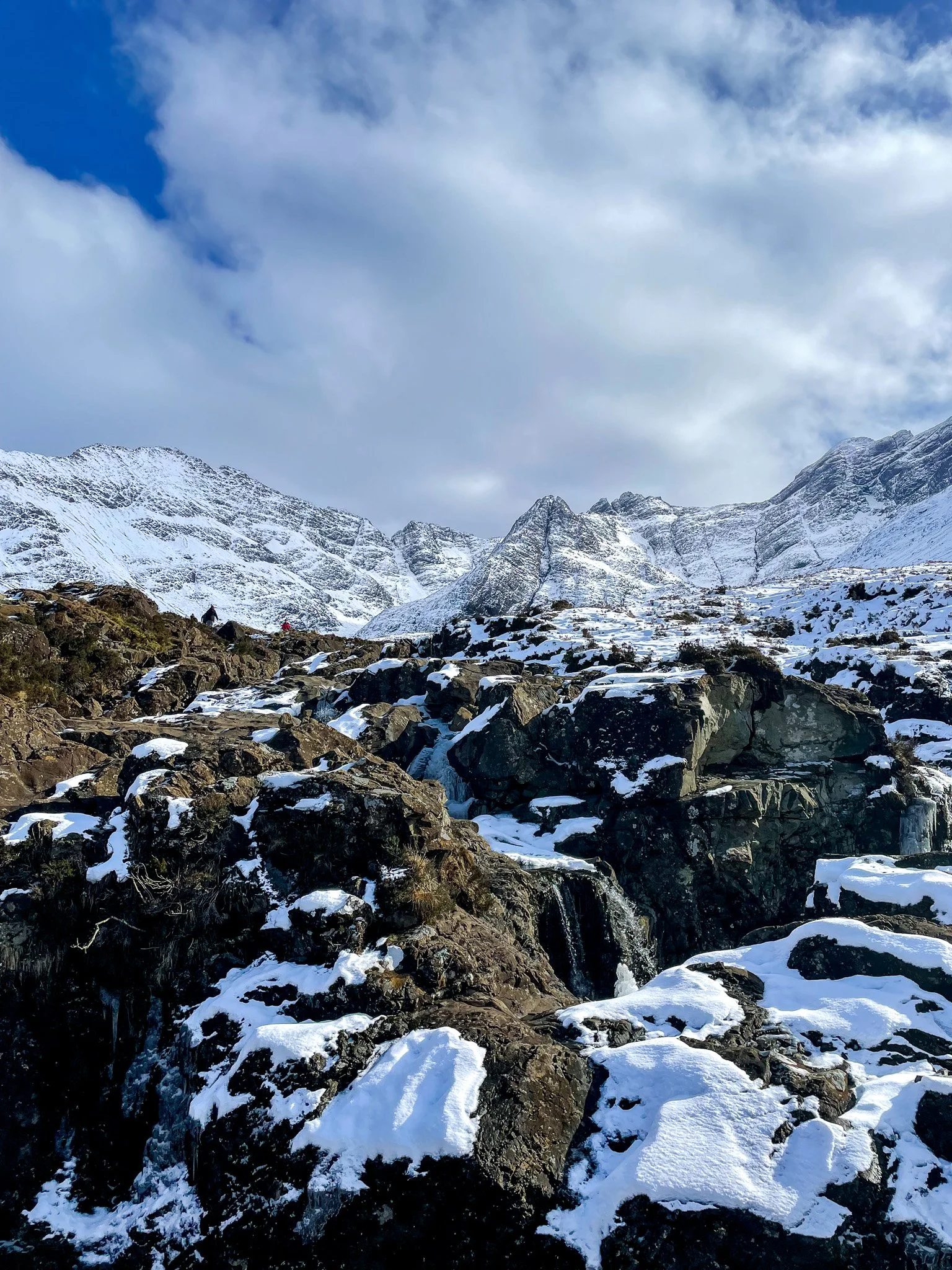
We booked a trip for March thinking we'd be greeted by the early signs of spring, but instead ended up hiking the Storr in 6+ inches of snow! The trade-off for the less than ideal conditions was that we basically had the place to ourselves — the same could not be said about visiting this landmark in the summer months.
That unpredictability is part of Skye's charm, but it also makes planning trickier. Below, I'm breaking down what each season actually feels like — the weather, the crowds, the events worth planning around, and the trade-offs of each — so you can figure out the best time for your trip, not just the postcard-perfect version everyone else chases.
This post contains affiliate links. I may earn a small commission if you book or shop through them, at no extra cost to you.
When is the Best Time to Visit Isle of Skye? My Quick Answer
If you want the short answer: late April through May, or September into early October are the best all-around times to visit Isle of Skye. You'll get milder weather, noticeably fewer crowds than the summer peak, lower prices on accommodation, and — in May especially — some of the driest, sunniest weather of the entire year, with almost no midges to deal with.
That said, "best" really depends on what you're optimizing for. Want the longest days and the liveliest atmosphere, and don't mind sharing the Fairy Glen with a busload of other travelers? Go in summer. Chasing complete solitude, moody skies, and a shot at the Northern Lights, and don't mind a short daylight window? Winter is calling. There's no single wrong answer here — just trade-offs.
Isle of Skye by Season
Spring on Isle of Skye
Spring arrives slowly on Skye. March can still feel like winter's tail end (snow included), but by late April the island turns a corner — wildflowers start appearing along the verges, lambs show up in the fields, and the light starts to stretch out. Late April into the first week of May is widely considered one of the sweetest spots of the whole year on Skye: the days are long enough for a full day of exploring, the midges haven't started biting yet, and the island isn't yet dealing with peak-season crowds.
I absolutely loved our early March visit, but recognize that those conditions aren't ideal for every traveler. And due to the snow and ice still on some roadways, we weren't able to visit some sights like the Quiraing on the northern part of the island. The trade-offs for us were well worth it. We felt like we almost had the island to ourselves — there was ample parking at trailheads, no issues with getting a dinner reservation, and it was incredibly easy to find a place to park up each night in our campervan.
Spring might be for you if:
You want a good mix of decent weather and fewer tourists before the summer rush hits
You're hoping to avoid Scotland's infamous biting midges (they're not active yet in early-to-mid spring)
You're interested in seeing Skye's landscape wake up — wildflowers, lambing season, and swollen waterfalls from melting snow
You want lower accommodation prices than peak summer, especially outside of school holidays
You don't mind some lingering cool temperatures and rain, especially in early spring
Notable Spring Happenings:
Bluebells and primroses bloom along Strathaird and the island's roadsides by late April
First puffins typically return to nearby Canna in early April
Otters are especially active along the coast in spring, and golden eagles begin nesting
The Skye Live Festival, a popular music event, usually takes place in spring
Easter weekend brings a short but noticeable bump in visitors and traffic
Summer on Isle of Skye
The summer months on Skye are peak season, and it's easy to see why. This is when the island gets the longest daylight hours — near the solstice in June, you can have usable light from around 4 a.m. to 10:30 p.m., which means plenty of time for a big hiking day or an evening boat trip. Every restaurant, boat tour, and attraction is open and running on a full schedule. It's also, by far, the busiest and most expensive time to visit. If you're planning a trip to Skye in summer, book your accommodations as early as possible as the limited selections tend to book out far in advance. And pack your patience! Car parks at popular trailheads are likely to be full, and traffic along the single-track roads will be much heavier.
Summer might be for you if:
You want the longest days and warmest months of the year to pack in hikes, day trips, and boat tours to spots like Loch Coruisk
You'd rather have every tour operator, restaurant, and attraction open and running full schedules
You're comfortable visiting popular spots like the Old Man of Storr, the Quiraing, and the Fairy Pools early in the morning to beat the crowds
You don't mind the trade-off of midges — worst at dawn and dusk from mid-June on — in exchange for warm(ish), long days
Budget is more flexible, since summer brings the highest prices on accommodation and rental cars
Notable Summer Happenings:
Highland games and local music sessions run throughout the island in summer
Midges typically arrive in numbers by the second or third week of June, especially near standing water at dawn and dusk
The Trotternish Peninsula — home to the Old Man of Storr and the Quiraing — gets seriously busy, with parking lots filling before mid-morning
Boat trips to Loch Coruisk and wildlife-watching cruises run daily, weather permitting
Fall on Isle of Skye
Fall is fast becoming a favorite season for a lot of repeat visitors, and it's easy to understand why once you've seen the island's hillsides turn from green to burnt orange and gold. September still holds onto some of summer's energy — restaurants and boats are running, the water is about as warm as it gets — while October brings quieter roads, dramatic light, and a real sense of the island beginning to settle down for winter.
Fall might be for you if:
You want dramatic, colorful landscapes without the summer crowds
You're chasing better light for photography — October in particular is known for long, low, theatrical light
You want the midges to be mostly gone (they largely disappear by mid-October)
You're comfortable with more variable, wetter weather in exchange for quieter attractions and lower prices
You like the idea of catching the tail end of the deer rut
Notable Fall Happenings:
Red deer rutting season is in full swing through October
Sea temperatures peak in late August into September, making it the (relatively) warmest time to be near the water
Many boat operators, including sailings to Loch Coruisk, are still running regularly through mid-October
Some attractions begin trimming hours or closing for the season by late October or November
Winter on Isle of Skye
Visiting Skye in the winter months is a completely different trip than the other three seasons — and for the right traveler, that can be very appealing. Daylight is short (as little as seven hours in December and January), a fair number of tourist-facing businesses close or scale back, and the weather can be rough. But the island empties out almost entirely, prices drop, and there's something undeniably atmospheric about seeing the Cuillin Mountains dusted in snow with almost no one else around.
Winter might be for you if:
You want to see Skye at its quietest — popular spots like the Storr can be completely empty
You're chasing a shot at the Northern Lights, which are possible (though never guaranteed) on clear winter nights
You don't mind short daylight hours (as little as 7 hours) in exchange for dramatically lower prices
You're drawn to snow-capped peaks, misty coastlines, and cozy nights by the fire with a dram of whisky
You're comfortable with some attractions, tours, and boat trips being closed, limited, or weather-dependent
Notable Winter Happenings:
Hogmanay (New Year's Eve) and Burns Night (January 25) are celebrated with local events
Some attractions, including Dunvegan Castle and the Museum of Island Life, close for the season
Boat trips run on a reduced, weather-permitting basis rather than a fixed schedule
Winter offers a medium chance of spotting the aurora borealis on clear, dark nights
→ For more, check out my guide to everything you need to know about visiting Isle of Skye in Winter
Isle of Skye Weather Month-by-Month
Skye's weather is famously changeable — so treat these as general averages rather than guarantees. Numbers are based on long-term averages for Portree, the island's main town. Check Met Office weather once you arrive and before heading out on a hike. While the weather can still shift unexpectedly from hour-to-hour, this will be your best forecast.
| Month | Avg High | Avg Low | Precipitation | Daylight |
|---|---|---|---|---|
| Jan | 8°C / 46°F | 4°C / 39°F | ~7 hrs | |
| Feb | 8°C / 46°F | 4°C / 39°F | ~9 hrs | |
| Mar | 9°C / 48°F | 5°C / 41°F | ~11.5 hrs | |
| Apr | 11°C / 52°F | 6°C / 43°F | ~14 hrs | |
| May | 13°C / 55°F | 8°C / 46°F | ~16.5 hrs | |
| Jun | 15°C / 59°F | 10°C / 50°F | ~18 hrs | |
| Jul | 16°C / 61°F | 12°C / 54°F | ~17 hrs | |
| Aug | 17°C / 63°FWarmest | 12°C / 54°F | ~15 hrs | |
| Sep | 15°C / 59°F | 10°C / 50°F | ~13 hrs | |
| Oct | 12°C / 54°F | 8°C / 46°F | ~10.5 hrs | |
| Nov | 10°C / 50°F | 6°C / 43°F | ~8 hrs | |
| Dec | 8°C / 46°FColdest | 4°C / 39°F | ~7 hrs |
Figures are long-term monthly averages for Portree, Isle of Skye's main town, and are meant as general guidance — Skye's weather can shift within a single day. Sourced from weather-and-climate.com (data aggregated from Met Office, CRU, and KNMI records), cross-referenced with climate-data.org and holiday-weather.com. Jan, Feb, and Dec are statistically tied for coldest average high/low.
FAQs About When to Visit Isle of Skye
When is the best time to visit Isle of Skye?
Late April through May and September into early October generally offer the best balance of decent weather, thinner crowds, and lower prices. May is typically one of the driest months of the year, while September holds onto warmth from summer with noticeably fewer visitors.
Is Isle of Skye worth visiting?
Yes — Skye is one of Scotland's most dramatic landscapes, from the jagged peaks of the Cuillin to sea cliffs, waterfalls, and single-track roads that wind past centuries-old castles. It's popular for good reason, and even with its unpredictable weather, most visitors come away calling it one of the most memorable stops on a Scotland trip.
How many days should I spend on Isle of Skye?
Most first-time visitors are comfortable with 3 to 4 days on Skye — enough time to see the highlights like the Old Man of Storr, the Fairy Pools, the Quiraing, and Dunvegan Castle without feeling too rushed. If you only have a day, you'll need to pick your top 1-2 sites (the Old Man of Storr and Fairy Pools are a popular pairing). We spent 3 full days on our trip, and that felt like sufficient time to linger at each destination and explore some more "off the beaten path" sites along the way.
→ Isle of Skye 3-Day Itinerary
Is Isle of Skye expensive to visit?
It can be, especially in July and August, when accommodation, rental cars, and tours are at their most expensive due to peak demand. Visiting in the shoulder seasons (spring or fall) or winter can meaningfully cut costs on lodging and car rentals. We opted to explore Skye with a campervan, which is an option to consider if you're looking for unique ways to make this a budget-friendly trip. Essentially, our rental car and accommodations were combined into a single expense that came in cheaper than booking each individually.
Do I need a car on Isle of Skye?
For the most part, yes, a rental car will be the most efficient way to get around on the Isle of Skye. Public transportation exists but is limited, and many of Skye's best spots — like Neist Point Lighthouse, Glen Brittle, and the Trotternish Peninsula — are spread out and only realistically reachable by car. Just know you'll be navigating plenty of single-track roads with passing places, so it's worth building in extra travel time. The first day of driving was nerve-wracking, and we definitely left our egos at home, using passing places to let faster traffic pass. But, by the last day of our trip it felt totally natural.
If you would rather not drive yourself on Skye, consider a multi-day guided tour from cities like Edinburgh or Glasgow, or a day tour (or two) once you've reached Skye via public transportation from elsewhere in Scotland.
What is the best way to get to the Isle of Skye?
You have two options. You can take the Skye Bridge via the A87. This route will take you past other popular landmarks like Eilean Donan Castle. Alternatively, you can also reach the Isle of Skye by ferry connecting Mallaig and Armadale on the Isle of Skye. For ferry timetables and rates, check with CalMac.
We opted to use the bridge on our trip simply due to having other sights on our to-do list along the A87. The bridge is free to cross, and perfectly scenic.
Final Thoughts on the Best Time to Visit Isle of Skye
There isn't one universally "correct" time to visit Isle of Skye — there's the time that's right for the trip you're actually trying to have. If you want long days, open attractions, and a lively atmosphere, summer delivers, but comes with crowds of other tourists seeking the same. If you're chasing quiet trails, dramatic light, and a slower pace, the shoulder seasons — or even winter, if you're up for it — might be exactly what you're looking for. Whenever you go, pack layers, expect the weather to change on you at least once a day, and give yourself a little extra time on the road. I will definitely be planning my next Skye trip for fall.
Want more tips, personalized recommendations and access to perks such as complimentary upgrades and spa credits? I’d love to help you plan your Scotland adventure!
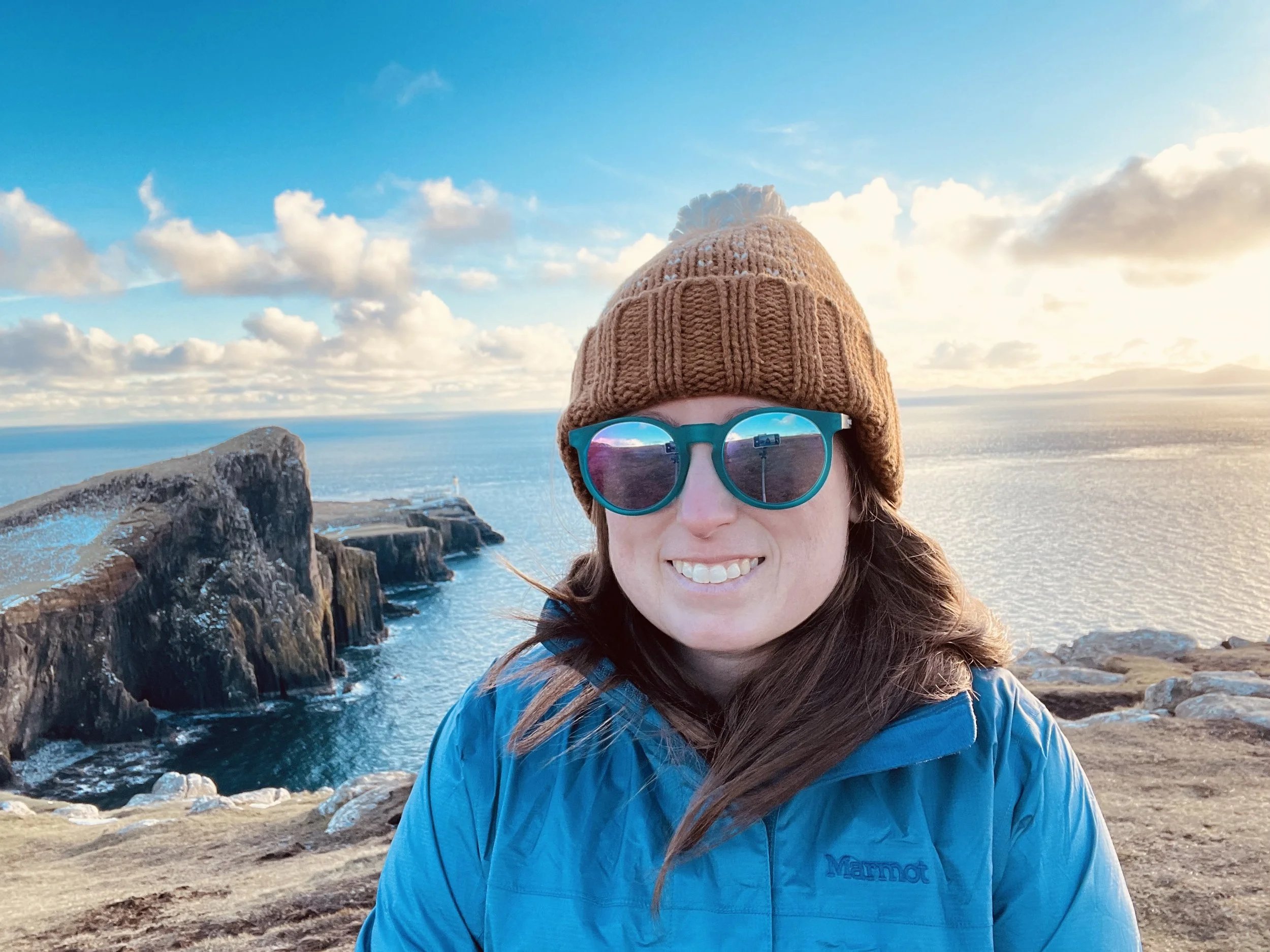
Hi, I’m Jess
I’m here to help you plan epic adventures. If you’re looking for authentic travel guides that mix luxe lodging and incredible dining with out of this world hikes and adventures, you’re in the right place.


My favorite petite jackets - including fleeces and rain jackets