The Best Day Trips From Edinburgh by Train or Bus
One of the things that makes Edinburgh such a great base for a Scotland trip is how much is accessible without a car. The public transport network here is excellent — frequent, affordable, and scenic in a way that makes the journey half the fun. Whether you've already covered Edinburgh's cobbled closes and castle esplanade, or you're building in unforgettable day trips from the start, there's a full world of Scotland waiting just outside the city.
One of my favorite things to do when I lived in Edinburgh was to hop on a train or bus with no real plan in mind — it's how I discovered some of my favorite places. You'll need to be a little more intentional during a short trip, and this guide will help you figure out the best day trips based on your travel style. I've also helped plenty of clients work these destinations into their Scotland itineraries as a Virtuoso-affiliated travel advisor — so consider this the version with the inside track.
This post contains affiliate links. I may earn a small commission if you book through them, at no extra cost to you.
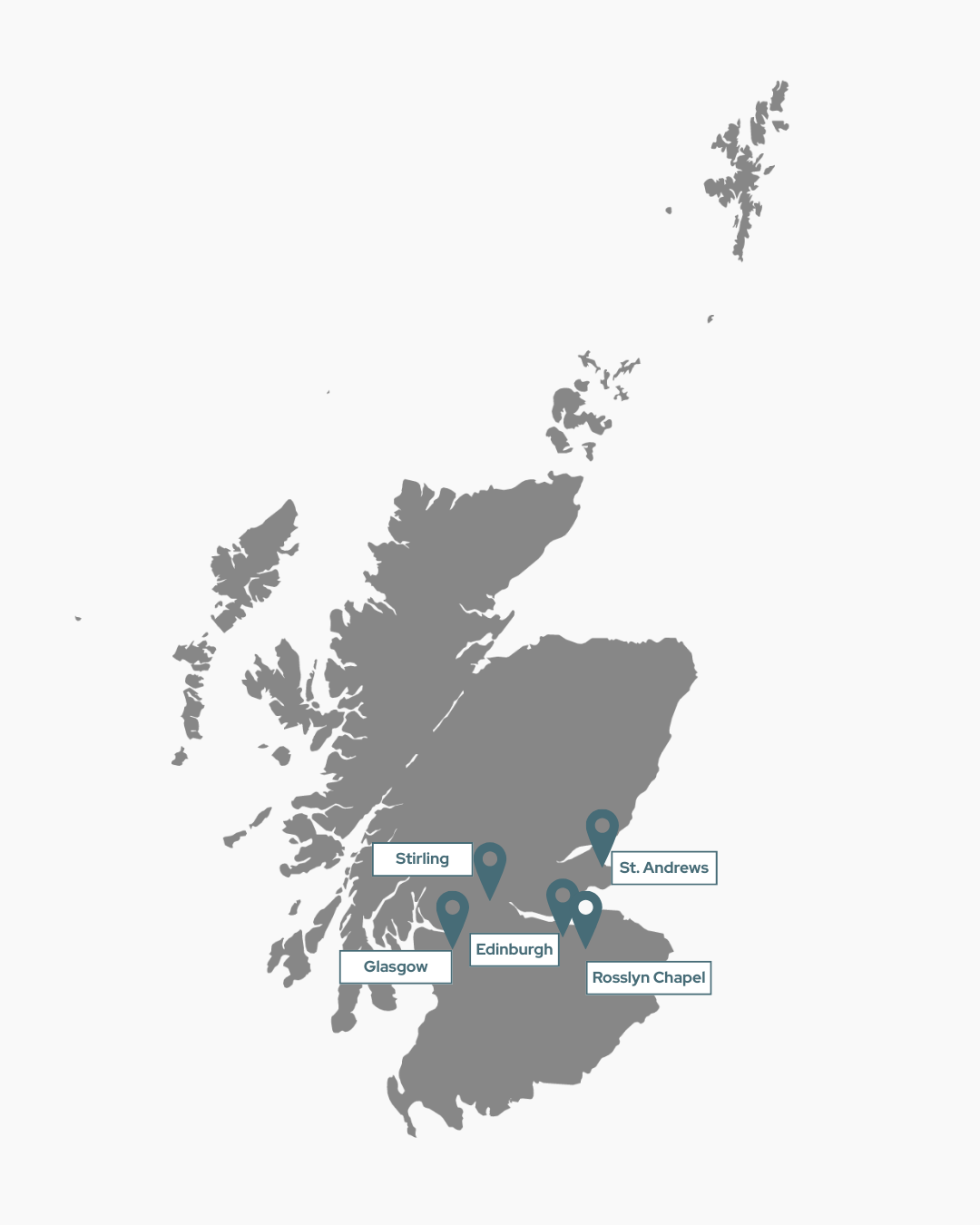
Before You Go: A Few Practical Notes
All of these trips depart from Edinburgh Waverley, the city's main station, right in the heart of the city center — walking distance from most hotels in both Old Town and New Town.
Book tickets through ScotRail — their app makes it easy to buy in advance or on the day. For most of these routes, booking ahead is not strictly necessary since trains are frequent, but it can save money and guarantees a seat on busier days. If you have a railcard, use it — you can save up to a third off most fares.
One more thing worth knowing: ScotRail removed peak fares in September 2025, so there is no longer a price penalty for traveling during rush hour. Trains are still busier in the morning and evening, but you won't pay more for it.
This guide was last updated March, 2026. I make my best effort to provide up to date information regarding trains, buses and attractions but please verify directly with the provider before heading out.
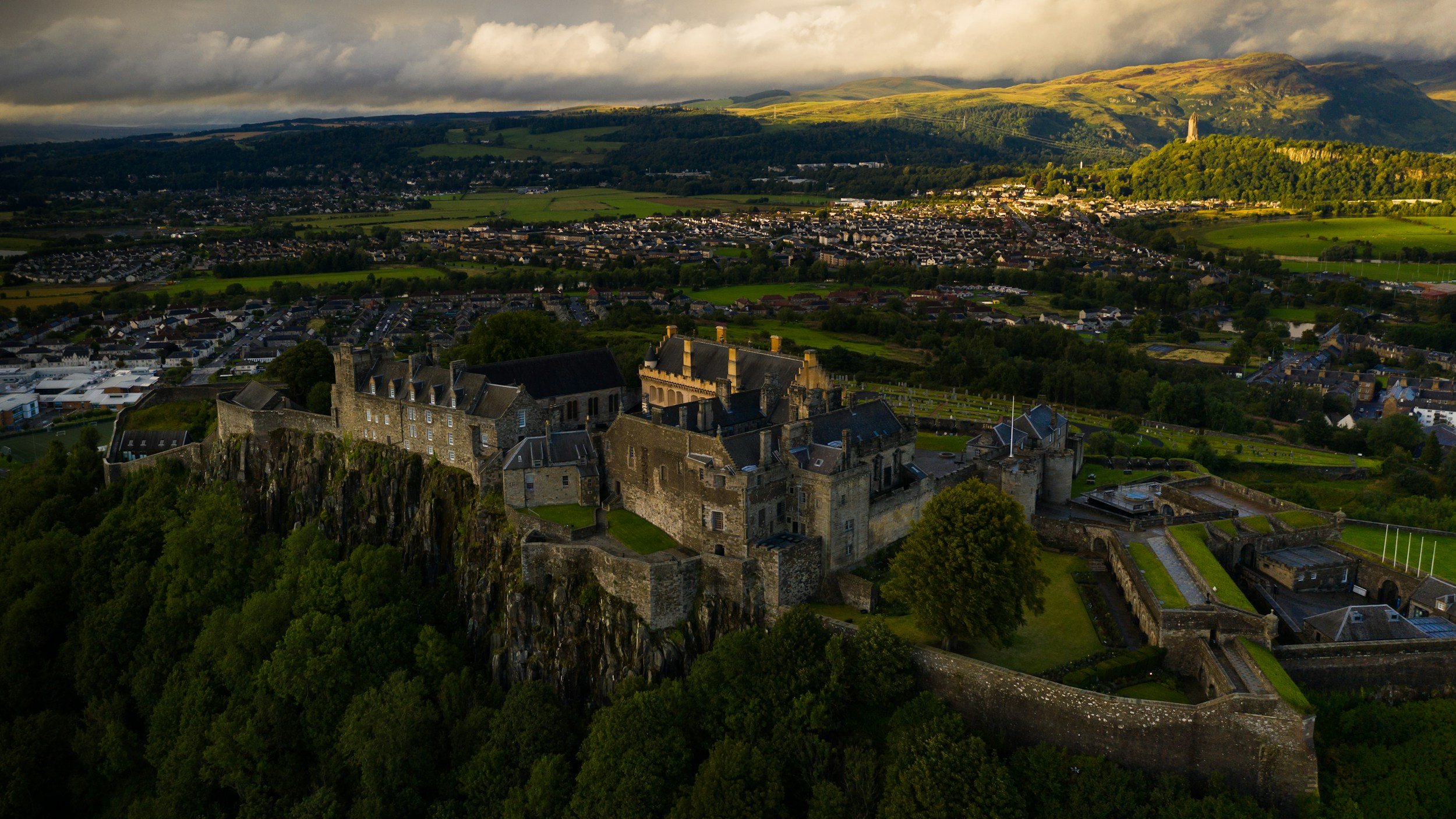
Stirling — 45–55 Minutes by Direct Train
Best for: History, dramatic views, a genuine taste of Scotland
Perched on a volcanic crag high above the city, Stirling Castle was one of the most strategically important fortresses in Scottish history — the gateway to the Highlands and the site of some of Scotland's most pivotal battles. Standing on its esplanade with views stretching across the Forth Valley to the Ochil Hills feels like a scene from a film. Because it basically is.
The journey itself sets the mood. Direct ScotRail trains run every 30 minutes from Waverley, and the fastest services get you there in about 45 minutes. On the way through Falkirk, keep an eye to the right side of the train for the Kelpies — two 30-metre-tall horse sculptures visible from the tracks. Worth looking up from your phone for.
What to Do in Stirling
Stirling Castle is the headline act and deserves the full visit. The royal palace inside the walls was one of the preferred residences of the Scottish monarchs — Mary Queen of Scots was crowned here as an infant. Budget at least two hours inside.
The Wallace Monument — the tower dedicated to William Wallace, perched on a hill above the city — is a steep walk or short bus ride from town, but the views from the top are sweeping. You will recognize this chapter of Scottish history if you have seen Braveheart, though history buffs will want to know the film took some notable creative liberties. I highly recommend taking the bus unless you’re game for a good workout - I wasn’t aware it exited on my first visit and climbed the hill. And, if you’re expecting any of the statues to resemble Mel Gibson in Braveheart, you will be disappointed.
The Battle of Bannockburn Visitor Centre brings the 1314 battle to life with an impressive 3D experience.
The Old Town itself is worth time: the Church of the Holy Rude (where the infant James VI was crowned), the medieval town wall, and the quiet closes between the castle and the train station carry a fraction of the crowds you will encounter on Edinburgh's Royal Mile.
Getting There
Train: Direct ScotRail, Edinburgh Waverley → Stirling
Journey time: 45–55 minutes | Every 30 minutes
Cost: From around £10–15 return, booked via ScotRail
The station is a short walk from the Old Town; the castle is uphill but walkable
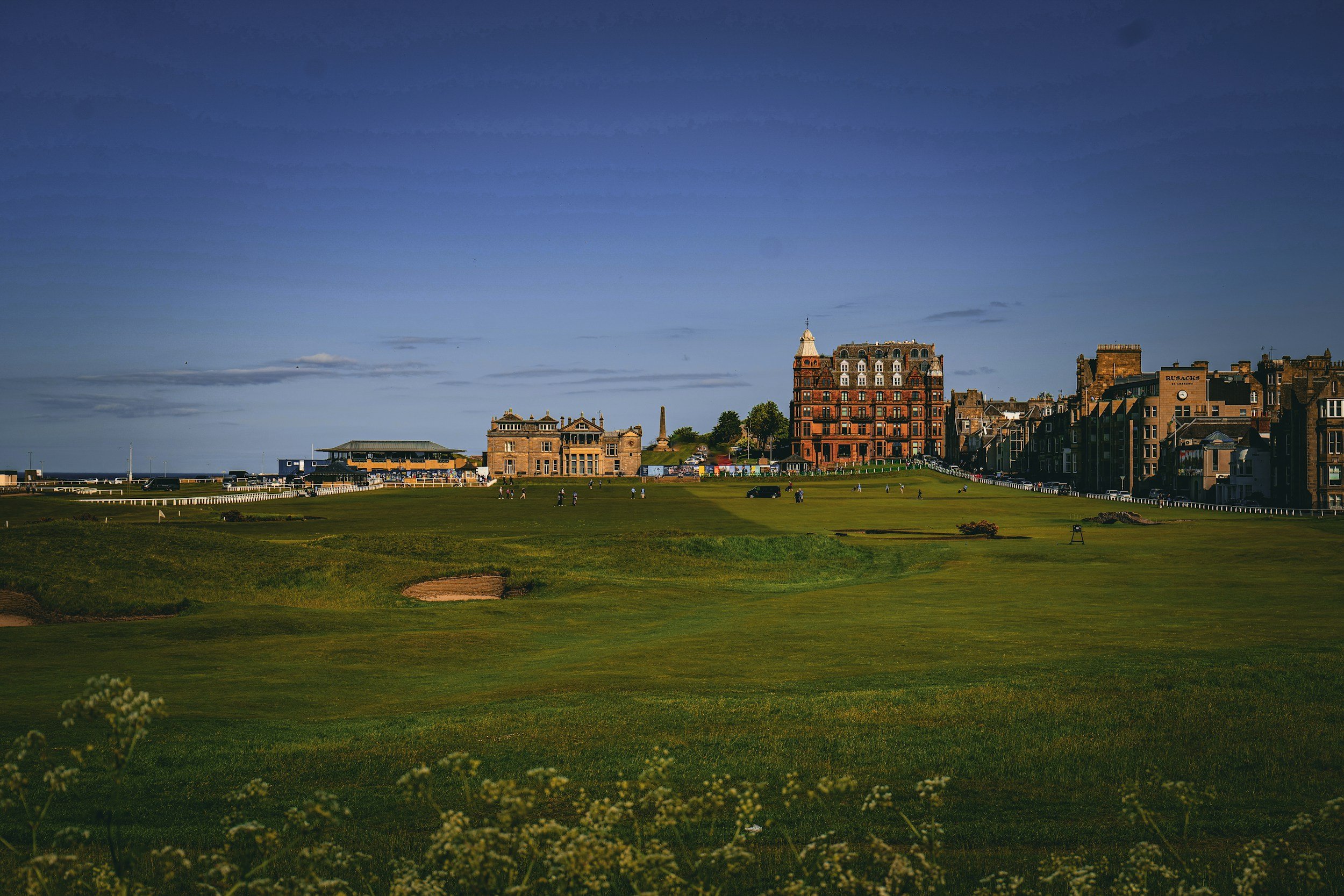
St. Andrews — About 1.5 Hours by Train + Bus
Best for: History, coastal walking, home of golf, one of the most beautiful small towns in Scotland
St. Andrews sits on a dramatic stretch of the Fife coastline and packs more into a small town than almost anywhere else in Scotland — cathedral ruins, a medieval castle, Scotland's oldest university, world-famous golf, and two miles of golden beach where Chariots of Fire was filmed. It has been a few years since my last visit, but some places don't need to change to stay worth visiting. This is one of them.
The logistics are slightly more involved than the other trips on this list — worth knowing before you go. St. Andrews does not have its own train station. You will take the train to Leuchars and catch a connecting bus from there.
But here is the thing: the journey is half the experience. The train from Edinburgh crosses the Forth Bridge — the iconic Victorian cantilever railway bridge designated a UNESCO World Heritage Site in 2015 — before continuing north through Fife. Sit on the right side of the train leaving Edinburgh for the best views as you cross. It is one of those moments that makes you glad you did not rent a car.
What to Do in St. Andrews
St. Andrews Cathedral— The ruins of what was once the largest cathedral in Scotland sit right at the edge of the sea. Climbing St. Rule's Tower for panoramic views over the coast is one of the more quietly spectacular things you can do in Scotland.
St. Andrews Castle — A ruined coastal fortress with underground tunnels and a bottle dungeon carved directly into the rock. Genuinely eerie, genuinely excellent.
The Old Course— Even if you are not a golfer, standing beside the 18th green of the most famous course in the world is worth the trip. You can walk across the Swilcan Bridge, crossed by every major golfer in history. The Links is public land — just be aware the course is in operation during playing hours.
West Sands Beach — Two miles of golden sand stretching north from town, and the setting for the iconic opening sequence of Chariots of Fire. Worth a long walk.
The University of St. Andrews — Scotland's oldest university (founded 1413) spreads through the historic town center. The quads, the chapel at St. Salvator's, and the cobbled streets of the academic quarter are worth wandering.
Getting There
The smoothest option is to book a through ticket to "St Andrews Bus" on the ScotRail website or app, which bundles the train and bus connection into one ticket. The train from Waverley to Leuchars takes about an hour; the bus from Leuchars station into St. Andrews runs every 10–15 minutes and takes around 10–15 minutes. Total door-to-door: roughly 1 hour 15–30 minutes.
Alternatively, a direct coach (the X59) runs from Edinburgh Bus Station to St. Andrews in about 2 hours — no transfers, but slower. For a day trip where time in town matters, the train wins.
Train: ScotRail Waverley → Leuchars, then bus (99 service) → St. Andrews
Journey time: ~1 hour 15–30 minutes total
Cost: From around £15–20 return for the through ticket
Everything in St. Andrews is walkable once you arrive

Glasgow — About 50 Minutes by Direct Train
Best for: Art, architecture, food, music, free world-class museums, a completely different energy to Edinburgh
Glasgow and Edinburgh have had a friendly rivalry running for centuries, and honestly both cities win. Glasgow is Scotland's largest city and one of the most underrated in Europe — vibrant, with exceptional free museums, stunning Victorian architecture, and a thriving food and music scene.
It is also the easiest trip on this list. Direct trains run every 30 minutes from Waverley and the fastest services get you there in under 50 minutes. Nothing to book in advance — just show up and get on.
What to Do in Glasgow
Kelvingrove Art Gallery and Museum — Free entry, 22 galleries, and one of the finest civic museum collections in the UK. The building itself — a red sandstone Victorian masterpiece — is worth visiting on its own. This is non-negotiable.
The University of Glasgow — The neo-Gothic main building along University Avenue is genuinely stunning, and the cloisters are one of the most beautiful spots in the city. It also appeared in Outlander as the exterior of a Paris hospital.
The City Mural Trail — Street art by some of the world's best-known artists scattered across the city center. Wander and discover — some of the best pieces are in unexpected spots.
Ashton Lane — A cobbled alley in the West End lined with bars, restaurants, and a cinema. This is Glasgow at its most atmospheric. Grab lunch here before or after Kelvingrove.
The Necropolis — A Victorian hillside cemetery next to Glasgow Cathedral, with ornate monuments and sweeping views over the city. It sounds like an unusual recommendation. It is genuinely one of the most atmospheric places in Scotland.
Glasgow Cathedral — The only medieval cathedral on the Scottish mainland to survive the Reformation intact. Free to visit, and the crypt underneath is beautiful.
Getting There
Two Glasgow stations to know: trains from Waverley run to both Glasgow Queen Street (fastest, most central, ideal for the city center and West End) and Glasgow Central (slightly longer, better for the South Side). For a day trip hitting the highlights, Queen Street is your station.
Train: Direct ScotRail, Waverley → Glasgow Queen Street
Journey time: 45–55 minutes | Every 30 minutes
Cost: From around £12–17 return | No need to book ahead
Glasgow has its own underground (the Clockwork Orange) for getting to the West End
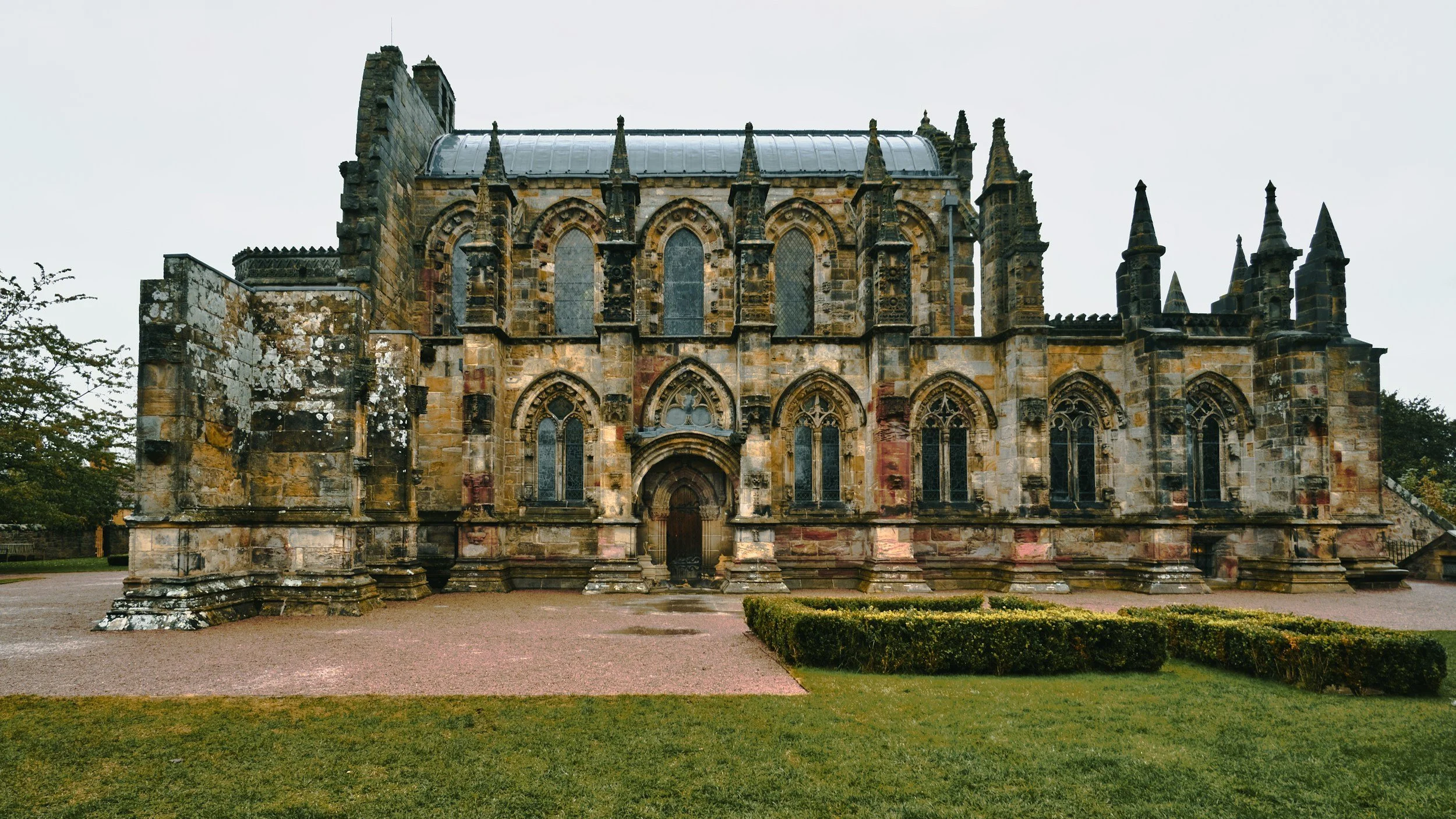
Rosslyn Chapel — About 45–50 Minutes by Bus
Best for: History, mystery, medieval architecture, Da Vinci Code fans, and anyone who wants a half-day trip that feels genuinely otherworldly
Seven miles south of Edinburgh, tucked into the village of Roslin, is one of the most extraordinary buildings in Scotland. Rosslyn Chapel was founded in 1446 by nobleman Sir William St. Clair, who spent his mid-twenties traveling Europe studying Gothic cathedrals before coming home to build his own. The result is a 15th-century masterpiece so densely covered in stone carvings — angels, green men, biblical scenes, Celtic knots, and symbols that have never been fully explained — that historians are still arguing about what some of them mean.
Dan Brown's The Da Vinci Code brought a wave of new visitors through the door (the chapel appears in both the book and the film), and the theories about Knights Templar connections and hidden vaults beneath the floor have taken on a life of their own. Whether you arrive for the conspiracy theories or the architecture, the chapel itself is the star — and it genuinely earns the visit on its own terms, no Holy Grail required.
Worth knowing before you go: photography is not permitted inside the chapel. Take your time with the exterior carvings before you head in, and make use of the introductory talk included with admission.
What to Do in Roslin
Rosslyn Chapel — Budget one to two hours for the chapel, grounds, and visitor center. Book tickets in advance online — timed entry slots keep the crowds manageable and mean you won't queue. Open Monday–Saturday 9am–5pm, Sunday 12pm–5pm. Closed December 24, 25, 31 and January 1. Adult admission is around £10.50.
Rosslyn Glen— Just below the chapel, a wooded gorge follows the River Esk through some genuinely beautiful Midlothian countryside. The glen takes about an hour to walk and leads down to the ruins of Rosslyn Castle — a 14th-century fortress built into the cliffs above the river. It's a striking combination: medieval chapel above, ruined castle below, ancient woodland in between. For adventurous travelers, this is the part that elevates the trip from a chapel visit into a proper half-day adventure.
Roslin Village — A genuinely lovely small village to wander before or after the chapel. The Original Rosslyn Hotel is the local pub right at the bus stop and a good spot for a post-walk lunch.
Getting There
Rosslyn Chapel is bus-only — there is no direct train. Take Lothian Bus 37 from Princes Street (look for the bus marked Penicuik/Deanburn) and ride to the Original Rosslyn Hotel stop. The chapel is a two-minute walk from the bus stop.
Bus: Lothian 37 from Princes Street → Original Rosslyn Hotel stop
Journey time: ~45–50 minutes | Buses every 15 minutes
Cost: Around £2.20 single, £5.50 day ticket — pay contactless on the bus
Book chapel tickets in advance at rosslynchapel.com
Tip: Rosslyn pairs naturally with a half-day in Edinburgh's Old Town — the bus drops you back on Princes Street, walking distance from the Royal Mile. It also combines well with a guided Borders day tour if you want to see more of Midlothian and the Scottish Borders in a single day.
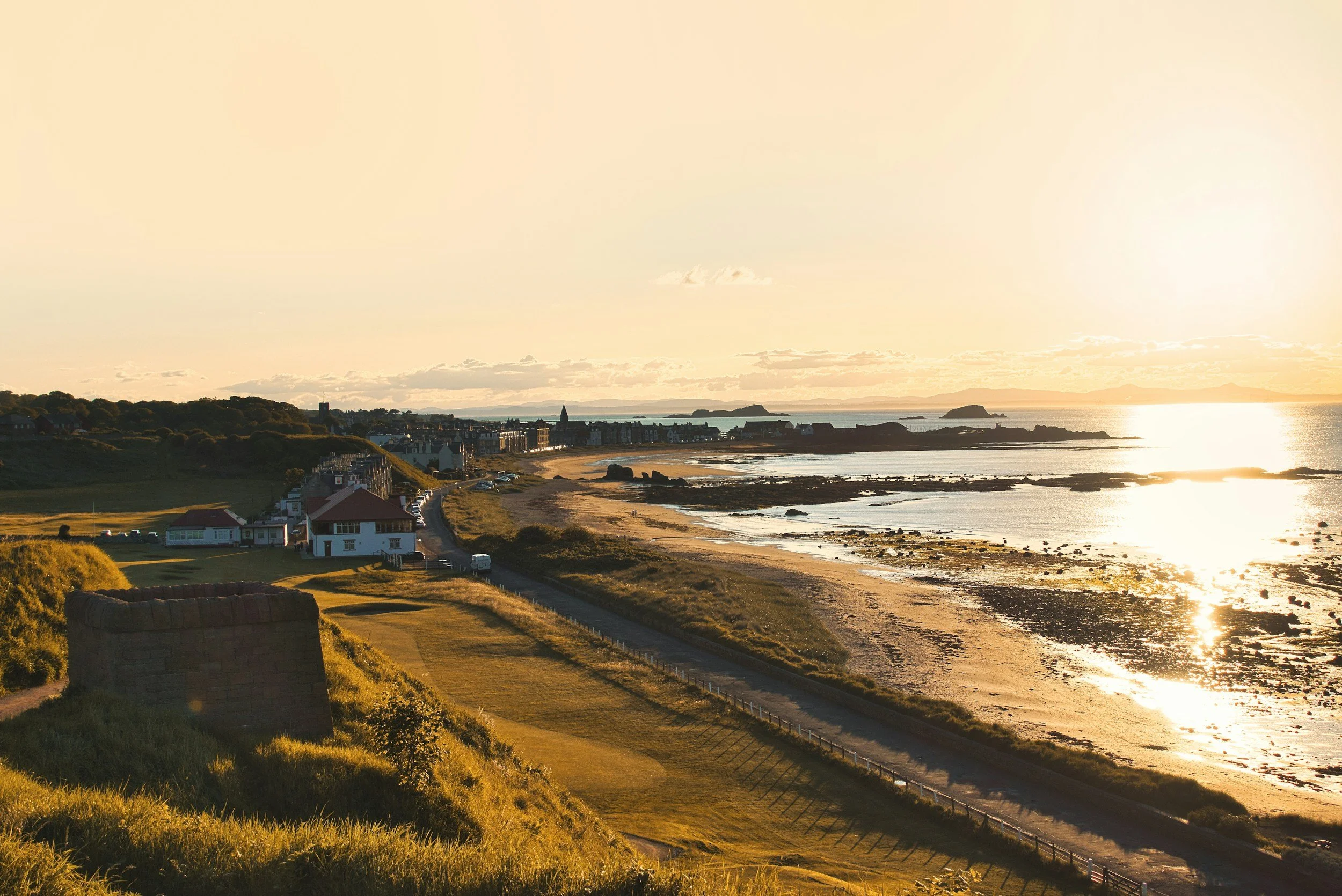
Hidden Gem: North Berwick — 30 Minutes by Direct Train
Best for: Coastal hiking, wildlife, golden beaches, a genuinely great day out that almost nobody outside Scotland knows about
This is the one I would add to every Edinburgh itinerary without hesitation, and the one most visitors miss entirely. North Berwick is a small seaside town on the East Lothian coast — 30 minutes by direct train from Waverley — and it punches well above its weight.
The town sits at the foot of North Berwick Law, a volcanic hill with a replica whale jawbone at the summit and views across the Firth of Forth all the way back to Edinburgh on clear days. But the real star is Bass Rock — a volcanic island just off the coast that is home to over 150,000 northern gannets, the world's largest colony. Sir David Attenborough has described it as one of the wildlife wonders of the world. From shore it looks almost white from the sheer volume of birds.
Seacliff Beach, a short distance from town, was named Scotland's top beach in 2025 and features the UK's smallest harbor carved directly into sandstone cliffs. It feels like a secret.
What to Do in North Berwick
North Berwick Law — A steep but short hike to the summit, with the whale jawbone at the top and panoramic views over the Firth of Forth, the coast, and Edinburgh in the distance. About an hour return.
Scottish Seabird Centre — At the harbour, with live wildlife cameras trained on Bass Rock and nearby islands, boat trips, and interactive exhibits. An excellent half-day visit.
Bass Rock Boat Trip — Between April and September, the boat trip around Bass Rock is one of the most memorable wildlife experiences you can have in Scotland. The sound and scale of 150,000 gannets is something you carry with you.
The Beach and Town — A lovely high street with independent shops and cafes, and the beach just off the main street is excellent for a walk in any weather.
Getting There
Train: Direct ScotRail, Waverley → North Berwick
Journey time: ~30 minutes | Trains throughout the day (hourly on Sundays)
Cost: From around £10–12 return
The town center, beach, and North Berwick Law are all walkable from the station
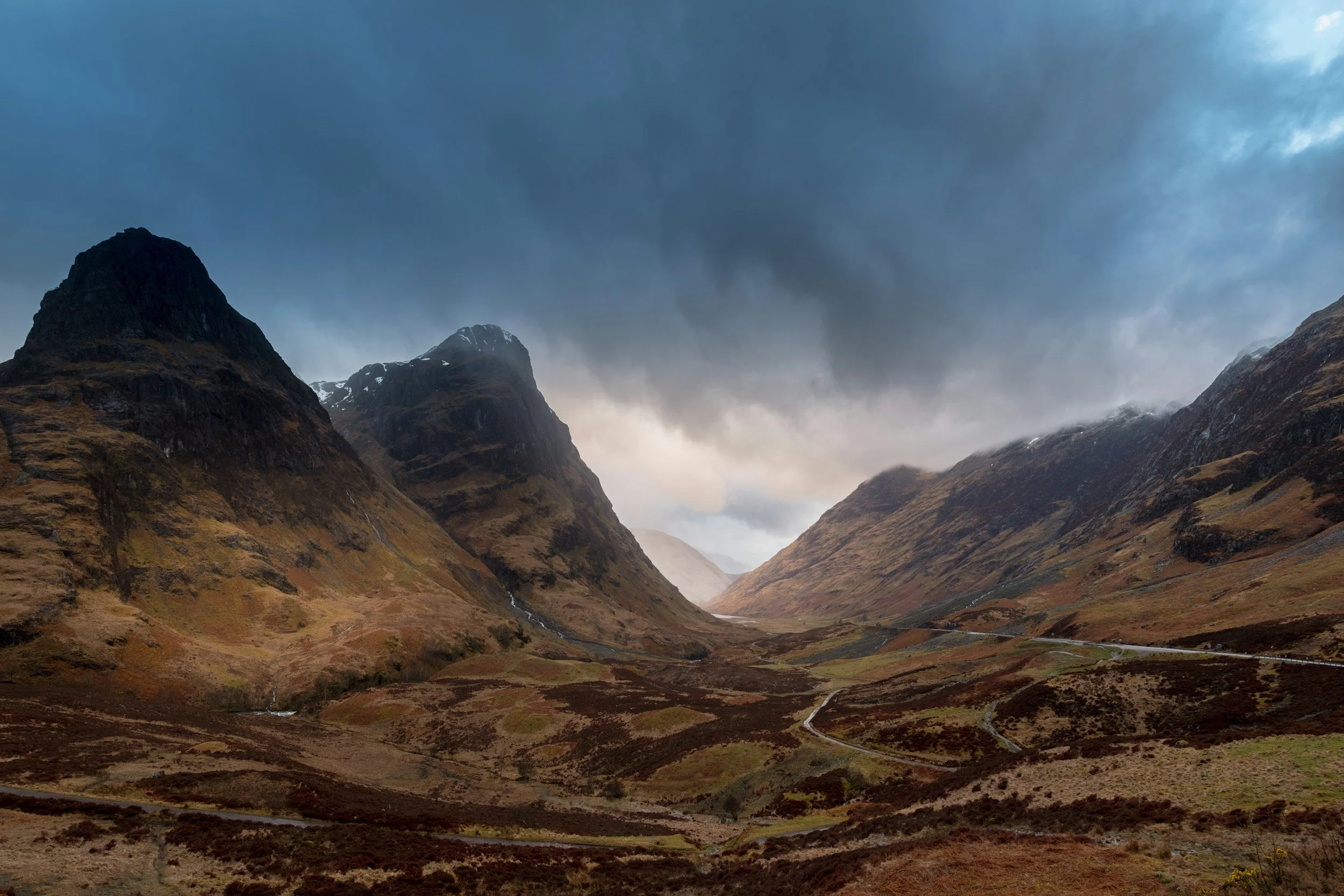
What About the Highlands?
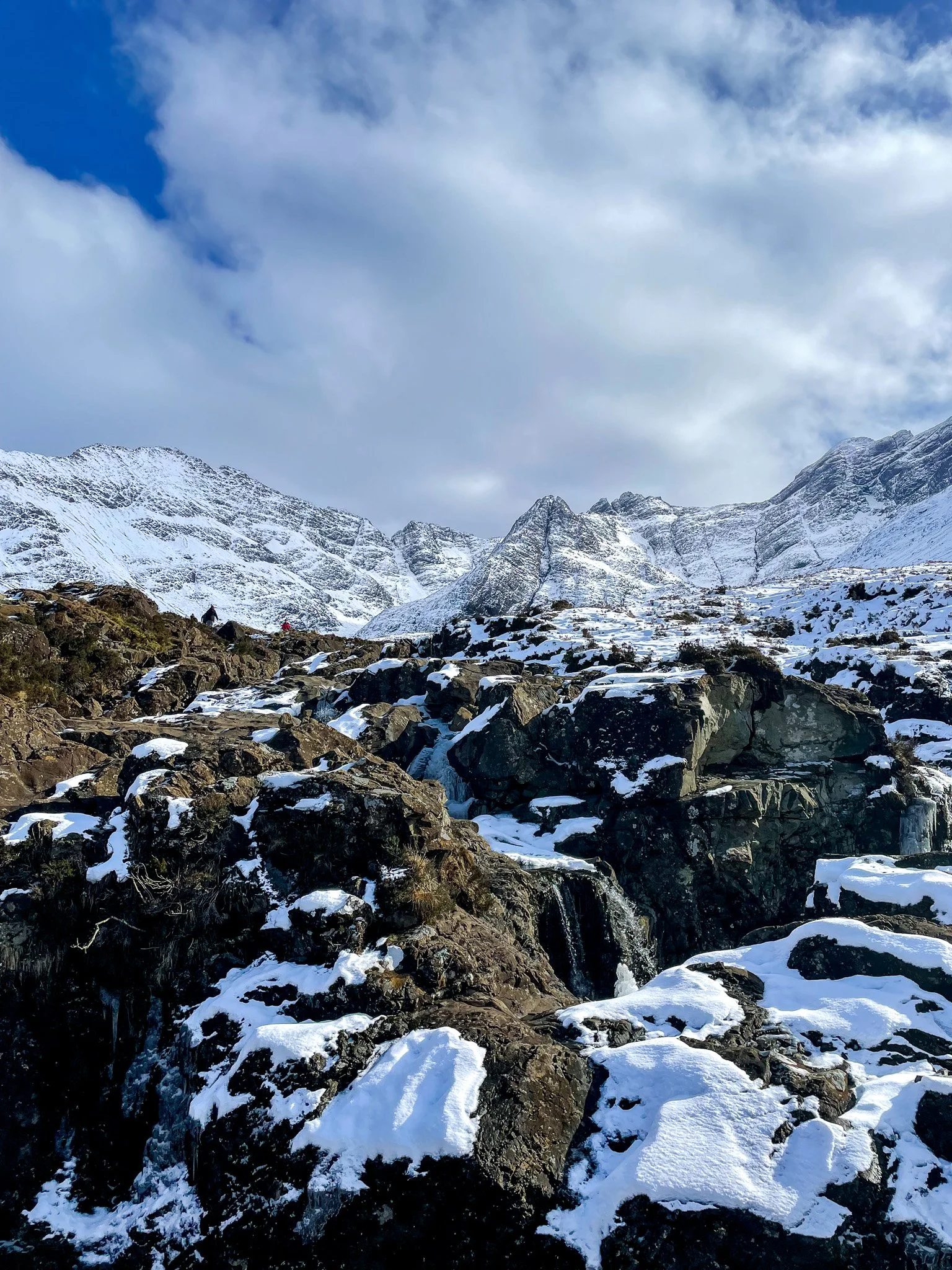
No list of day trips from Edinburgh would be complete without at least mentioning the Highlands — and yes, destinations like Glencoe, Fort William, the Glenfinnan Viaduct, and Loch Ness are technically reachable in a day from Edinburgh. But technically doable and actually enjoyable are two different things.
The Highlands are far enough that driving yourself eats most of the day in the car, and independent rail requires multiple connections and creative scheduling that leaves very little time at the destination. The way to do a day trip — and do it well — is a guided day tour departing from Edinburgh. These are typically full-day itineraries that cover multiple stops, handle all the logistics, and come with guides who make the history and landscape come alive in a way a solo drive simply doesn't.
The most popular routes combine Glencoe (one of the most dramatic landscapes in all of Scotland, and a Skyfall filming location) with Fort William and the Glenfinnan Viaduct — the bridge made famous as the route of the Hogwarts Express in the Harry Potter films. Watching the Jacobite steam train cross that viaduct against a backdrop of Scottish Highlands is one of those bucket-list moments that earns every superlative thrown at it. Other popular tours head east toward Loch Ness, Urquhart Castle, and Inverness.
Even better, if you have more time to explore, all of these destinations could easily make up a multi-day Scotland roadtrip. Giving you more time at each stop along the way to explore the towns and scenery.
Planning Tips
Book via the ScotRail app — easiest way to buy and show tickets on your phone. Advance tickets can be cheaper, especially on the Stirling and Glasgow routes.
Start early — all four destinations have enough to fill a full day, and getting there before the crowds makes a real difference, especially at Stirling Castle and St. Andrews.
Pack a waterproof layer — Scotland's weather does not reliably cooperate. A packable rain jacket earns its weight on all four of these trips, especially North Berwick and St. Andrews.
More Edinburgh and Scotland guides:
Want help planning your Scotland trip — including hotel upgrades and exclusive perks? I'd love to help.

Hi, I’m Jess
I’m here to help you plan epic adventures. If you’re looking for authentic travel guides that mix luxe lodging and incredible dining with out of this world hikes and adventures, you’re in the right place.



Your guide to the best time to visit Highlands, NC