Your Ultimate Guide to San Jose del Cabo Whale Watching
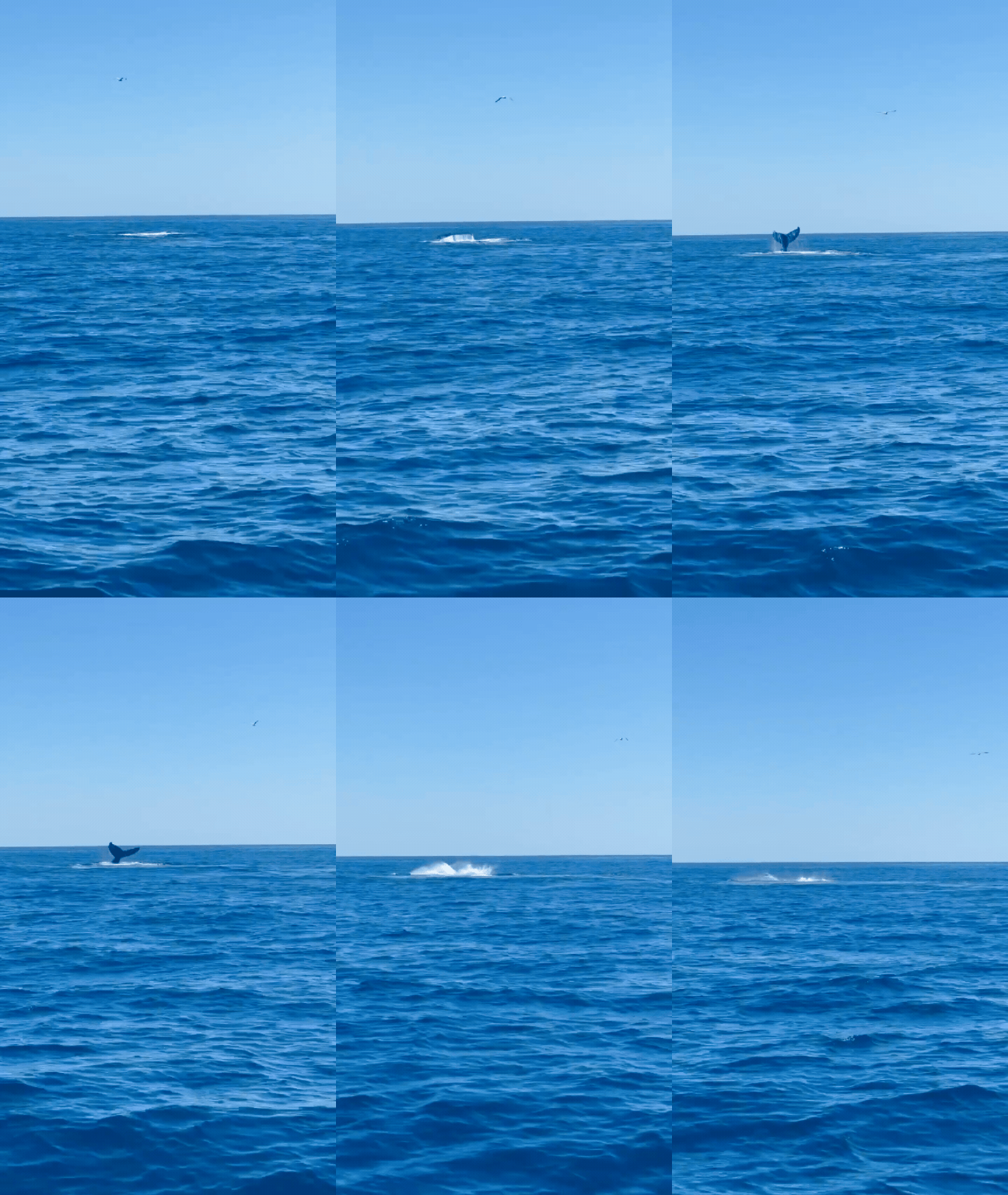
If you're staying in San José del Cabo and wondering whether whale watching is worth adding to your itinerary — the answer is an unqualified yes. While most travelers associate whale watching in Los Cabos with the Cabo San Lucas marina, San José del Cabo offers a different (and in some ways better) experience: quieter waters, fewer boats, and direct access to the Sea of Cortez, where humpbacks and gray whales move through season after season.
I've been out on these waters during whale season, and no amount of time at the pool or at a rooftop bar compares to watching a humpback launch itself out of the ocean fifty feet from your boat. It's the kind of thing you'll still be talking about years later.
This post contains affiliate links. I may earn a small commission if you book through them, at no extra cost to you.
Quick Facts:
Season: December through April (peak: January–March)
Departures: Most San José tours leave from Marina Puerto Los Cabos
Tour length: Roughly 2–3 hours
Tour recommendations: Whale Watch Cabo or Cabo Trek for ethical whale watching in San Jose del Cabo.
Why San Jose del Cabo for Whale Watching?
The Baja Peninsula sits at a natural convergence point where the Pacific Ocean meets the Sea of Cortez — two distinct bodies of water that together create one of the most biodiverse marine environments on earth. Jacques Cousteau once described the Sea of Cortez as the "aquarium of the world," and that reputation holds today.
Tours departing from San José del Cabo operate entirely within the Sea of Cortez, which has a few distinct advantages. The water tends to be calmer than the Pacific side, boat traffic is dramatically lighter than near Cabo San Lucas, and the overall experience is more relaxed and intimate. If you're staying along the hotel corridor closer to San José — or in town itself — you're also saving yourself the commute to the marina in Cabo.
When to Go: The San José del Cabo Whale Season Breakdown
The official whale watching season runs December through April, as established by SEMARNAT, Mexico's environmental regulatory agency. Here's how each part of the season plays out:
December: Gray whales begin showing up in Baja's calving lagoons. This is an underrated time to go — whale numbers are building, and there are fewer tourists and tour boats competing for space on the water, with exception of the Christmas holiday week.
January through March: This is the peak window, full stop. Gray whales are active, humpback whales are breaching and tail-slapping across the Sea of Cortez, and the concentration of marine life is at its highest point all year. If you have flexibility in your travel dates, aim for this stretch. During an early February trip, I saw primarily gray whales; my husband's early March trip was dominated by humpbacks putting on a nonstop aerial display.
April: Whale activity begins winding down as migration patterns shift northward. Sightings are still possible and crowds are thinner — but I went in late April once and came back empty-handed, so manage expectations accordingly.
May through November: Outside of whale season, whale sharks take center stage in the Sea of Cortez from October onward. A completely different experience, but absolutely worth planning around if your trip falls outside the winter-spring window.
Which Whales Will You Actually See in San Jose?
Several species move through Los Cabos waters during the season. Here are the ones you're most likely to encounter:
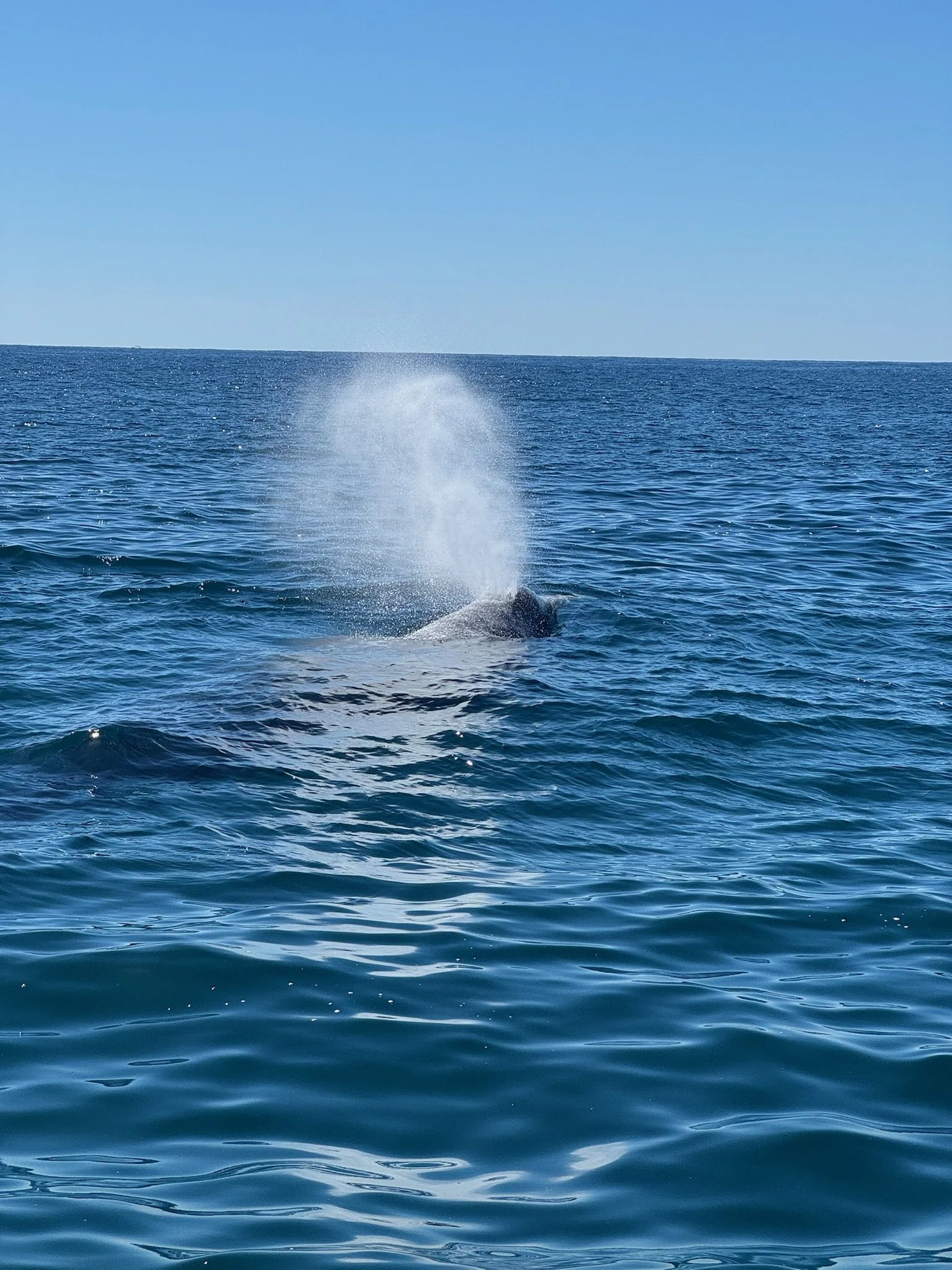
Gray Whales — These are the headline act of Baja's winter season. Gray whales complete one of the longest annual migrations of any mammal, traveling from feeding grounds in Alaska all the way down to the warm, sheltered lagoons of Baja California to breed and give birth. On the water, they move in long, undulating arcs — you'll spot the curve of their back and the lazy lift of a tail before they slip below. They occasionally throw in a fin slap. Slower and more measured than humpbacks, but watching a mother and calf move through calm water together is unforgettable.
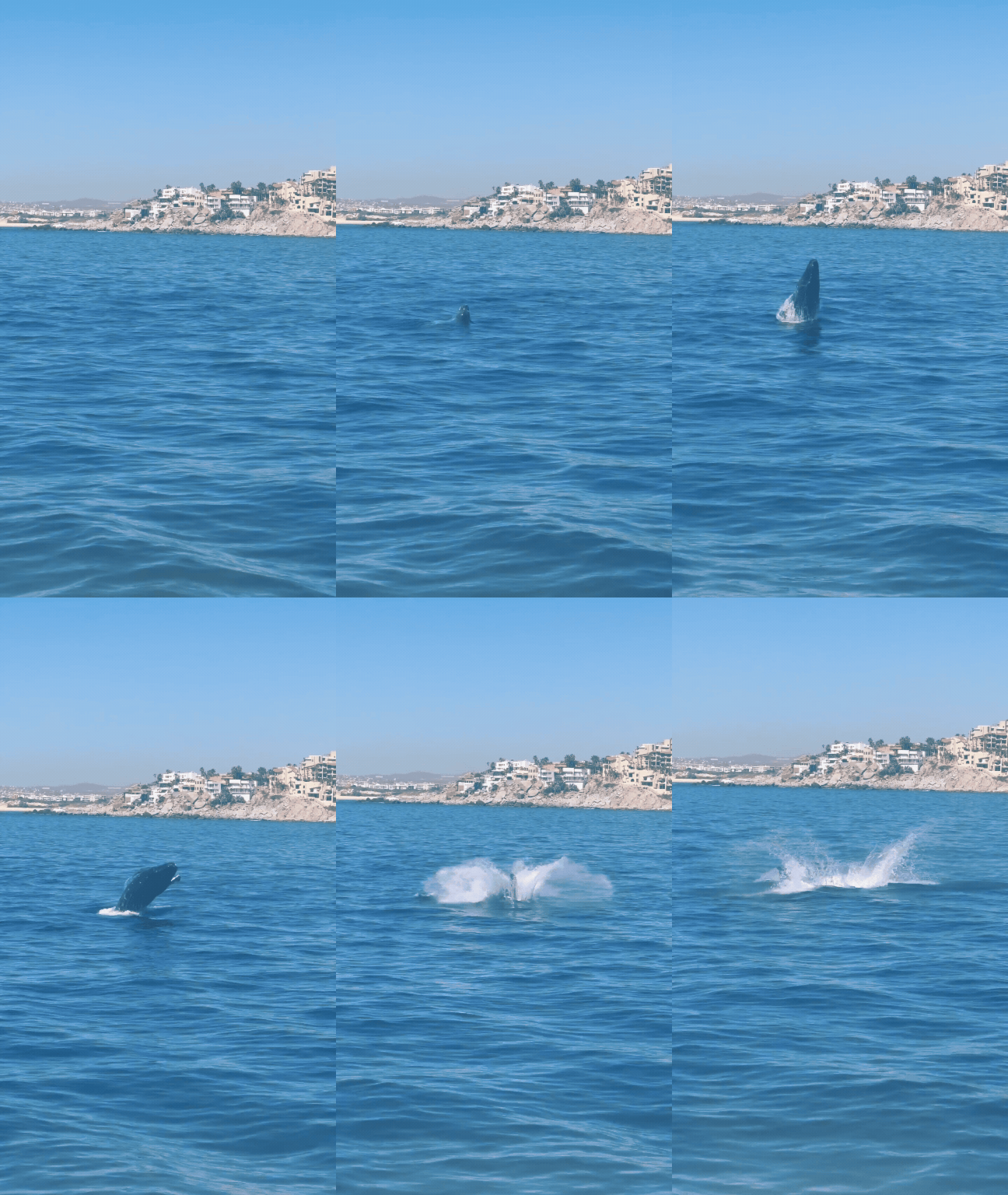
Humpback Whales — If gray whales are the storytellers, humpbacks are the showoffs. They breach, they tail-slap, they spin. Peak activity runs January through March, and during that window you can sometimes spot them breaching from the shoreline without even getting on a boat. These are the moments that end up as screen savers.
Whale Sharks — Technically not a whale, but too significant to skip. These filter-feeding giants gather in the Sea of Cortez near La Paz from October through April and can be experienced on a dedicated day tour from Los Cabos. Swimming alongside a 40-foot whale shark is a different category of experience entirely.
Less Common Species: Orcas are present around Baja year-round and occasionally appear when humpbacks are calving. Fin whales inhabit the Sea of Cortez year-round and are more regularly spotted near Loreto. Sperm whales are rare but do appear — typically in groups, resting at the surface between deep dives.
How to Pick the Right Whale Watching Tour
The quality of whale watching tours varies significantly depending on who you book with. A few things worth evaluating:
Private vs. Group Tours
Private tours let your group follow the whales rather than a fixed route, spend more time with an active pod, and move at your own pace. If you're traveling with family, celebrating something, or just want more focused time on the water, it's worth the added cost.
Group tours are a perfectly good option — just know the boat will be fuller and the experience more structured.
What Separates Good Operators from Great Ones
A marine biologist or trained naturalist on board. Having someone explain what you're watching — why a gray whale is behaving the way it is, what that breach actually signals — transforms the experience from "cool sighting" to something genuinely educational and memorable.
Smaller boat sizes. Fewer passengers means a more intimate experience and less disruption to the animals.
A clear conservation ethic. Responsible operators maintain safe distances, limit engine interference near whales, and avoid crowding pods. Ask before you book.
Humpback & Gray Whale Tours from San José del Cabo:
Quick Facts:
Where: San José del Cabo (Marina Puerto Los Cabos), with sightings throughout the Sea of Cortez
When: December – April.
How Long: 2–3 hours on average
Tour Recommendation: Whale Watch Cabo and Cabo Trek are my top picks for ethical whale watching in San Jose del Cabo
The key practical difference between booking a whale watching tour from San José versus Cabo San Lucas comes down to boat traffic. The marina in San José doesn't see the same volume of cruise ships, party boats, water taxis, and sport fishing vessels that crowd the Cabo San Lucas side. On the water, that means more time near the whales and less time navigating around other boats.
The tradeoff: tours from San José operate in the Sea of Cortez only. Tours from Cabo San Lucas can head either east into the Sea of Cortez or west into the Pacific, depending on where whales have been spotted recently. For most of the season, that flexibility doesn't matter much — but it's worth knowing.
After your tour, keep in mind that the marina in San José is a bit removed from the town center, so you'll likely need to drive to reach restaurants or other activities. In Cabo San Lucas, the marina drops you right into the middle of everything.
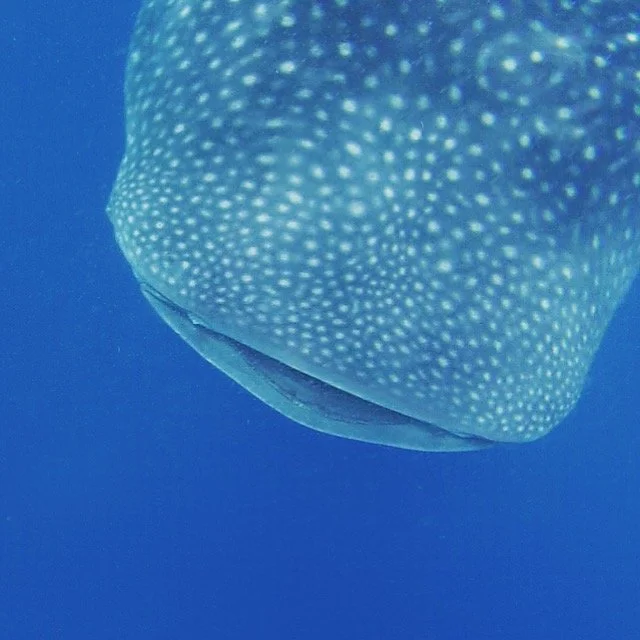
Whale Shark Encounters Near San José del Cabo
Quick Facts:
Where: Sea of Cortez, off the coast of La Paz
When: The official season for swimming with whale sharks runs from October – April
How: A half- or full-day tour with a licensed operator; most run 2–3 hours on the water Recommended operator: Cabo Trek runs day tours departing from Los Cabos
Tour Recommendations: Tuna Tuna Tours are a great, small group option that departs out of La Paz.
La Paz is one of a handful of places worldwide where you can actually get in the water with whale sharks. From October through April, these animals — which can reach up to 60 feet in length — congregate in the Sea of Cortez to feed on plankton and krill. Despite their size, they pose no threat to humans.
The experience is tightly regulated. A limited number of boats are permitted in the feeding area each day, each boat is capped at a maximum of three hours, and only one vessel may approach a whale shark at a time. In the water, you'll be snorkeling with a guide and no more than five other snorkelers. No feeding, no baiting.
It's a full day from San José, but it's worth it.
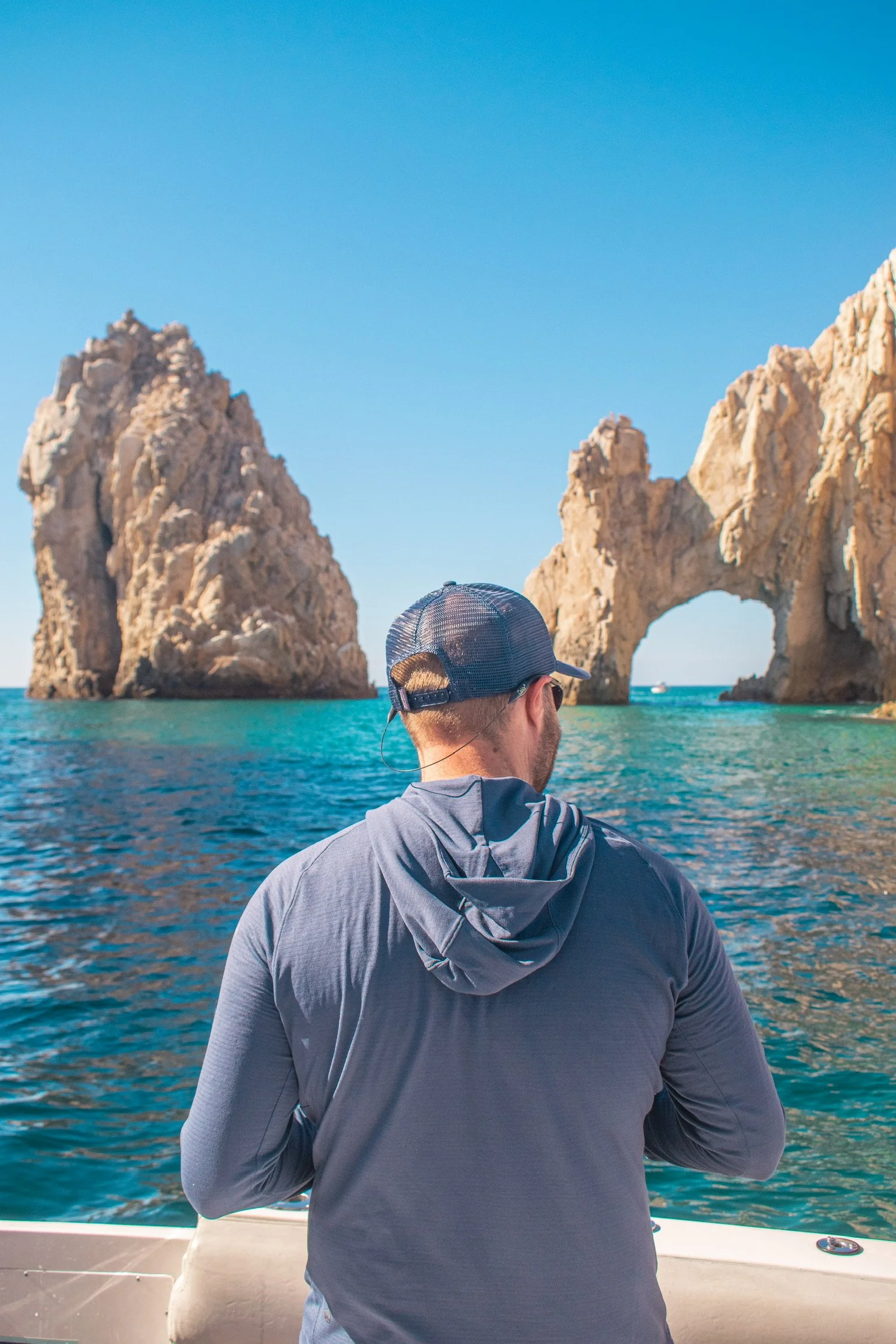
What a Day on the Water Actually Looks Like
Most tours run 2–3 hours and depart in the morning. Here's what to plan for:
The boats: Options range from small, open pangas to larger, more stable vessels. If anyone in your group is sensitive to motion, a bigger boat offers more stability — though smaller boats often get you closer to the action.
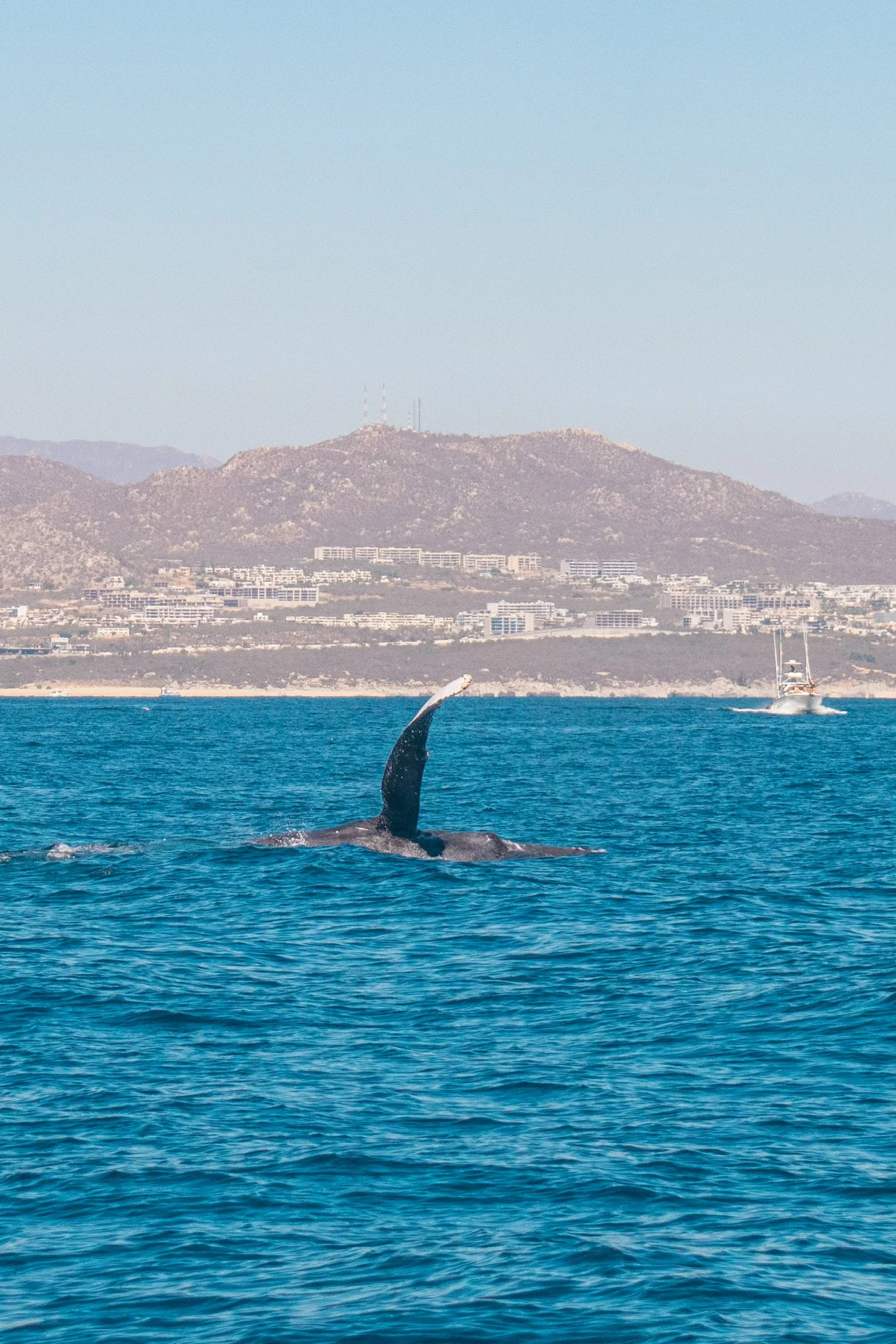
What to expect to see: During peak season (January–March), seeing 4–5 whales is a reasonable baseline — and many trips deliver considerably more. Tail slaps, spy-hops, and full breaches are common. Gray whales offer longer, slower surface time; humpbacks are more explosive and unpredictable.
What to bring: Layers for the morning chill, sunscreen, a hat, a sun shirt, and motion sickness medication if you're prone to it. A camera with a decent zoom lens is worth it — phone cameras can struggle with the distance and speed of whale movement. Leave anything you'd be upset to lose overboard at the hotel.
→Click here for my full Cabo packing list.
Practical Tips Before You Book
Reserve early. The best operators and smaller private boats fill up weeks ahead during peak season. This is not a last-minute decision if you're traveling January through March.
Book a morning departure. Water conditions are calmer in the morning, boat traffic is lighter, and the light is better for photography. Afternoon winds tend to pick up and chop the surface, which affects both comfort and visibility.
San José vs. La Paz: If you're based in San José or along the hotel corridor and primarily want to see gray and humpback whales, tours from San José or Cabo San Lucas are the practical choice. If swimming with whale sharks is the priority, a day trip to La Paz is the move — and it's a worthwhile drive.
Verify your operator is licensed. SEMARNAT-licensed whale watching operators are required to fly a whale watching flag on their vessel each season. This is the simplest way to confirm your operator has met the training and permitting standards — not just someone who happens to own a boat.
The Bottom Line
Whale watching in San José del Cabo doesn't get the same attention as the tours that leave from Cabo San Lucas, but that's exactly part of its appeal. You're getting access to the same extraordinary marine life — gray whales, humpbacks, the occasional orca — with a fraction of the boat traffic and a more relaxed pace on the water.
If you're based in San José or anywhere along the Los Cabos corridor, this is worth prioritizing over another beach day. Book it early, go in the morning, and give yourself a moment when you're out there to just watch.
Whale Watching in San José del Cabo FAQs
Is whale watching in Cabo regulated?
Yes. SEMARNAT (Mexico's Secretariat for Natural Resources) governs whale watching operations throughout the country. Regulations cover where tours can operate, how operators must approach whales, what permitting is required, and how tour companies must train their guides. The system is designed to protect the animals while keeping the experience accessible.
How do I make sure my operator is properly licensed?
Look for the whale watching flag. Licensed operators who have completed SEMARNAT's training and permit requirements are issued this flag at the start of each season and are required to display it on their vessel. If a boat isn't flying one, that's a red flag. There are plenty of boats in Los Cabos waters — fishing charters, snorkel tours, water taxis — but not all of them are equipped or trained to operate ethically around whales.
What's the best time of day to go out?
Most tour companies offer multiple tours each day — so how do you choose the best one?
Morning, if you can. Seas tend to be calmer earlier in the day, there's less boat traffic, and you'll be out before the afternoon winds add chop. If you're prone to seasickness, a morning tour is especially worth prioritizing.
What is the difference between taking a whale watching tour in San Jose del Cabo vs. Cabo San Lucas?
Tours from San José operate in the Sea of Cortez and offer a noticeably quieter experience — far fewer competing boats. Tours from Cabo San Lucas have the option of heading into either the Pacific or the Sea of Cortez depending on conditions and recent whale activity. After your tour in San José, plan for a short drive to reach restaurants and town; in Cabo San Lucas, you step off the boat and you're already in the middle of everything.
When Can You See Whales in Los Cabos?
Whale season runs from December to early April each year.
What Should I Wear for Whale Watching in Cabo?
Here's what I recommend wearing for a great boat day:
A wide brimmed or baseball cap
A SPF shirt
Quick-dry shorts or board shorts
A comfortable strappy sandal - many boats will have you remove your shoes before boarding, but if not you'll want a comfy, strappy sandal
Reef-safe sunscreen, stay away from spray sunscreen on boat days. Most boats won't allow it.
Can you see orcas in Cabo?
Orcas are present in Baja year-round but less commonly seen by tourists. So, while it's not impossible to see one, I wouldn't plan a trip around that as my primary goal.
Hi, I’m Jess
I’m here to help you plan epic adventures. If you’re looking for authentic travel guides that mix luxe lodging and incredible dining with out of this world hikes and adventures, you’re in the right place.





Your complete guide to the best time to visit the Isle of Skye