Guide to Whale Watching in Cabo San Lucas (2026)
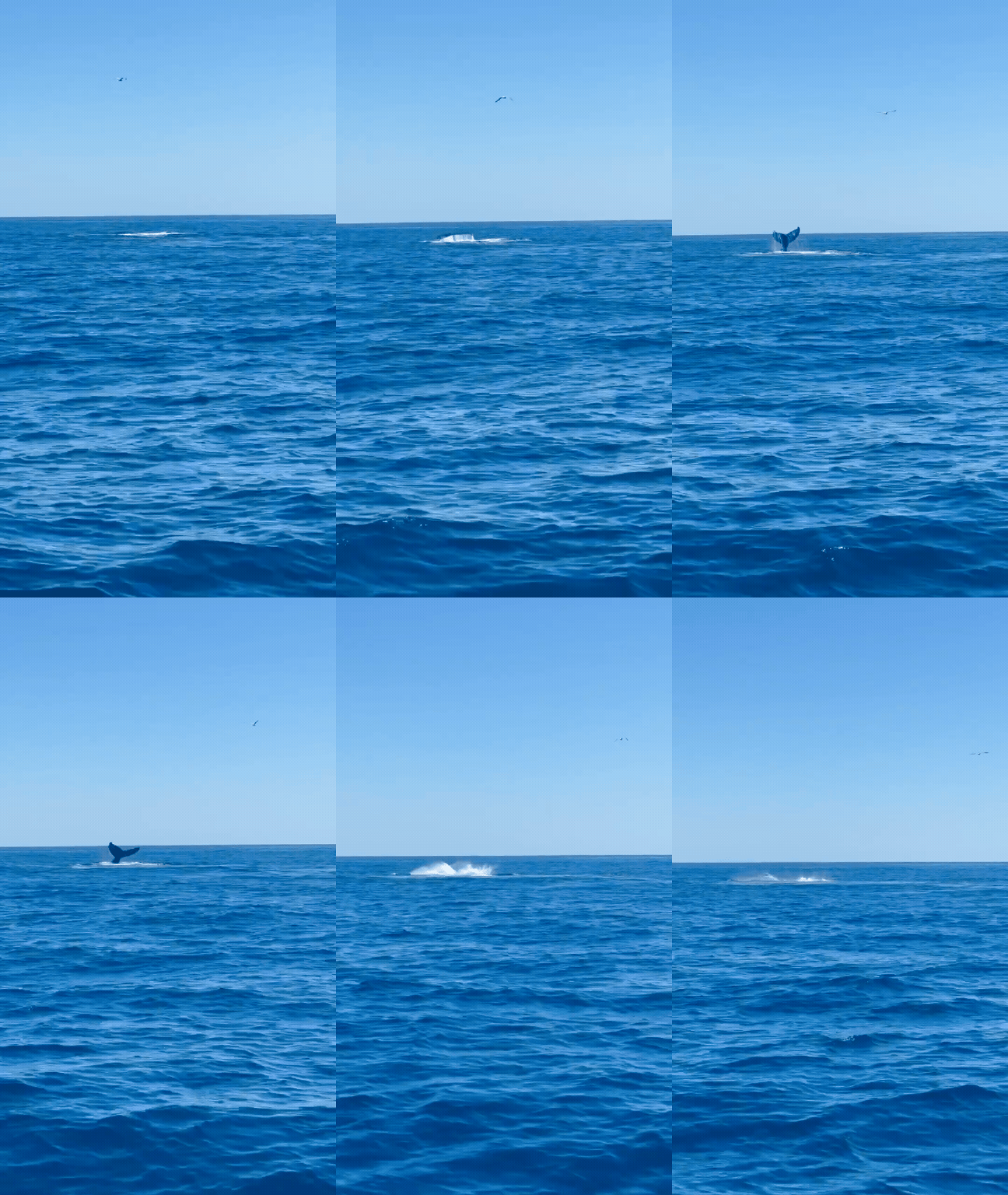
If you've ever wanted a front-row seat to one of nature's most spectacular events, whale watching in Cabo San Lucas should be at the top of your list. Every year, the waters of the Pacific Ocean and the Sea of Cortez become the backdrop for one of the most remarkable wildlife migrations on the planet — and Los Cabos puts you right in the middle of it.
I've been lucky enough to experience this firsthand, and it's the kind of thing that's hard to put into words. Watching a humpback whale breach just off the bow of a boat, or spotting a gray whale mother and calf drifting through calm water, is a life-changing experience that no resort pool or tasting menu can compete with.
This post contains affiliate links. I may earn a small commission if you book through them, at no extra cost to you.
Quick Facts:
When: the official whale watching season is December – April. The peak time to see the most whale activity is January – March.
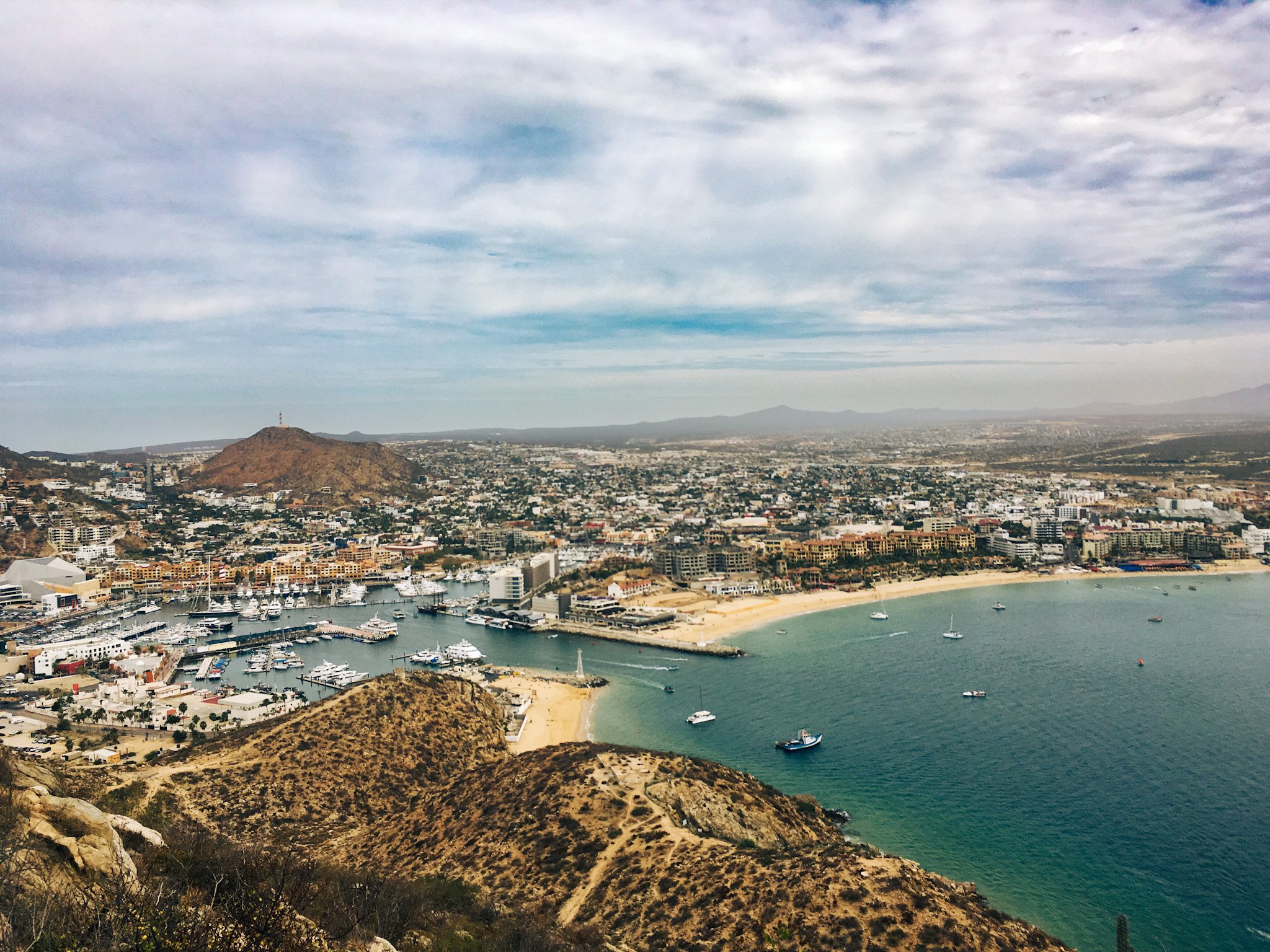
Where: most tours depart from the Cabo San Lucas Marina. There are limited tours from the Marina Puerto Los Cabos in San Jose del Cabo.
How: a 2 – 3 hour whale watching tour on a boat with a licensed tour operator.
Tour recommendations: Whale Watch Cabo or Cabo Trek for ethical whale watching in Cabo San Lucas.
Why Cabo for Whale Watching?
The Baja Peninsula sits at a rare geographic crossroads. The Pacific Ocean meets the Sea of Cortez here, creating nutrient-rich waters that attract an extraordinary concentration of marine life. Jacques Cousteau famously called this region the "aquarium of the world" — and the whale watching alone backs that up.
The waters of Cabo San Lucas and San José del Cabo offer sightings of multiple species throughout the season, including gray whales and humpback whales. And while not whales by scientific classifications, tourists also have the chance to see orcas and whale sharks.
The Best Time for Whale Watching in Cabo
December through April is your window — and within that, January through March is peak whale season for the best overall experience. This window is also set by SEMARNAT, Mexico's environmental agency, which regulates when licensed whale watching tours are permitted to operate. That said, whales are wild animals who don't follow our calendar so there are no guarantees. Here's how the season breaks down for your best chances:
December: Gray whales begin arriving in Baja California's lagoons to breed and calve. An excellent time to go with fewer boats on the water.
January – March: This is the sweet spot. Gray whale activity peaks, humpback whales are putting on a show with breaches, tail slaps, and surface activity. Migration patterns are in full swing, and the concentration of whales is at its highest. If you can only go once, go now. We only spotted gray whales during our early February visit to Los Cabos, my husband was treated to many humpbacks breaching a few weeks later in early March.
April: The tail end of the season. Whale numbers begin to thin as migration patterns shift and the animals start heading north, but sightings are still very much possible and this is a quieter time to go with fewer boats competing for the same water. FWIW, I went in late April and had zero whale sightings.
Outside the season (May – November): Whale sharks take center stage in the Sea of Cortez from October through May — a different bucket-list experience worth planning around if your travel dates fall outside whale season.
What Species Will You See?
The Cabo whale watching season draws several species into these waters. These are the most popular, that you are most likely to see:
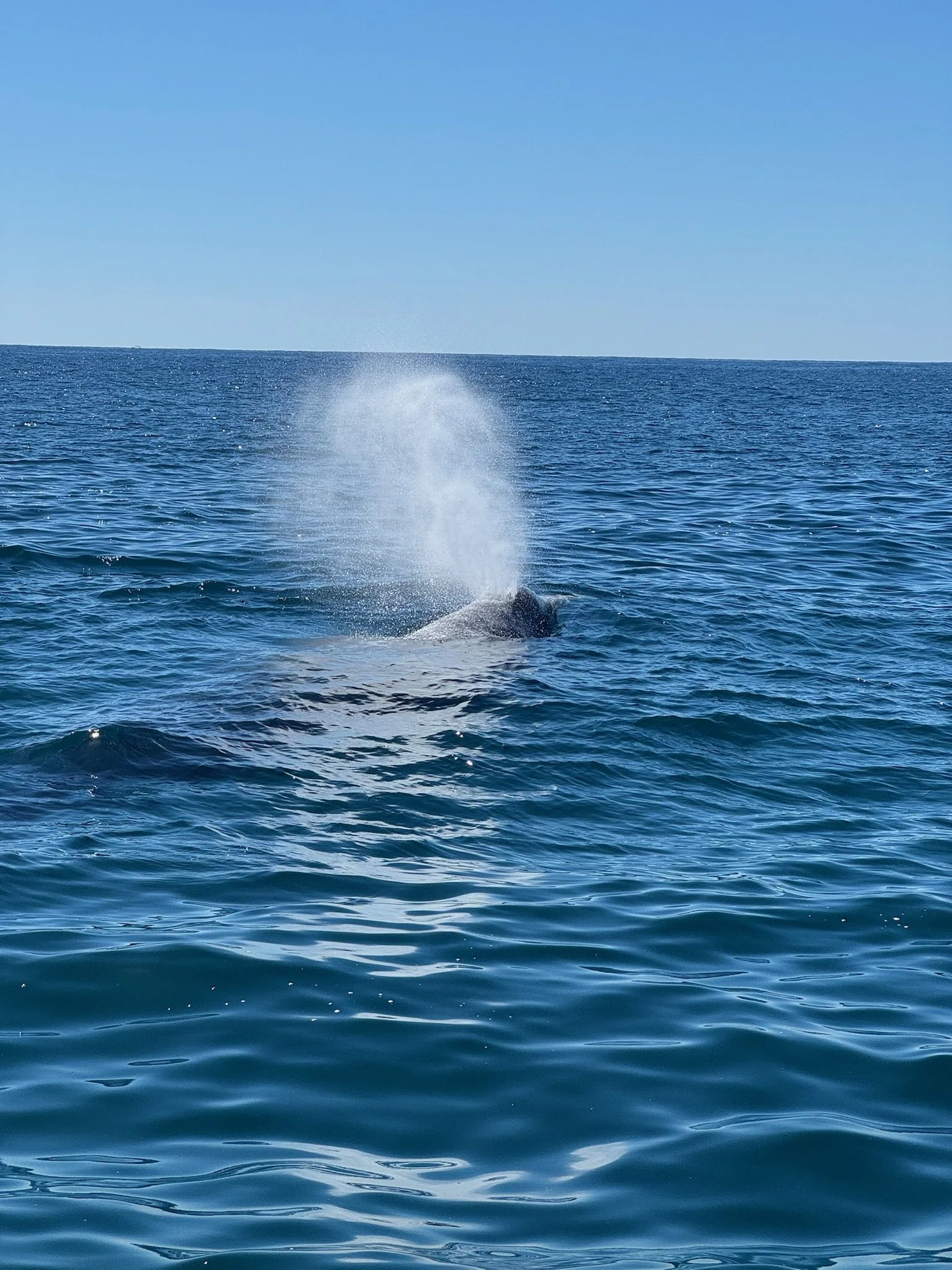
Gray Whales — The stars of the season. Gray whales make one of the longest annual migrations of any mammal, traveling from their feeding grounds in Alaska down to the warm lagoons of Baja California to breed and give birth. Watching a gray whale mother navigate the shallow waters with a brand new calf is something you won't forget. These whales move in a more serpentine motion so you'll frequently see their back and tail breaching. You'll also occasionally get a playful fin slap.
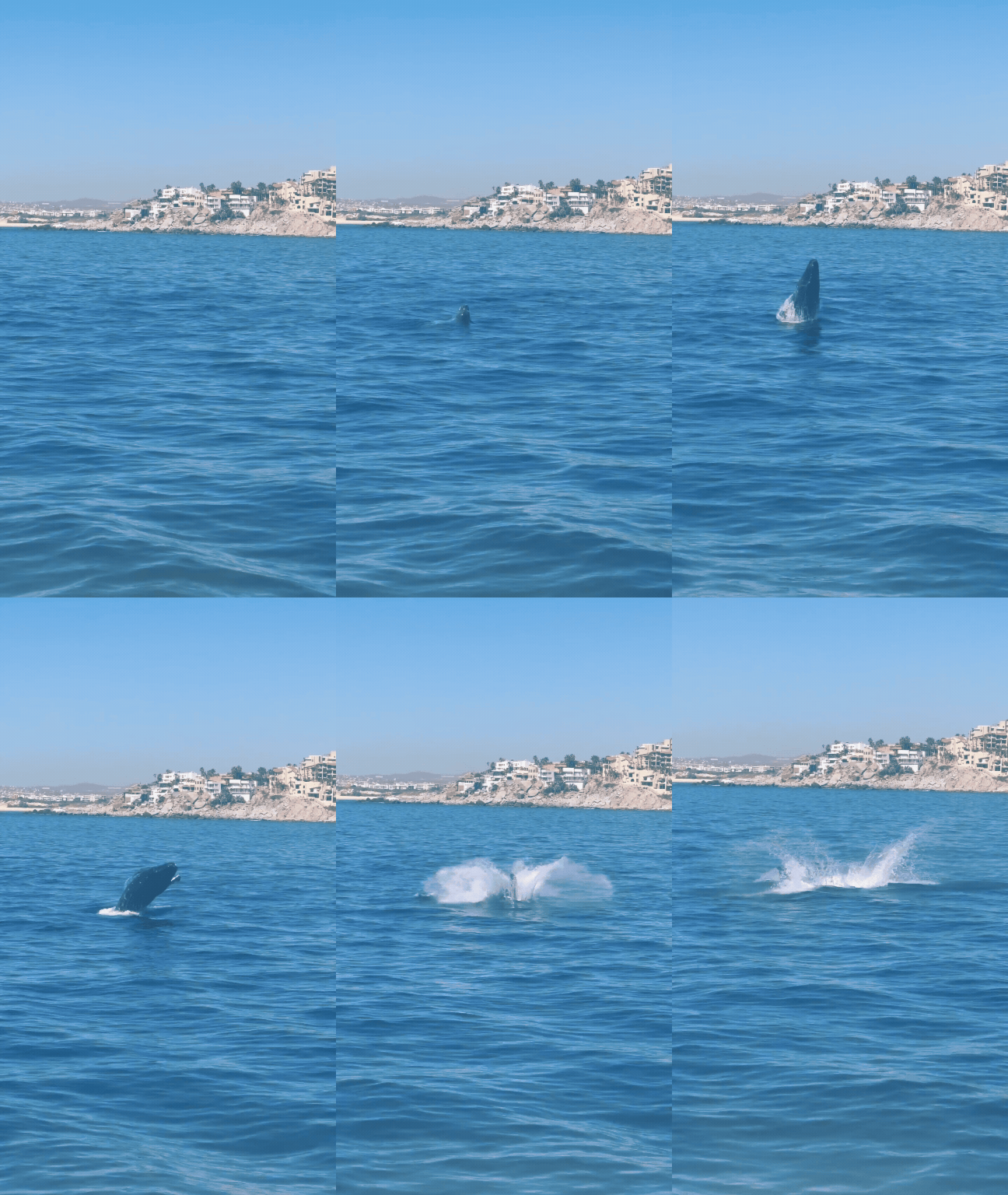
Humpback Whales — The performers. Majestic humpback whales are the most acrobatic of the species you'll encounter in Cabo — known for their dramatic breaches & fin slaps.
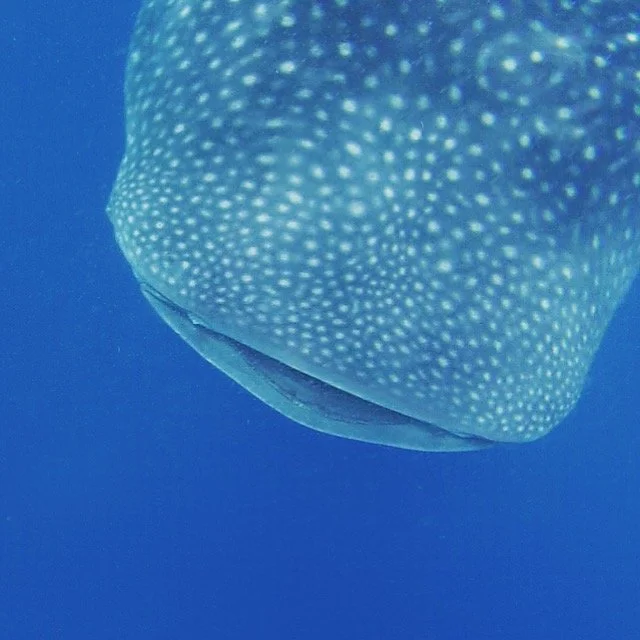
Whale Sharks - Not technically a whale, but too remarkable to leave out, these majestic creatures hang out below the surface, feeding on plankton. These gentle giants are found in the waters near La Paz and are best experienced via a day tour from Los Cabos.
Other less common whales also visit the waters around the Baja Peninsula - seeing one of these is more of a chance encounter and you won't see any dedicated tours for them. Some of these less common species include:
Orcas (killer whales) – Also, technically not a whale, orcas live around Baja year-round. They can be seen around Los Cabos when humpback whales are birthing, near La Paz when the mobula rays congregate, and in the Pacific near Magdalena Bay for the annual sardine runs.
Fin whales – Fin whales live year-round in the Sea of Cortez and are commonly spotted around Loreto.
Sperm whales – Sperm whales can be found in the Sea of Cortez and the Pacific but are rare to see. When you do spot them, they typically travel in large groups and will be seen resting at the surface after feeding at low depths.
Choosing a Tour
Not all whale watching tours are created equal, and since you're making the trip, it's worth choosing well.
Private Tour vs. Group Tour
A private tour gives your group the flexibility to spend more time with a single pod, take a different route based on where the whales are active that day, and move at your own pace. It's the best way to go if you're traveling with a group, celebrating a special occasion, or simply want a more focused experience. Group tours are a solid, more affordable option — just know you may be sharing the boat with a large and enthusiastic crowd.
What to Look For:
A qualified marine biologist or naturalist on board. The best companies employ guides with extensive knowledge of whale behavior and the ecosystem — your experience is dramatically better when someone can narrate what you're seeing and why it matters.
Smaller vessels. Fewer boats and smaller vessels mean a more intimate experience and less disturbance to the whales. Look for companies that limit group size.
Conservation efforts. Responsible operators follow guidelines that protect the whales' natural habitat — maintain safe distances, limit engine noise, and avoid crowding. Ask about their approach before you book.
Humpback & Gray Whale Watching:
Quick Facts:
Where: Los Cabos, Todos Santos and Cabo Pulmo.
When: December – April.
How: A single-day whale watching tour, most commonly departing from Cabo San Lucas marina
Tour Recommendation: Whale Watch Cabo and Cabo Trek are my top picks for ethical whale watching in Cabo San Lucas.
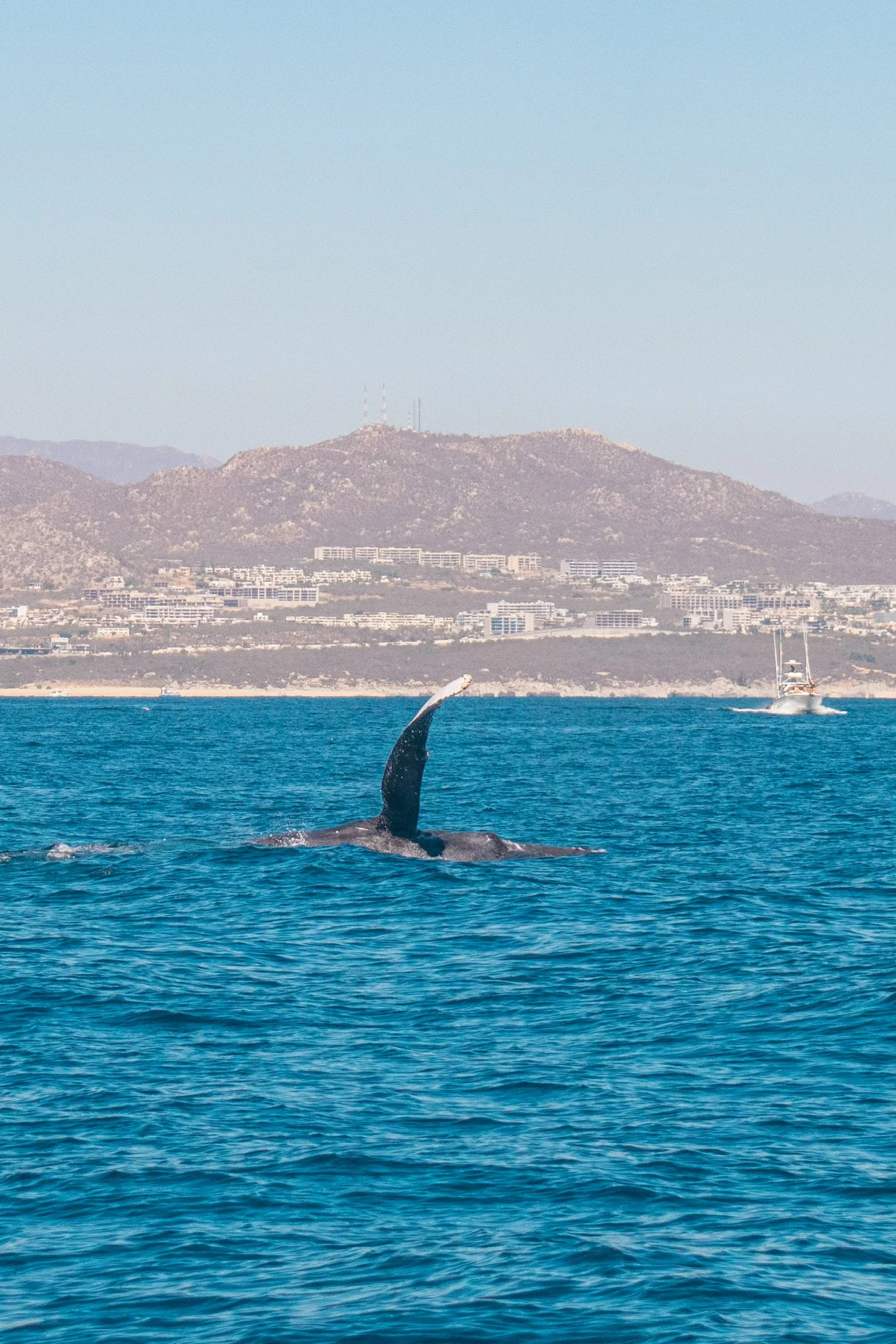
Of the two species, humpbacks are the showstoppers. They're acrobatic, unpredictable, and — if you're in Los Cabos during January or February — almost impossible to miss. From any beach along the corridor, keep your eyes on the horizon and you'll spot spouts and, if you're lucky, full breaches right from the shore.
Gray whales tell a different story. They move through the water in a slower, more serpentine way — you'll see the arc of their back and a lazy tail before they slip under again. Rather than launching themselves out of the water, they're more likely to treat you to a fin slap or a long, unhurried surface before diving. Less dramatic than a humpback breach, but there's something quietly magnificent about watching one glide past the boat.
The species you're most likely to encounter shifts as the season progresses. We spotted primarily gray whales during our early February visit, while my husband's early March trip treated him to humpbacks breaching nonstop. If you have a preference, time your trip accordingly — but honestly, either is worth the early wake-up call.
Swimming with Whale Sharks:
Quick Facts:
Where: In the Sea of Cortez off the coast of La Paz.
When: The official season for swimming with whale sharks runs from October – April
How: A tour with a licensed operator, generally lasting 2 – 3 hours, to swim alongside the whale sharks.
Tour Recommendations: If you are staying in Los Cabos and are looking for a day tour that departs from there, check out Cabo Trek.
While not technically a whale, I'm including whale sharks in this guide — the opportunity to swim with them is a life changing experience.
La Paz is one of the few places in the world where you can swim with whale sharks. Each year, from October to April, whale sharks migrate to the Sea of Cortez off the coast of La Paz. These gentle giants can grow up to 60 feet in length, but don't pose a threat to humans as they only eat small microorganisms like plankton and krill.
Swimming with whale sharks is highly regulated. Approved tour operators take small groups to the feeding zone, where you're able to jump in the water to snorkel next to a whale shark. In addition to being a licensed operator, other regulations include:
A limited number of boats are permitted each day, for a maximum of three hours
Only one boat may approach the whale shark - while staying at a minimum distance.
When you jump in the water, you'll be accompanied by a guide with a maximum of six snorkelers at a time
There is no feeding or baiting
What to Expect on the Water
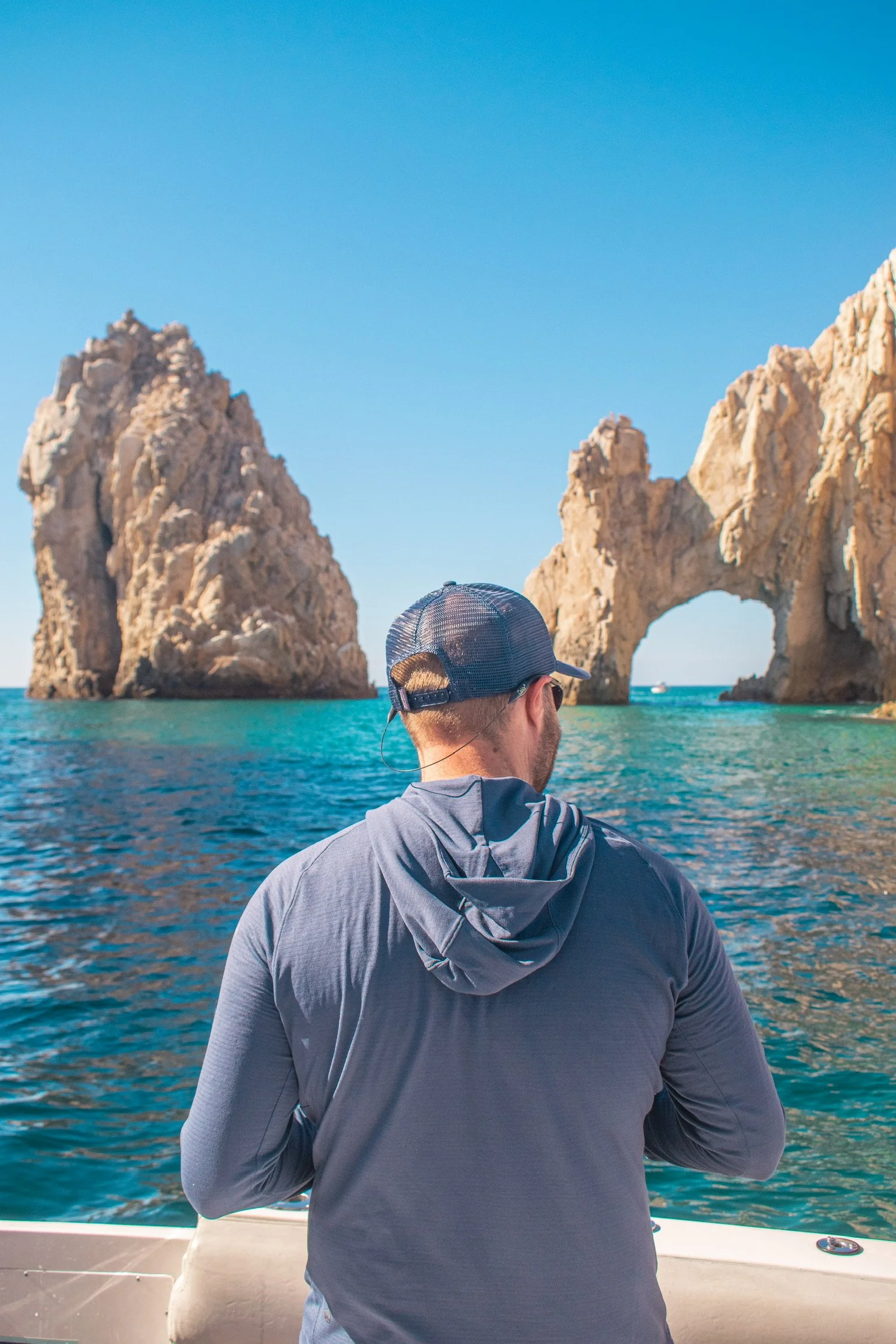
Most whale watching tours depart from the Cabo San Lucas marina and run 2–3 hours. Here's what to know before you go:
The boats: Tours operate on everything from small pangas to larger vessels and cruise-style boats with open bars. Larger vessels offer more stability — worth considering if anyone in your group is prone to seasickness. Smaller boats get you closer to the action.
What you'll see: On a good day — and most days during peak season are good days — expect to see 4–5 whales at minimum, often more. Tail slaps, spy-hops, and full breaches are common January-March.
Bring: Layers (mornings on the water are cool), sunscreen, a hat, sun shirt, motion sickness medication if needed, and a camera with a zoom lens if you have one. Leave the expensive gear at home if seas are choppy. Click here for my full Cabo packing list.
Planning Tips
Book in advance. The best private tour operators and smaller boats sell out weeks ahead during peak season. Don't leave this one to last-minute.
Go early. Morning departures typically offer calmer seas and better light for photos. Whale activity doesn't follow a schedule, but conditions are usually calmer before the afternoon winds pick up and increase chop.
Los Cabos vs. La Paz: Both offer excellent whale watching. The waters of Cabo San Lucas are more accessible if you're based in Cabo San Lucas, San Jose del Cabo or the Los Cabos hotel corridor. La Paz offers access to whale shark encounters in the Sea of Cortez and is worth the drive if you have a full day to spare.
The Bottom Line
Whale watching in Cabo is one of those experiences that catches people off guard — they come for the beach and leave talking about the whales. The combination of species diversity, the stunning Pacific Ocean backdrop, the Sea of Cortez meeting point, and the sheer abundance of marine life during peak season makes this one of the best whale watching destinations in the world.
If it's on your radar, don't talk yourself out of it. Book the tour, go early, and bring a good camera. The whales will take care of the rest.
Whale Watching in Cabo FAQs
Is whale watching in Cabo regulated?
SEMARNAT (the Secretariat for Natural Resources, Mexico’s environmental agency) regulates whale watching all over Mexico. Regulations include:
where whale watching activities can occur
training and licensing for operators
permit systems for tour companies
strict rules on how whales can be approached
How do I make sure my operator is legit?
Choose a licensed operator.
There are so many boats in the waters around Cabo (fishing, booze cruises, water taxis, snorkeling tours, private yachts) and it seems like everyone has, or knows someone with a boat. That doesn't necessarily mean they are trained in properly interacting with whales in an ethical manner.
Licensed operators who have undergone the training and met SEMARNAT criteria are issued a whale watching flag each season, which must be flown on their vessel.
What time of the day is best for whale watching in Cabo?
Most tour companies offer multiple tours each day - so how do you choose the best one?
My personal recommendation if your schedule allows is to head out in the morning. Here's why:
Ocean conditions: The water is generally calmer and less choppy in the morning. If you are prone to sea sickness, opt for a morning tour. Generally, waters tend to get choppier throughout the day - this can sometimes mean increased whale activity but sacrificing your comfort could impact your overall enjoyment of the experience.
Boat Traffic: As I've already mentioned, there can be a lot of boat traffic in Cabo, especially in peak tourist season. The earlier you're out on the water, the quieter it will be. Morning tours leave later than most of the deep sea fishing boats but before the party boats and snorkel tours get into full swing.
What is the difference between taking a whale watching tour in San Jose del Cabo vs. Cabo San Lucas?
Most tours leave from the Cabo San Lucas Marina, but for those that are maybe staying closer to San Jose, you can find a few options departing from there. Here are the key differences between whale watching in San Jose del Cabo vs. whale watching in Cabo San Lucas:
Location: Tours departing from San Jose will primarily take place in the Sea of Cortez. In Cabo San Lucas, tours have the option of heading west into the Pacific Ocean or east into the Sea of Cortez, depending on where whales have recently been sighted.
Boat traffic: the main benefit of whale watching in San Jose del Cabo is that there are far fewer boats around compared to Cabo San Lucas. San Jose doesn't have the cruise ships, party cruises, massive yachts and water taxi traffic so you'll get a quieter experience.
Pairing with other activities: The Cabo San Lucas marina is in the heart of town, making it easy to grab lunch or dinner after your tour. In contrast, the San Jose del Cabo marina is a bit further removed from El Centro, so be prepared to have to hop in the car to get to your next stop on the agenda.
Hi, I’m Jess
I’m here to help you plan epic adventures. If you’re looking for authentic travel guides that mix luxe lodging and incredible dining with out of this world hikes and adventures, you’re in the right place.





Your complete guide to the best time to visit the Isle of Skye