Scuba Diving In Cabo Pulmo, Mexico, is it worth it?
If you're looking for world-class scuba diving on Mexico's Baja California Sur peninsula, Cabo Pulmo should be at the top of your list. Forget the glitzy resort diving you'll find closer to Cabo San Lucas — this is something entirely different, and entirely unforgettable.
This post contains affiliate links. I may earn a small commission if you book through them, at no extra cost to you.
About Cabo Pulmo
Cabo Pulmo National Marine Park is one of the most remarkable dive destinations in the western hemisphere. Located along the East Cape of Baja California Sur, roughly an hour and a half north of San José del Cabo, this UNESCO World Heritage Site is home to the only living coral reef in the Sea of Cortez — and one of the oldest in North America, estimated to be around 20,000 years old.
What makes Cabo Pulmo truly special is its conservation success story. After decades of overfishing nearly wiped out the marine ecosystem, local families made the radical decision in 1995 to stop fishing and advocate for full federal protection. The results have been staggering. Marine biomass rebounded by over 460% in just over a decade, earning it recognition as one of the most successful marine conservation efforts in the world.
Today, the deep blue waters of Cabo Pulmo teem with an abundance of fish, marine species, and natural marine wonders that rival dive sites anywhere on earth.
Jacques Cousteau famously called the Sea of Cortez "the aquarium of the world" — and after diving Cabo Pulmo, you'll understand exactly why.
Our Experience
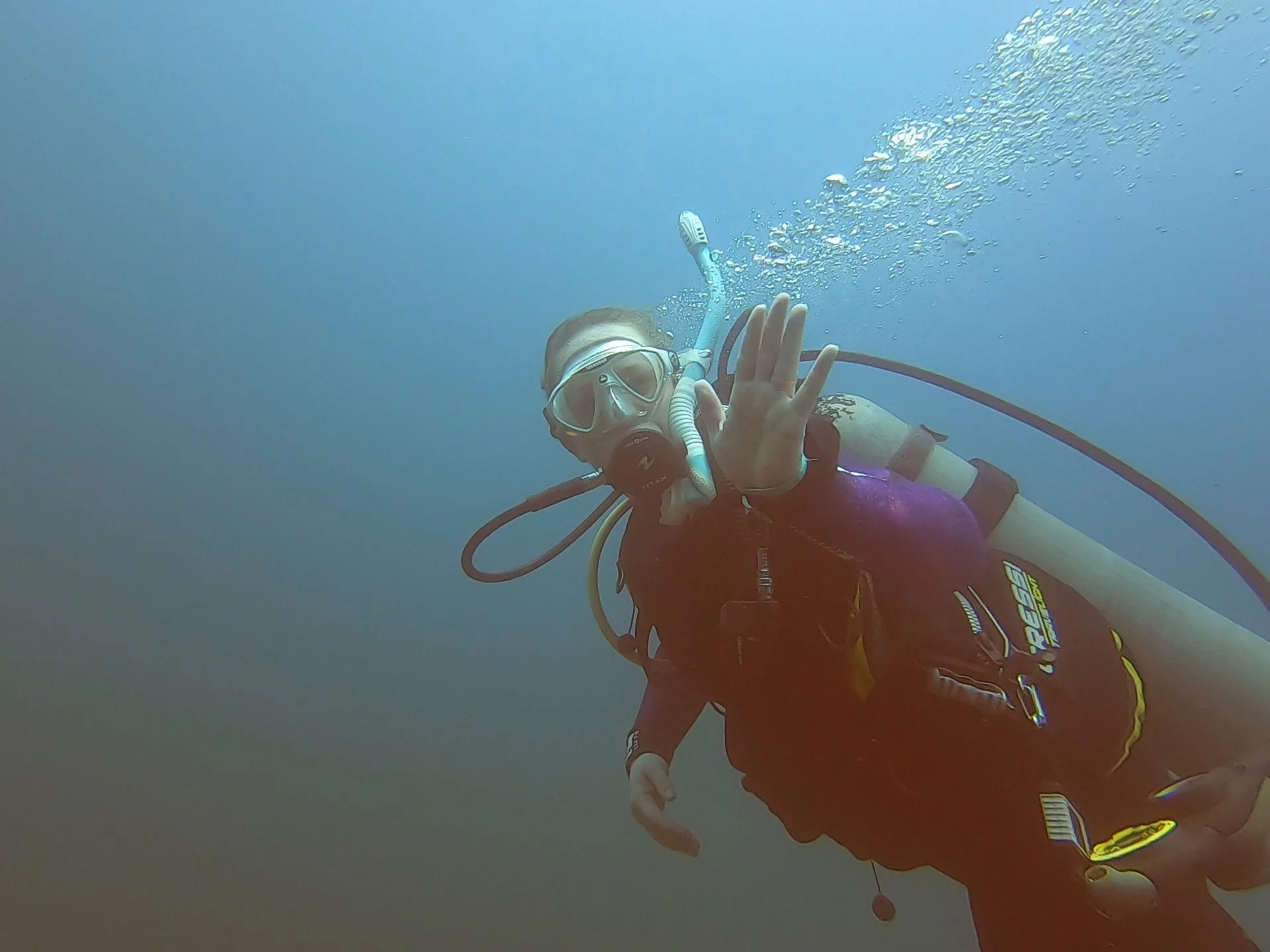
Our family visits Los Cabos annually at this point, often just for a few days — not enough time for a dive trip. So when we planned a week-long trip, we knew scuba diving had to be at the top of our list of activities (we are open water certified). As we started researching the various dive sites available in Cabo, Cabo Pulmo quickly jumped to the top.
Our day started with meeting at the Dive Cabo shop on the marina in Cabo San Lucas. From there, we hopped in a van to make the two-hour drive to Cabo Pulmo. We followed the highway route (more on your options below) and despite not having ocean views, it was still incredibly scenic driving through the Baja desert — mostly dotted with cacti, with a few cows in the middle of the road along the way for good measure.
Pulling into Cabo Pulmo is a world away from the resort aesthetic of Los Cabos. The buildings here are small, with thatched roofs and water cisterns. We got all of our gear prepped in an open-air palapa and loaded our tanks and BCDs into a pickup truck for transport down to the beach. Before getting on the boat, our dive guide gave us a briefing at the national park hut, where we learned that the marine park is divided using a grid layout — this determines which areas each tour operator can access on any given day to help protect the marine environment from over-tourism. So far, pretty standard stuff, right?
Well, our entry into the water was a first for me. Cabo Pulmo doesn't have a marina, and the dive sites are just far enough offshore that you still need a boat to reach them efficiently. The boats are small — fitting a maximum of seven divers plus the captain, who was navigating with an outboard motor in one hand and a cut-off bottle of Clorox to bail water in the other. They strategically placed us by size to make sure we didn't flip the boat. How did this boat get into the water, you ask? Great question. They backed us in on a trailer, attached to what I'm pretty sure was a 1990s GMC Jimmy.
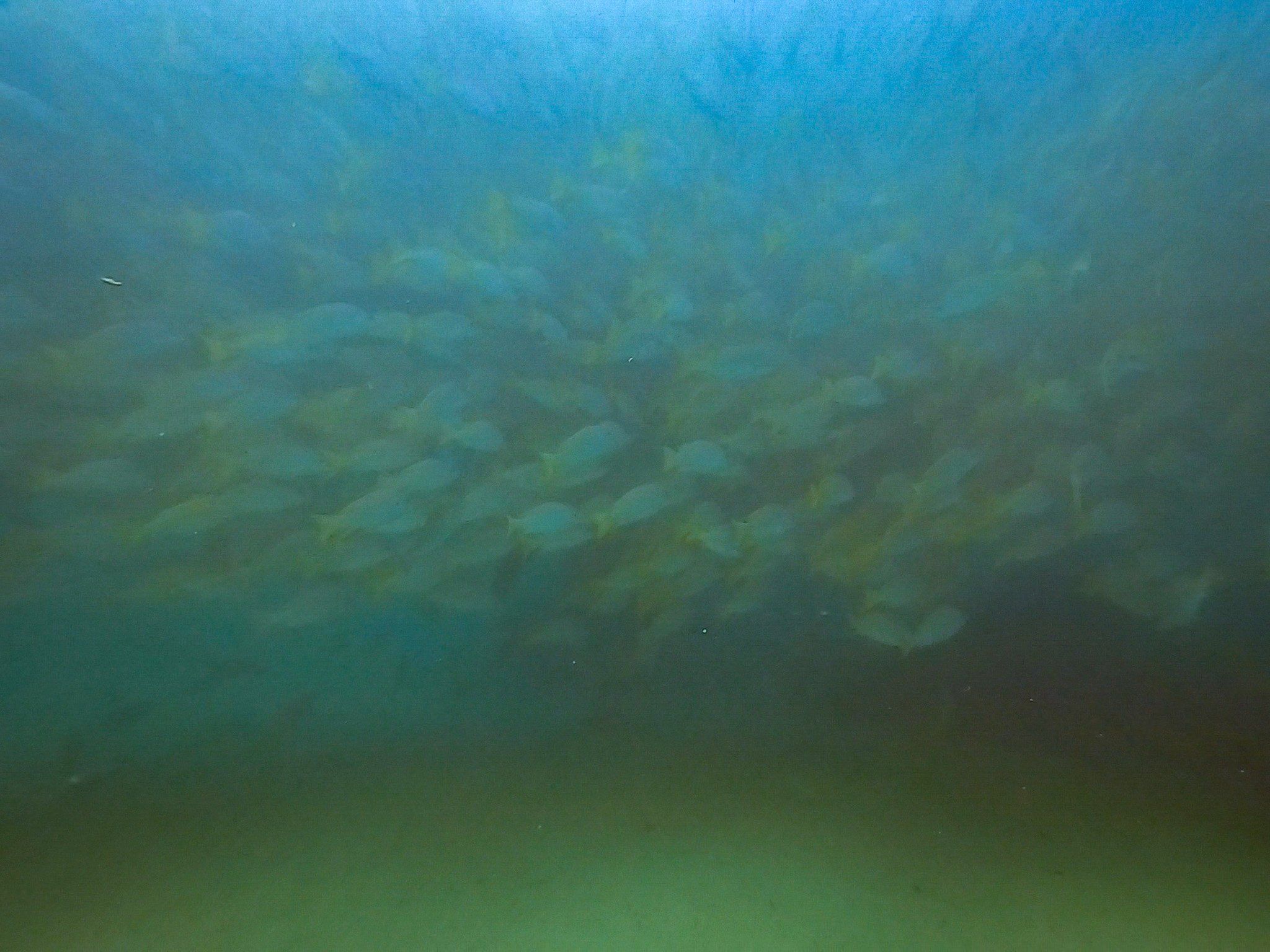
Our first dive treated us to tons of tropical fish along the reef, plus a massive school of jacks circling overhead.
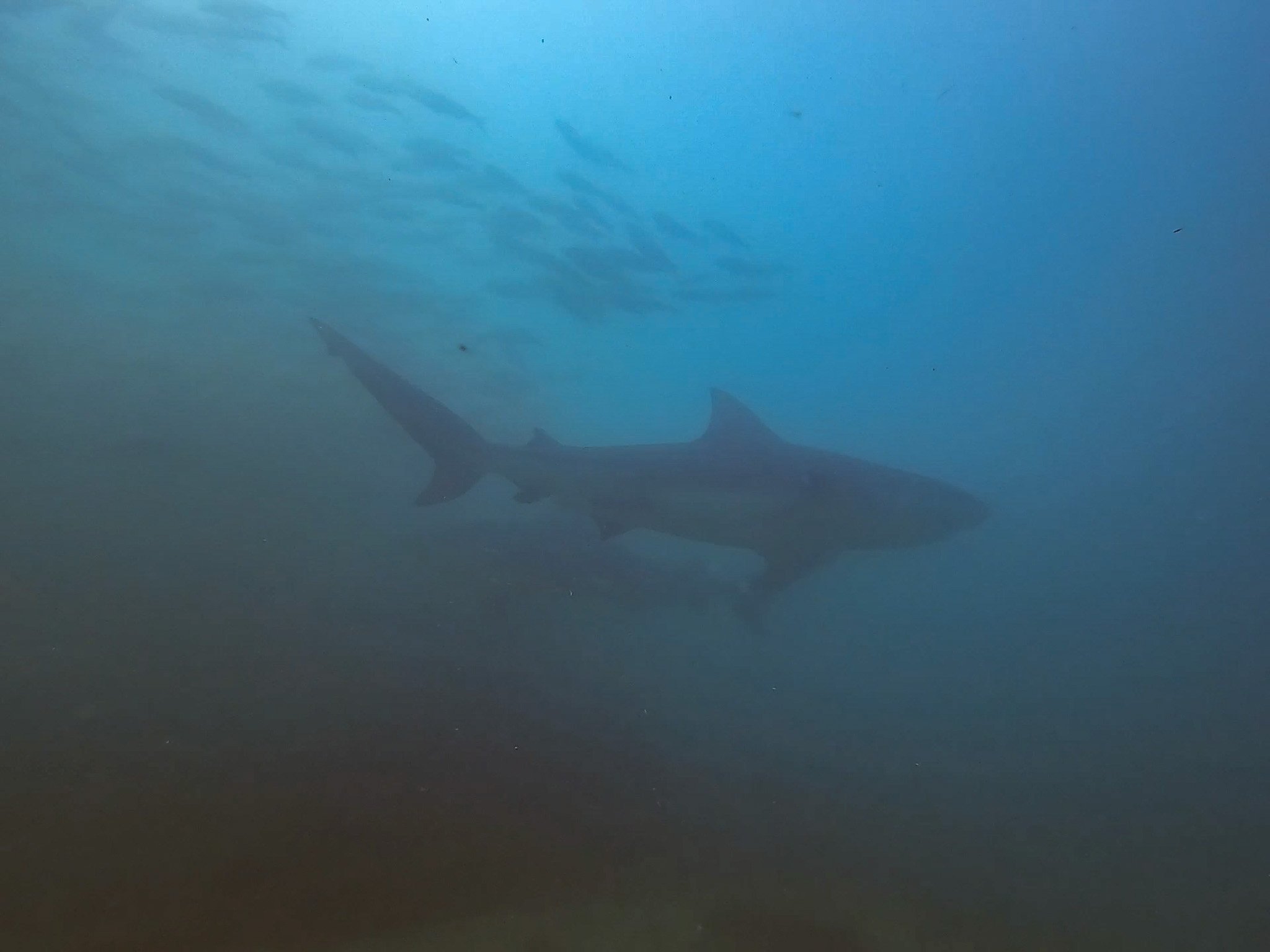
On the second dive, we dropped onto a sandy bottom where six bull sharks — each 8+ feet — paid a visit to the group before moving on. Casual. We've seen reef sharks before, but this was an entirely different experience. A little bit more of a pee in your wetsuit kind of reaction. With the limited visibility we had, they sort of just appeared out of the depths — a little bit ominous yet majestic at the same time.
We finished the day with some incredible fresh fish tacos in an open-air palapa before making the drive back to Los Cabos.
Cabo Pulmo Diving: What to Expect
Marine Life
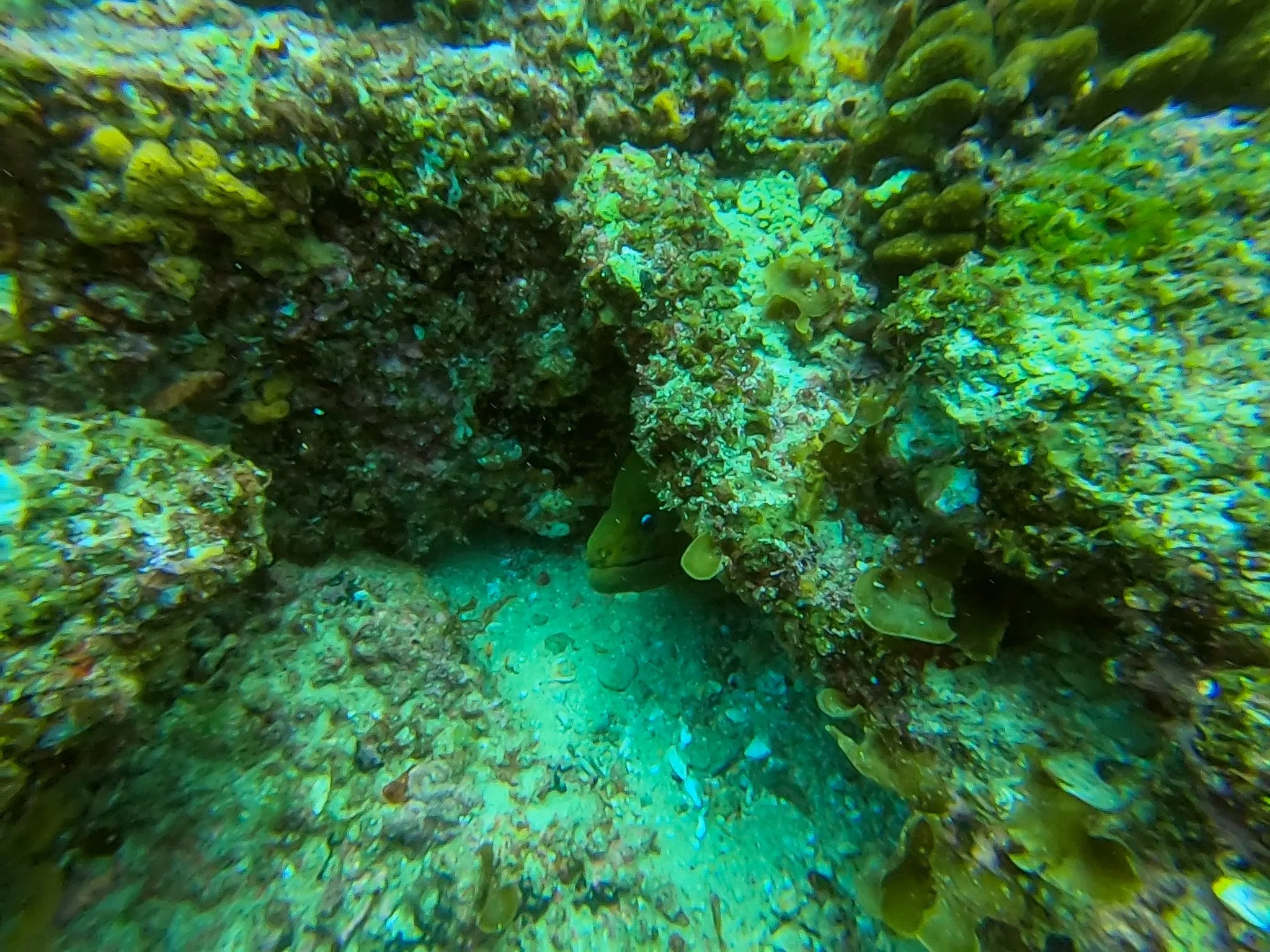
Cabo Pulmo is in a league of its own when it comes to marine life diversity. The national park's strict protections mean the ecosystem has had decades to fully recover. On any given dive you might encounter bull sharks, hammerhead sharks, sea turtles, moray eels, manta rays, mobula rays, and enormous schools of jacks that can block out the light above you. The rocky reefs are blanketed with vibrant coral and colorful tropical fish, while the sandy bottom dive sites attract pelagic species passing through. Sea lions are occasionally spotted, and during the right season, whale sharks and pods of dolphins make appearances too. Some divers also report being able to hear the songs of humpback whales in the spring months.
This Is a Full Day
Don't plan anything else. A trip to Cabo Pulmo — especially coming from Cabo San Lucas or San José del Cabo — is very much a full-day commitment. Between the drive, gearing up, two dives with a surface interval, a well earned lunch, and the leisurely journey back, you're looking at a sunrise-to-sunset kind of day.
Real Mexico, Not Resort Mexico
This is not a fancy dive resort with swim-up bars and world-class dive boats. Cabo Pulmo is a tiny, remote fishing village with a handful of small dive shops, some palapa-style restaurants, and dirt roads. The local community here has poured everything into protecting this reef, and that ethos permeates every interaction. The ruggedness is part of the charm. Embrace it.
What to Pack
Going in prepared makes a big difference. Here's what we'd recommend bringing:
Reef-safe sunscreen — regular sunscreen is harmful to the coral and is prohibited in the marine park
Cash (pesos) — Cabo Pulmo is remote; don't count on card readers or ATMs
A change of clothes for the drive back
An underwater camera or GoPro — you will want footage of whatever you see down there
Motion sickness medication if you're prone — the small boats can be extra bouncy in chop
Getting There from Cabo San Lucas
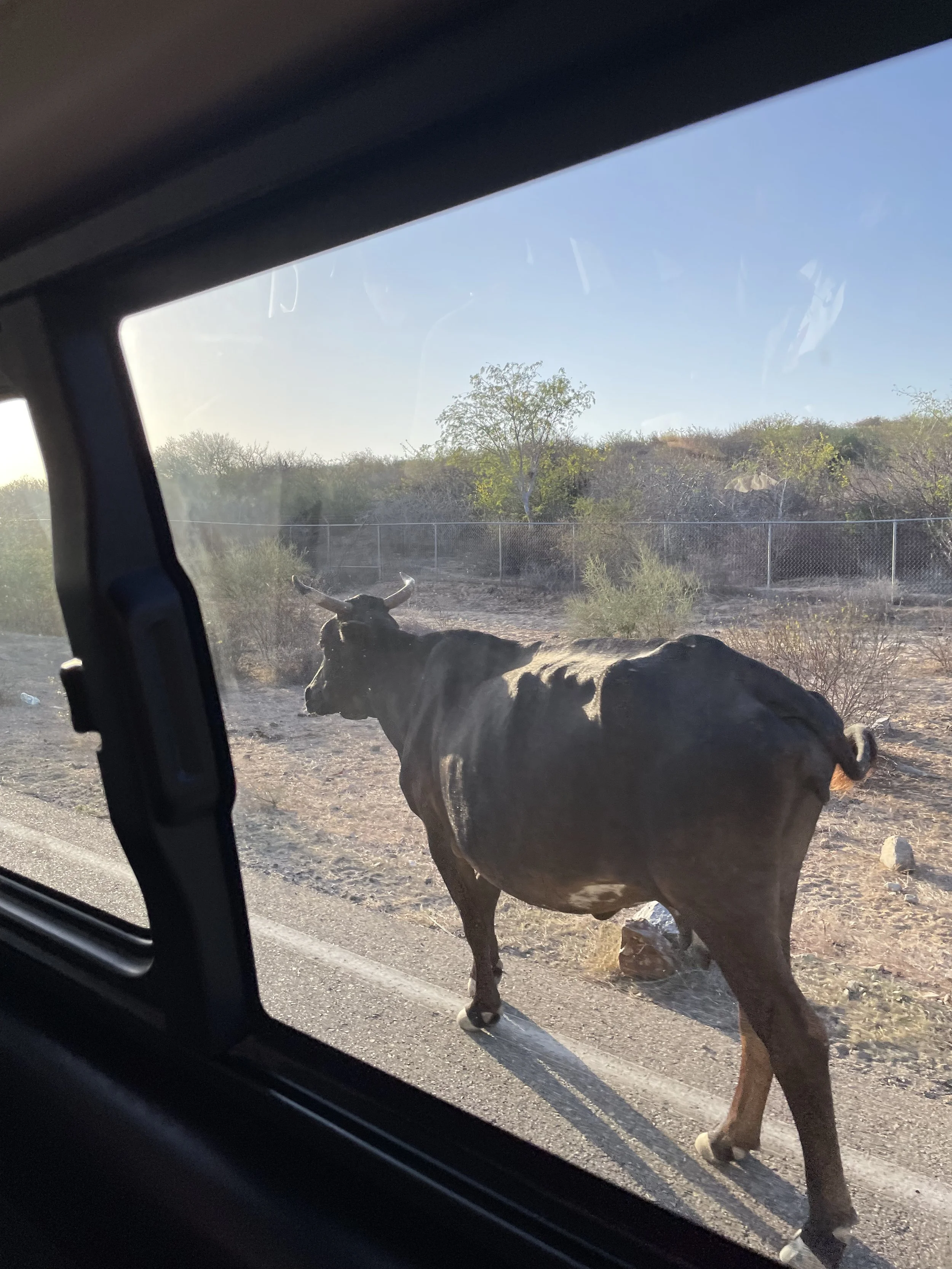
Driving to Cabo Pulmo
There are two main routes from Cabo San Lucas, and the total drive time ranges from about 2 hours depending on which route you take and road conditions. Regardless of which you choose, the final stretch into Cabo Pulmo itself is on a dirt road.
The East Cape Route (MEX-286 / Camino Cabo East): This is the more direct route hugging the coastline, and it's the scenic one — but know what you're getting into. A significant portion of this road is unpaved, rough, and best suited for a truck, SUV, or high-clearance vehicle. In dry conditions it's manageable and beautiful; after rain, sections can become impassable. If you're renting a vehicle, check your rental agreement — many prohibit driving on unpaved roads, which could affect your insurance coverage.
The Highway Route (MEX-1 to Los Barriles): The longer but mostly paved option. Take MEX-1 north toward San José del Cabo, continue through Santiago and on to Los Barriles, then follow the signs toward La Ribera and down to Cabo Pulmo. It adds time but is reliable in any weather and safer for standard rental cars. This is the route our Dive Cabo driver took, and it's what we'd recommend.
Either way, download an offline map before you go — cell service along both routes is limited.
Tours & Dive Shop Transfers from Cabo
If driving yourself sounds like a headache, booking through a dive shop that handles transportation is a great option — and honestly, it takes a lot of the stress out of the day. We went with Dive Cabo, and they handled everything: round-trip transportation, gear (if needed), and the dives. Having logistics managed by people who run this route regularly made a real difference.
FAQs
Do I have to be a certified diver?
To scuba dive at Cabo Pulmo, yes — you'll need to be a certified diver. Most operators require at minimum an Open Water certification. If you're not yet certified, it's worth completing a course before your trip; the diving here is too good to miss. Some operators may offer a resort or "Discover Scuba" experience for complete beginners, but options are limited, so confirm in advance.
What about snorkeling?
Absolutely — snorkeling at Cabo Pulmo is spectacular and requires no certification whatsoever. The rocky reefs are relatively shallow in places, the water is crystal clear, and the abundance of fish means you'll see plenty right from the surface. Huge schools of jacks, tropical fish, sea turtles, and colorful corals are all visible to snorkelers. It's a fantastic option for non-divers in your group.
What's the best time of year to go?
The short answer: late summer through fall for marine life, winter and spring for calmer conditions and visibility.
Water temperatures peak between July and October, reaching into the low-to-mid 80s°F (high 20s°C). These warm months bring the most dramatic marine life — bull sharks, hammerhead sharks, whale sharks, manta rays, mobula rays, and more are all most commonly spotted during this window.
Visibility tends to be best from spring through early summer and again in winter, when cooler, clearer water settles in. During peak summer months, plankton blooms can reduce visibility — and to be candid, when we visited in July, visibility was not the crystal-clear experience you see advertised. That said, seeing bull sharks up close made it an easy trade-off.
Spring (March–May) offers a sweet spot: warm enough water, good visibility, fewer crowds, and lower prices — a great time to go if you want a more relaxed experience.
Winter months are cooler, with water temperatures dropping into the low 70s°F, so plan your wetsuit accordingly.
Do I need a wetsuit?
Yes — even at its warmest, the water at Cabo Pulmo is cooler than you might expect. Some divers opt for just a skin in peak summer, but I found the water too cold for that. A 3mm wetsuit works well in summer; bump up to a 5mm in the cooler months.
Is it safe to dive there?
Cabo Pulmo is suitable for most certified divers. Currents can be moderate, and conditions vary by site, which is why diving with a knowledgeable dive master matters. The dive sites range in depth and difficulty, so communicate your experience level with your operator beforehand. Travel insurance that covers diving activities is always a smart idea.
What are the closest airports to Cabo Pulmo?
Los Cabos International Airport (SJD) in San José del Cabo is your closest and most practical option — it's about 1.5 hours from Cabo Pulmo and well-served by direct flights from cities across the US, Canada, and Mexico. There is no commercial airport in or near Cabo Pulmo itself. If you're flying into the region specifically for this dive, San José del Cabo is your gateway.
Should I tip my dive guide?
Yes. The guides here are deeply knowledgeable about the reef, often passionate about its conservation, and work hard to make your experience exceptional. A tip of $10–$20 USD per person per dive is customary and very much appreciated.
Can I Stay in Cabo Pulmo overnight?
Most tours or dive companies based on Cabo San Lucas/San Jose Del Cabo offer Cabo Pulmo as a day trip. If you're up for DIYing your visit, there are a few options for lodging as well as tour operators based in Cabo Pulmo you can coordinate with.
Lodging:
Have questions about diving Cabo Pulmo? Drop them in the comments below — happy to help.
More Los Cabos Travel Guides
If you found this helpful, here are a few more resources to help you plan your trip:
Hi, I’m Jess
I’m here to help you plan epic adventures. If you’re looking for authentic travel guides that mix luxe lodging and incredible dining with out of this world hikes and adventures, you’re in the right place.



Your complete guide to the best time to visit the Isle of Skye