The Best Reef-Safe Sunscreens for Hawaii (2026)
This post contains affiliate links. I may earn a small commission if you shop through them, at no extra cost to you.
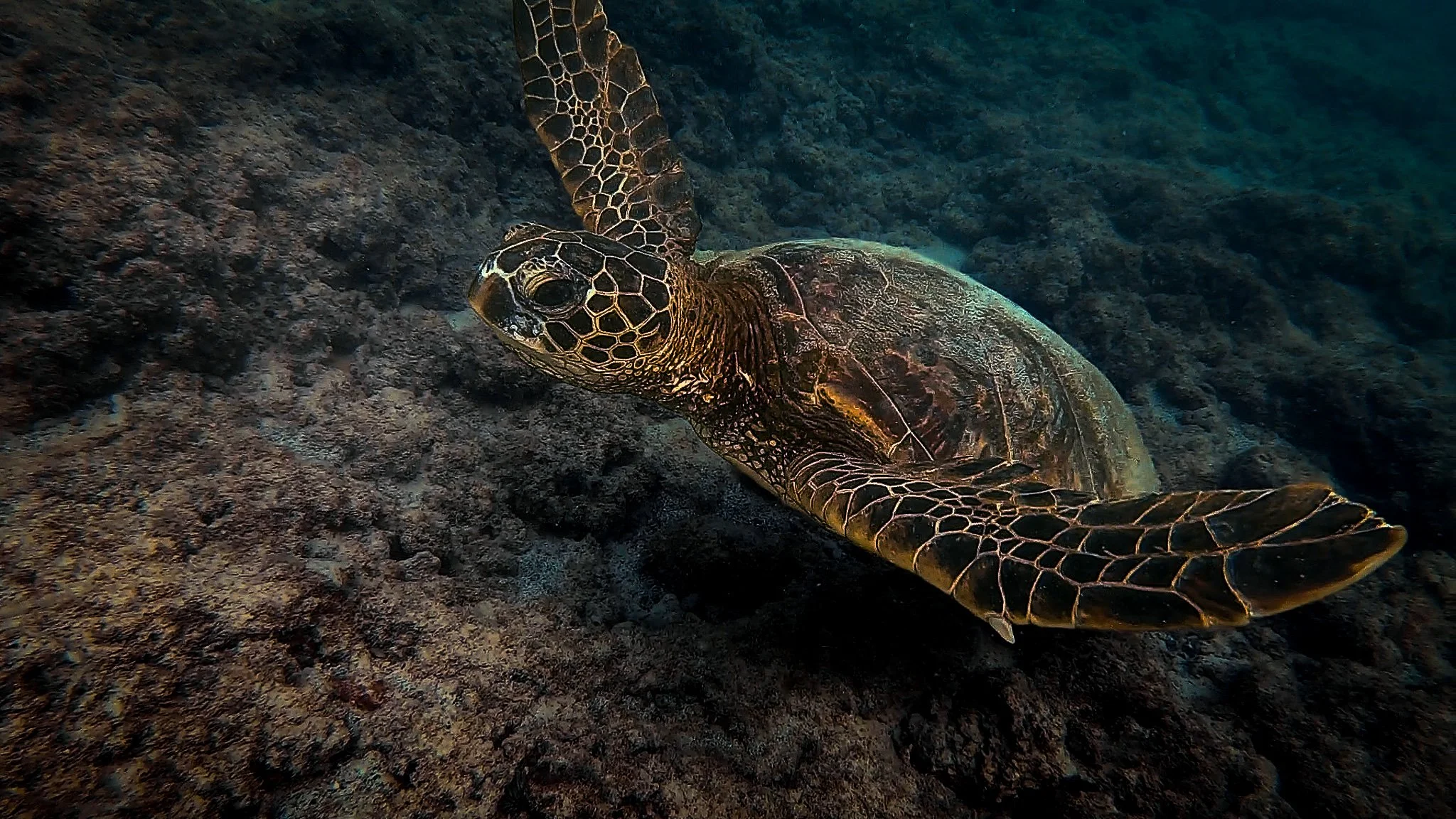
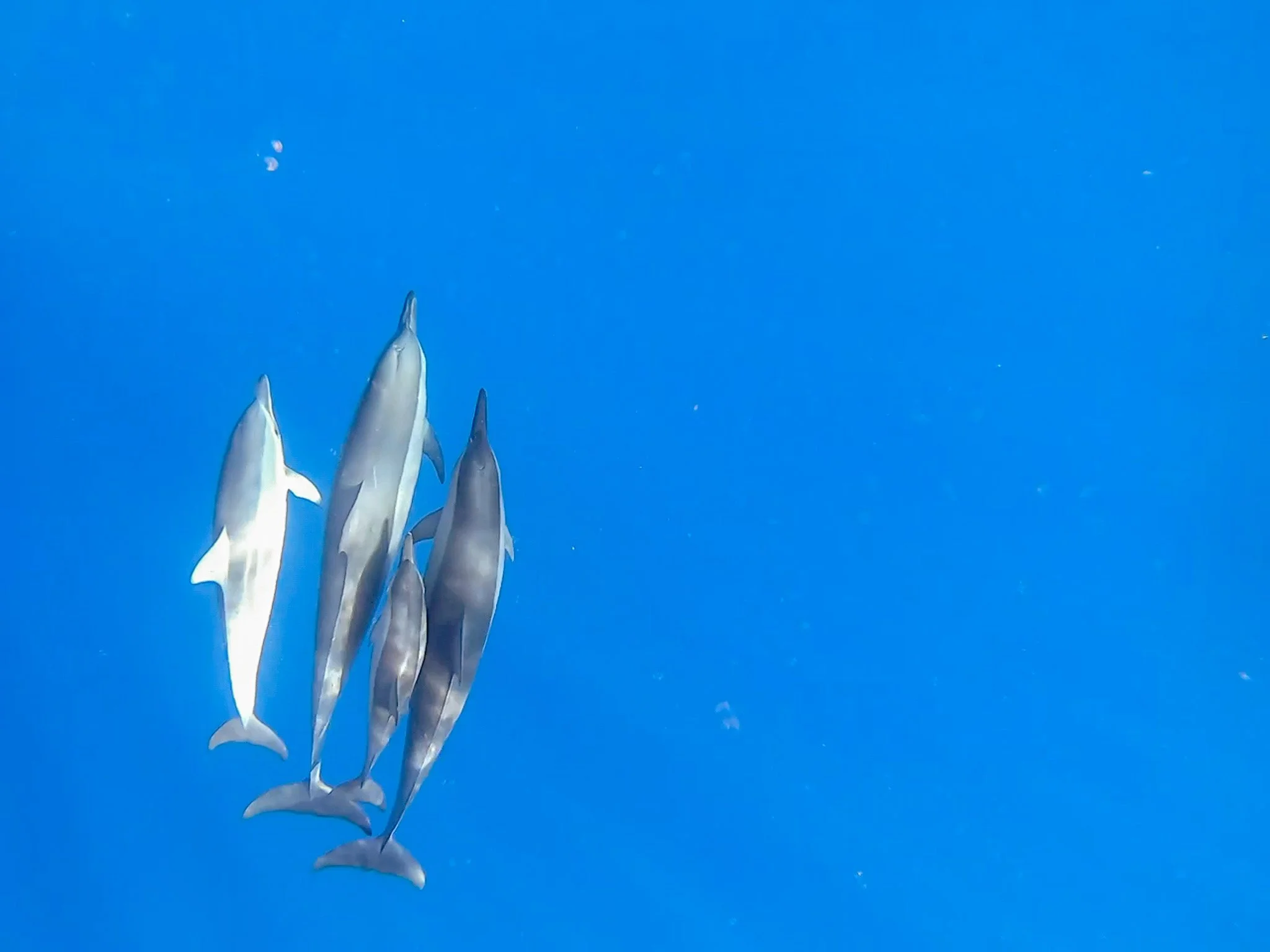
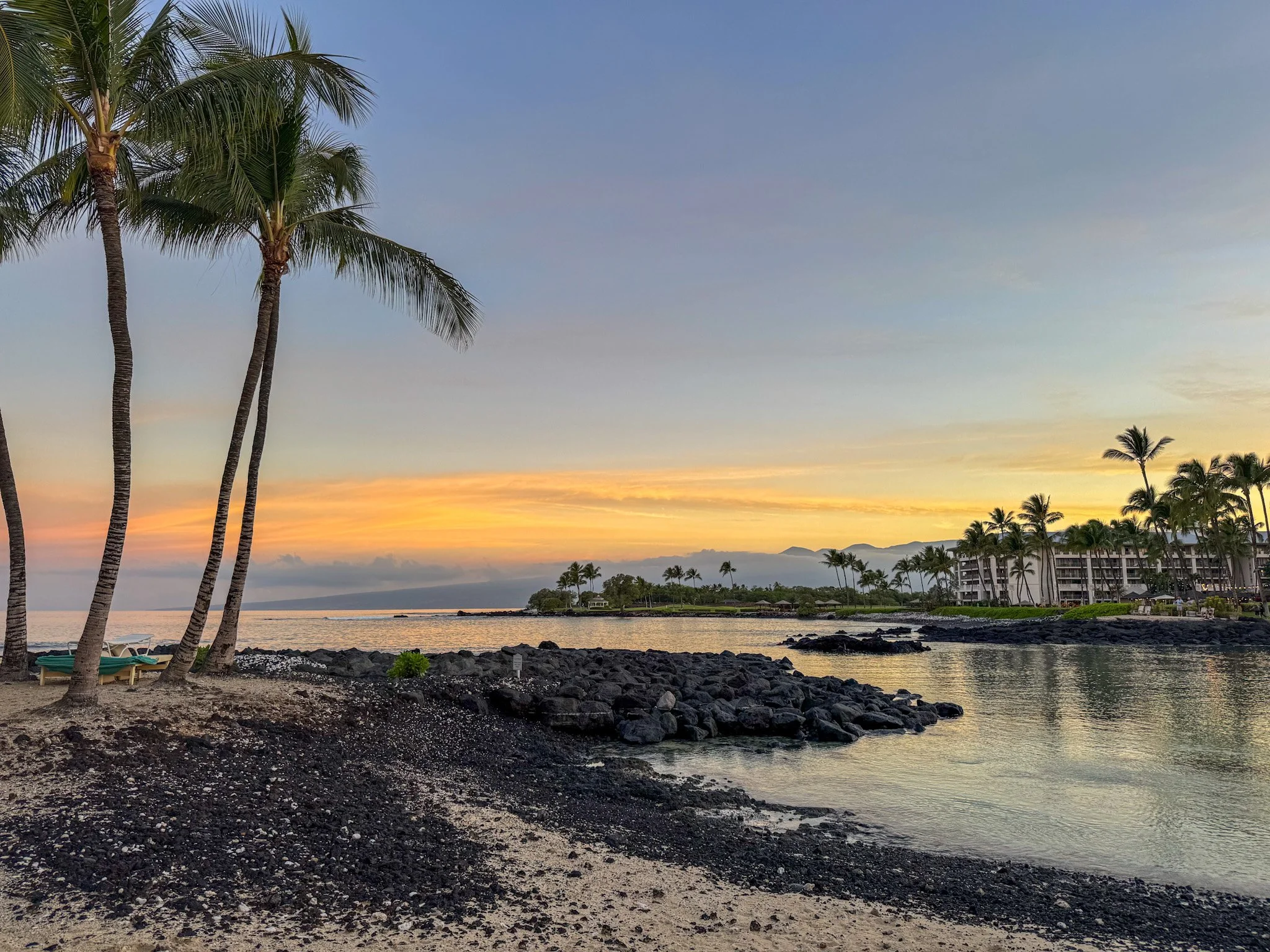
I've lost count of how many times I've stood at the edge of a Hawaiian bay, mask fogged, fins on, about to drop into some of the most beautiful water on earth. From snorkeling Pauoa Bay every morning during my stay at the Fairmont Orchid to floating above the coral at Two Step in Honaunau Bay, I've spent a lot of time thinking about what goes on my skin before I get in the water — because what I put on my body matters for those reefs just as much as not touching them.
If you're planning a trip to Hawaii — especially if you're snorkeling or scuba diving — reef-safe sunscreen isn't optional. Here's everything you need to know about Hawaii reef-safe sunscreen laws, ingredients to avoid, and the best mineral sunscreens to pack.
→ See my Hawaii packing post for or a full packing list and FREE printable download
In a Rush? Here are my favorite sunscreens:
Why Reef-Safe Sunscreen Matters in Hawaii
Hawaii's delicate coral reefs are not just beautiful — they're critical marine ecosystems that protect shorelines from erosion and support an enormous diversity of ocean life. Unfortunately, they're also under serious threat, and the sunscreen washing off tourists' skin is a documented part of the problem.
Research by the non-profit Haereticus Environmental Laboratories, conducted in partnership with NOAA, found that traditional sunscreens containing harmful chemicals — oxybenzone and octinoxate — contribute to coral bleaching. Baby coral exposed to these chemicals showed signs of distress, including bleaching, DNA damage, and irregular growth. Coral bleaching doesn't immediately kill coral, but it leaves reefs severely stressed, bleached white, and vulnerable to disease and death — and Hawaii's reefs are already under pressure from warming ocean temperatures, heavy visitor use, and harmful UV rays filtering through the water.
The cumulative impact is staggering. About 14,000 tons of sunscreen enter our oceans every year. When you picture the volume of visitors snorkeling Hanauma Bay or Molokini Crater on any given day, the math adds up fast.
Hawaii took action. Since January 1, 2021, sunscreens containing oxybenzone and octinoxate have been banned for sale and distribution statewide. Maui County and Hawaii County went even further, prohibiting the sale and use of all non-mineral sunscreens — meaning if you show up to the Big Island or Maui with a standard drugstore sunscreen, you could be in violation of local law.
As someone who has snorkeled these reefs many times over, and who helps clients book Hawaii travel as a travel advisor, I take this seriously. The reefs are the reason we go. Let's protect them.
What Actually Makes a Sunscreen "Reef-Safe"?
Here's where it gets a little confusing: "reef-safe" is not a regulated term. A product can be labeled reef-safe and still contain ingredients that are discouraged or restricted in Hawaii. Don't trust the front label — flip it over and read the active ingredients.
What you're looking for:
Zinc oxide or titanium dioxide as the only active ingredients. These ingredients provide broad-spectrum protection against both UVA and UVB rays while sitting on top of the skin to physically block harmful UV rays without dissolving in the water and harming marine life.
Non-nano particle size. Non-nano means the particles are large enough that coral won't absorb them. Both nano and non-nano zinc oxide are effective at UV protection, but the size matters for reef safety.
Free from oxybenzone, octinoxate, octisalate, octocrylene, homosalate, and avobenzone. These chemical UV filters have been linked to coral bleaching, DNA damage in coral larvae, and disruption of marine ecosystems.
Also worth noting: chemical sunscreens absorb into your skin, while mineral-based sunscreens create a physical barrier on the surface, blocking and reflecting UV rays. What's good for the reef tends to be gentler on your skin too. If you want the highest standard of verification, look for the Protect Land + Sea certification from Haereticus Environmental Laboratory — it's the most rigorous reef-safe standard available.
The Best Reef-Safe Sunscreens for Hawaii
After a lot of research and real-world testing in the water, here are the mineral sunscreens I'd feel confident recommending to my clients — and reaching for myself.
🥇 Badger Sport Mineral Sunscreen SPF 40 — Best Overall
Badger's reef-safe SPF 40 uses uncoated, non-nano zinc oxide as its only active ingredient, with just four total ingredients. It's earned top marks from the Environmental Working Group, offers 80-minute water resistance, rubs in evenly with minimal white cast, and comes out of the bottle easily. It's a certified B-Corp, woman-owned, and made in the USA. For snorkelers who want the most straightforward, trustworthy option, this is it.
Badger also offers a Clear Mineral formula which is great for those who hate white cast, but heads up, I find it to be more greasy than other options on this list.
🥈 Thinksport SPF 50+ — Best for Active Days
Thinksport SPF 50+ is built for high-activity days — swimming, sweating, water sports, and extended sun exposure. It uses zinc oxide for broad-spectrum protection and has a thicker texture that contributes to its durability once rubbed in properly. If you're doing a full-day snorkel excursion or spending hours in and out of the water, this one holds up.
🥉 Blue Lizard Sensitive Mineral SPF 50 — Best for Sensitive Skin
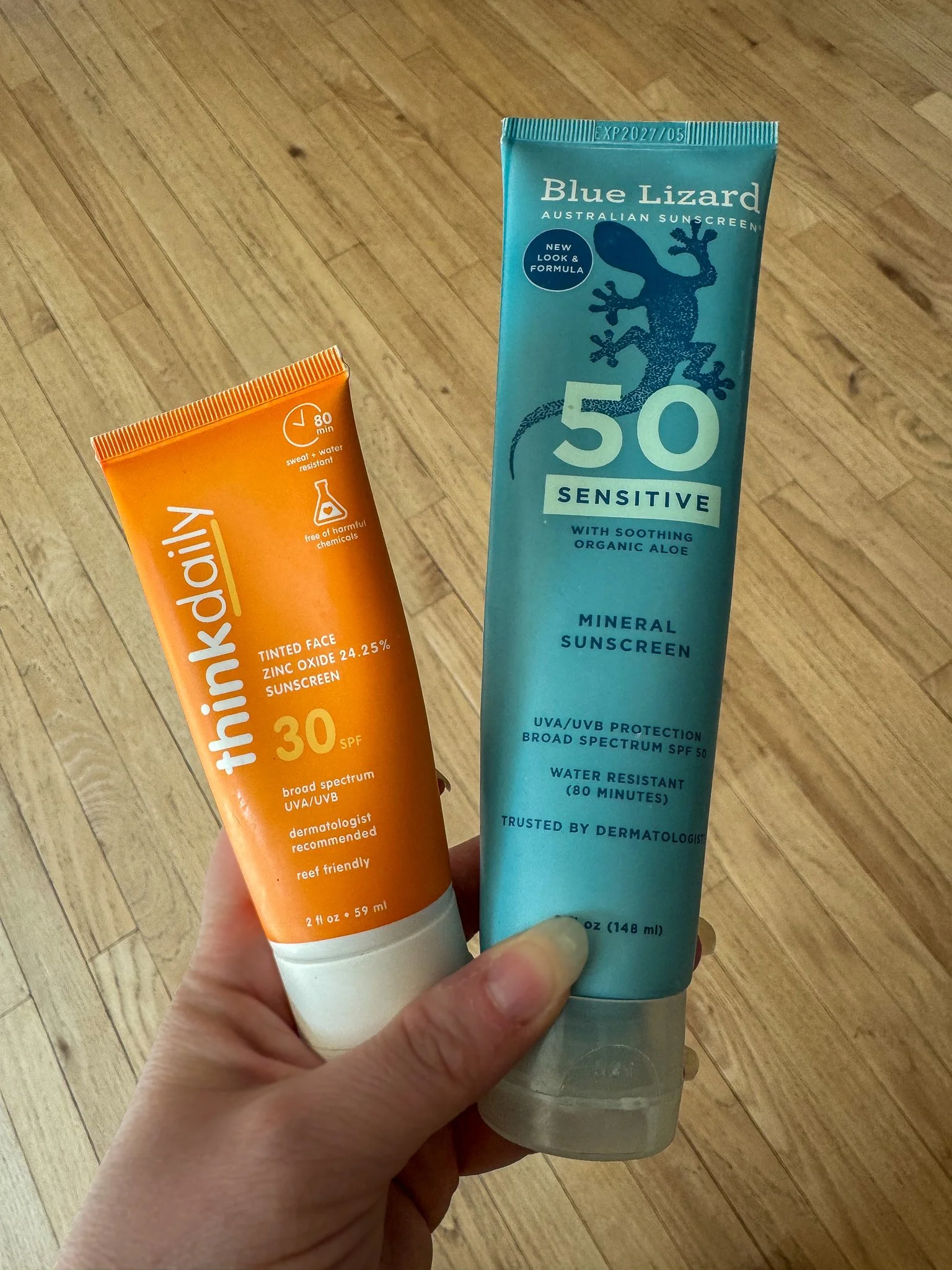
This is another one you can always find in my sunscreen bag. Blue Lizard Sensitive uses both zinc oxide and titanium dioxide for physical UV blocking. It's fragrance-free, avoids chemical filters, and is a solid choice for face and body — especially if you have reactive or sensitive skin that tends to flare up in the sun. I love the extra feature of their color change cap that indicates if it's being exposed to harmful UV rays, a handy reminder to reapply.
They also offer a version in a stick applicator form which can be great for kids or faces.
Badger Mineral Daily Sunscreen with Zinc Oxide - Best for Minimal White Cast
This alternate Badger formula feels more like a weightless moisturizer than some of the other options on this list. The sheer formula leaves behind a less noticable white-cast, making it a great option for daily use.
One of my favorite things about the Badger brand is that it’s family owned and women-led.
Raw Elements SPF 30 — Best Natural Formula
Raw Elements is celebrated for its water resistance and reliable protective barrier, making it a strong pick for snorkelers spending extended periods in the water. The formula leans into natural, organic ingredients with non-nano zinc oxide, and comes in eco-friendly tin packaging — a nice bonus if you're trying to reduce plastic waste on your trip.
Stream2Sea Mineral SPF 45 — Best for Ocean Environments
Stream2Sea's Every Day Active SPF 45 uses EcoSafe Zinc Oxide at 19% — the highest SPF of the mineral options tested by snorkeling-specific reviewers. Notably, testing found that this formula actually performs better after time in the water. It's specifically designed for ocean and reef environments and absorbs more easily than many traditional mineral formulas.
ThinkDaily Naturally Tinted SPF 30 - Best Face Sunscreen
This reef-safe tinted formula is my go-to face sunscreen. It uses Zinc Oxide 20% (Non-nano) for physical UV blocking and is free from oxybenzone, octinoxate, and other harmful chemicals. You can always find a bottle of this in my beach bag.
Tips for Using Reef-Safe Sunscreen in Hawaii
A few things I've learned from many trips in the water:
Apply early and reapply often. Even water-resistant mineral sunscreens typically last only 40 to 80 minutes in the water. Snorkeling, swimming, waves, and rubbing against gear all reduce effectiveness. Apply at least 15–20 minutes before sun exposure, and reapply whenever you're back on the beach.
Don't skip coverage. The Hawaiian sun is intense year-round, and the water amplifies UV exposure. Cover your back, shoulders, and the back of your legs — the areas that face up while you're snorkeling.
Consider a rash guard. This is honestly the best advice I can give. No sunscreen has been proven completely safe for aquatic wildlife — wearing rash guards or other UV-protective clothing, with long sleeves, while snorkeling is the best choice for coral as well as for your skin. I wear one every time I'm in the water in Hawaii, and it cuts way down on how much sunscreen I need in the first place.
Buy before you go. Reef-safe options are available on island, but selection may be limited and prices higher. Order ahead and pack it in your checked bag — most tubes are too large for carry-on.
Frequently Asked Questions About Reef-Safe Sunscreen in Hawaii
Is Hawaiian Tropic reef-safe? Most Hawaiian Tropic formulas are not reef-safe. They contain chemical UV filters like oxybenzone and octinoxate, which are banned under Hawaii sunscreen law. Check the active ingredients, and when in doubt, leave it at home.
Is Banana Boat reef-safe? Same story — most Banana Boat sunscreens rely on chemical filters that are banned statewide in Hawaii. There are a small number of Banana Boat mineral formulas that may be compliant, but you'd need to verify the active ingredients carefully.
What about spray sunscreen — is it reef-safe? Spray sunscreens are generally not recommended for Hawaii. Most spray formulas use chemical UV filters, and even mineral sprays can be problematic because they often contain nanoparticles that are small enough for coral to absorb. Beyond reef safety, aerosol sprays are also banned at many Hawaii beaches and parks. Stick to lotion or stick sunscreens for the most reef-friendly, beach-legal option.
What is a sunscreen stick and is it reef-safe? Sunscreen sticks are a solid, balm-like format that's great for face, ears, and hard-to-reach spots. They're easy to apply precisely and don't drip into your eyes in the water — a big plus when you're snorkeling. Several of the brands above, including Badger and Raw Elements, make reef-safe mineral stick formulas. Look for the same things you would in a lotion: non-nano zinc oxide or titanium dioxide, no chemical UV filters.
Is there a tinted reef-safe sunscreen option? Yes — tinted face sunscreens with mineral ingredients exist and are growing in popularity. Tinted options use iron oxides to provide some coverage while the zinc oxide does the UV-blocking work. Just make sure "tinted" doesn't mean they've added chemical filters — always check the active ingredients list, not the marketing on the front of the bottle. For a tinted face sunscreen, I usually reach for this ThinkDaily option (I have a fair complexion, so this formula may not work for everyone).
Can I buy reef-safe sunscreen at a grocery store in Hawaii? Yes, but selection will vary and keep in mind, you'll be paying island prices. Your most affordable bet is to order before you go — Amazon carries all of the brands listed above, often in multipacks.
Does reef-safe sunscreen leave a white cast? This is the #1 complaint about mineral sunscreens — and it's a fair one. Because zinc oxide and titanium dioxide sit on top of the skin rather than absorbing in, they can leave a white or chalky residue, especially on deeper skin tones. The good news: formulas have improved significantly in recent years. Brands like Badger Clear Zinc and ThinkDaily tinted formula are specifically engineered to minimize white cast. Applying a thin, even layer and rubbing it in thoroughly makes a big difference. And for what it's worth — after a few minutes in the water, you won't notice it at all.
How much sunscreen should I apply? More than you think. Dermatologists recommend about one ounce (a shot glass worth) to cover your full body — and most people apply far less than that. If you're snorkeling or spending a full day at the beach in Hawaii, plan on going through at least one full travel-size bottle per person. Stock up before your trip; buying sunscreen daily on island gets expensive fast.
Is reef-safe sunscreen safe for people with sensitive skin? Generally, yes — mineral sunscreens are actually better tolerated by sensitive skin than chemical options. Zinc oxide in particular has anti-inflammatory properties and is commonly recommended for reactive skin. Fragrance-free options like Blue Lizard Sensitive are a great choice if your skin tends to react to sunscreen. Always patch-test a new formula before applying head to toe on the first day of your trip.
What about sun protection beyond sunscreen — protective clothing? Reef-safe sunscreen is important, but it's not your only tool. For snorkeling in Hawaii, I strongly recommend layering in protective clothing wherever possible. A long-sleeve rash guard covers your back, shoulders, and arms — the areas most exposed while you're face-down in the water — which dramatically reduces how much sunscreen you need overall. Bonus: it's the most effective protection for the reefs, since no sunscreen has been proven 100% safe for marine life. I wear one every single time I get in the water in Hawaii.
Do I need reef-safe sunscreen if I'm visiting other destinations? Hawaii is the most well-known destination with sunscreen restrictions, but they're not alone — Key West, the U.S. Virgin Islands, Palau, Bonaire, and parts of Mexico also have bans or restrictions on chemical sunscreens in recent years. If you're a regular snorkeler or scuba diver, making the switch to mineral sunscreen permanently is the simplest approach. You'll always be compliant, and your skin (and the ocean) will thank you.
What is the Hawaii Reef-Safe Sunscreen Law (Hawaii Act 104)? Hawaii was the first U.S. state to ban the sale of sunscreens containing oxybenzone and octinoxate, with the law taking effect January 1, 2021. Maui County and Hawaii County (the Big Island) went further, requiring mineral-only sunscreens. Penalties apply to retailers selling non-compliant products — and many tour operators, snorkel companies, and marine parks apply their own stricter requirements on top of state law. When in doubt, mineral-only is always the safe choice.
What does "kokua" mean and why do you see it on sunscreen products? Kokua is a Hawaiian word meaning to help or contribute — it's often used in the context of environmental stewardship. You'll see it used by brands and organizations that are committed to protecting Hawaii's natural resources. Kokua Sun Care is one local brand that produces reef-safe mineral sunscreens. Supporting local Hawaiian brands when possible is a great way to put your dollars toward businesses that are directly invested in the islands they're protecting.
A Note as a Travel Advisor
When I'm helping clients plan Hawaii itineraries — whether it's a Big Island adventure with manta ray snorkeling or a Maui beach week — sunscreen always comes up in our pre-trip checklist. It's a small thing to swap out, but it makes a real difference for the reefs that make Hawaii worth visiting in the first place.
The Hawaiian sun will find you. Make sure you're protected — and that the protection you choose doesn't cost the ocean anything.
Ready to start planning your Hawaii trip? I'd love to help you book it →

Hi, I’m Jess
I’m here to help you plan epic adventures. If you’re looking for authentic travel guides that mix luxe lodging and incredible dining with out of this world hikes and adventures, you’re in the right place.





Your complete guide to the best time to visit the Isle of Skye