Scuba Diving Devil's Den — Is It Worth The Trip?
What Is Devil's Den?
Before we dig into the dive experience, what is Devil's Den anyway? This prehistoric spring cave is a window into ancient Florida — a subterranean world of crystal-clear water, fossil beds, and otherworldly rock formations that have drawn divers and snorkelers for decades.
Devil's Den is a dry cave karst window — essentially a collapsed section of limestone ceiling that has exposed the underground spring below. The name Devil's Den comes from the steam that rises from the warm water on cold winter mornings, giving the site an almost hellish appearance from the surface. Step inside, however, and you'll find anything but: the water is a constant 72 degrees year-round, visibility stretches the length of the cavern, and the walls are lined with ancient fossil beds dating back to the Pleistocene age — some containing remains of mastodons, giant ground sloths, and early human artifacts.
The site is privately owned and operated, making it one of Florida's most well-maintained dive destinations. Whether you're a seasoned cave diver or a first-timer with a snorkel, Devil's Den offers an unforgettable adventure beneath the surface of Florida's landscape.
This post contains affiliate links. I may earn a small commission if you book through them, at no extra cost to you.
Where Is Devil's Den?
Devil's Den Prehistoric Spring is located in Williston, Florida, in Levy County — right in the heart of Florida's springs country. The physical address is 5390 NE 180th Avenue, Williston, FL 32696.
Distances from nearby major cities:
Gainesville, FL — approximately 30 miles northeast (about 40 minutes)
Ocala, FL — approximately 25 miles southeast (about 35 minutes)
Tampa, FL — approximately 90 miles south (about 1 hour 45 minutes)
Orlando, FL — approximately 115 miles southeast (about 2 hours)
Jacksonville, FL — approximately 110 miles northeast (about 1 hour 45 minutes)
Tallahassee, FL — approximately 135 miles northwest (about 2 hours)
The site sits along the Nature Coast and is easy to reach via US-27 or US-41. For those driving through central Florida, it makes an ideal day trip stop — or it pairs beautifully with a visit to other nearby Florida springs.
Pro tip: combine Devil's Den with a stop at Ginnie Springs or an overnight in Cedar Key for a full Florida springs itinerary — I'd be happy to help you plan it.
My Experience at Devil's Den
Devil's Den is one of our go-to dive spots in Florida. Not only is it beautiful, but its somewhat controlled environment makes for the perfect place to work on your dive skills at a depth that most pools can't compete with. In fact, this was one of my very first dives after getting certified.
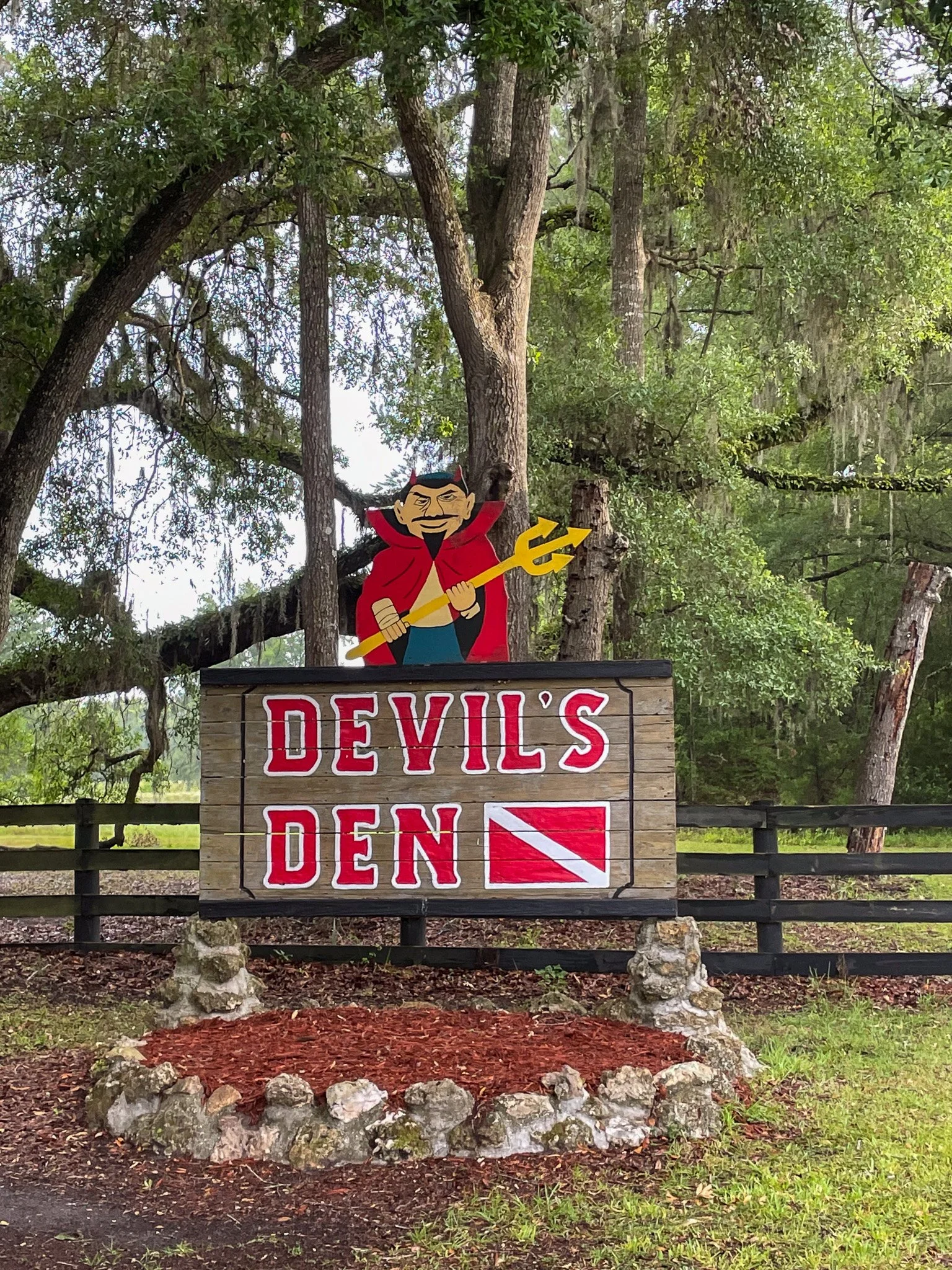
When you first arrive at Devil's Den, you may be thinking, "Really? I can dive HERE?" Once you turn off the main highway, the approach doesn't exactly scream world-class dive site as you pass horse farms and open pasture until the Devil's Den sign appears.
As you arrive, you’ll check in at the office and be provided a wristband for entry. At check-in, you can also rent any equipment needed to supplement your own gear. From there, we claim a picnic table to call home base and unload our gear (be prepared to carry your gear a fair distance from the parking lot).
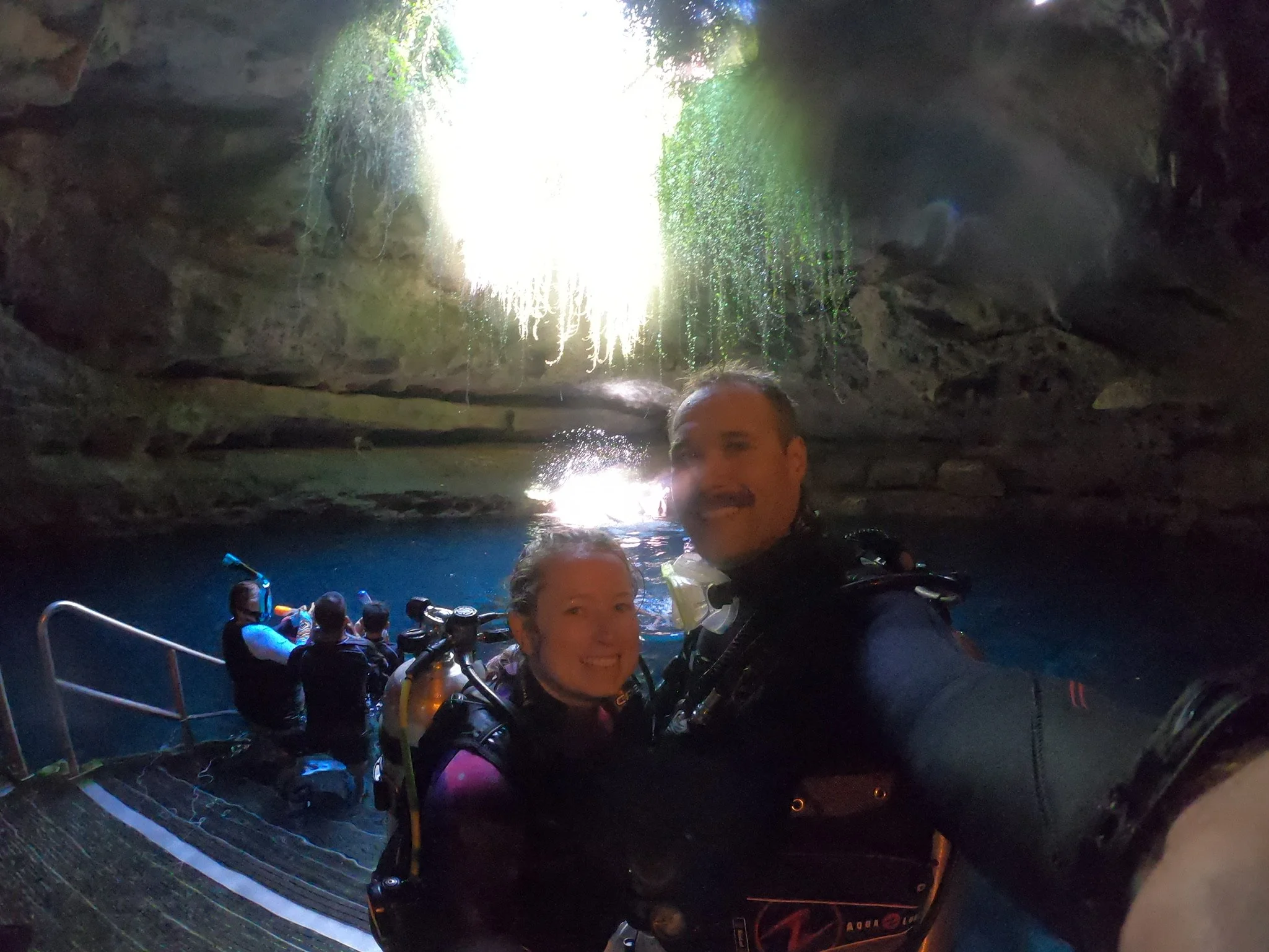
Descending the stairs from the cave entrance for the first time takes your breath away. The way the light shines down from the primary cave opening to illuminate the crystal-clear turquoise water is honestly magical. It feels a little like a prehistoric ballroom - only this time the dance is with fins on. Arriving early before the crowds will give you more time on the swim platform to take it all in. And while it may be called Devil’s Den, the water at the bottom of the stairway feels a lot like heaven when you’re in a 3mm wetsuit in the Florida heat.
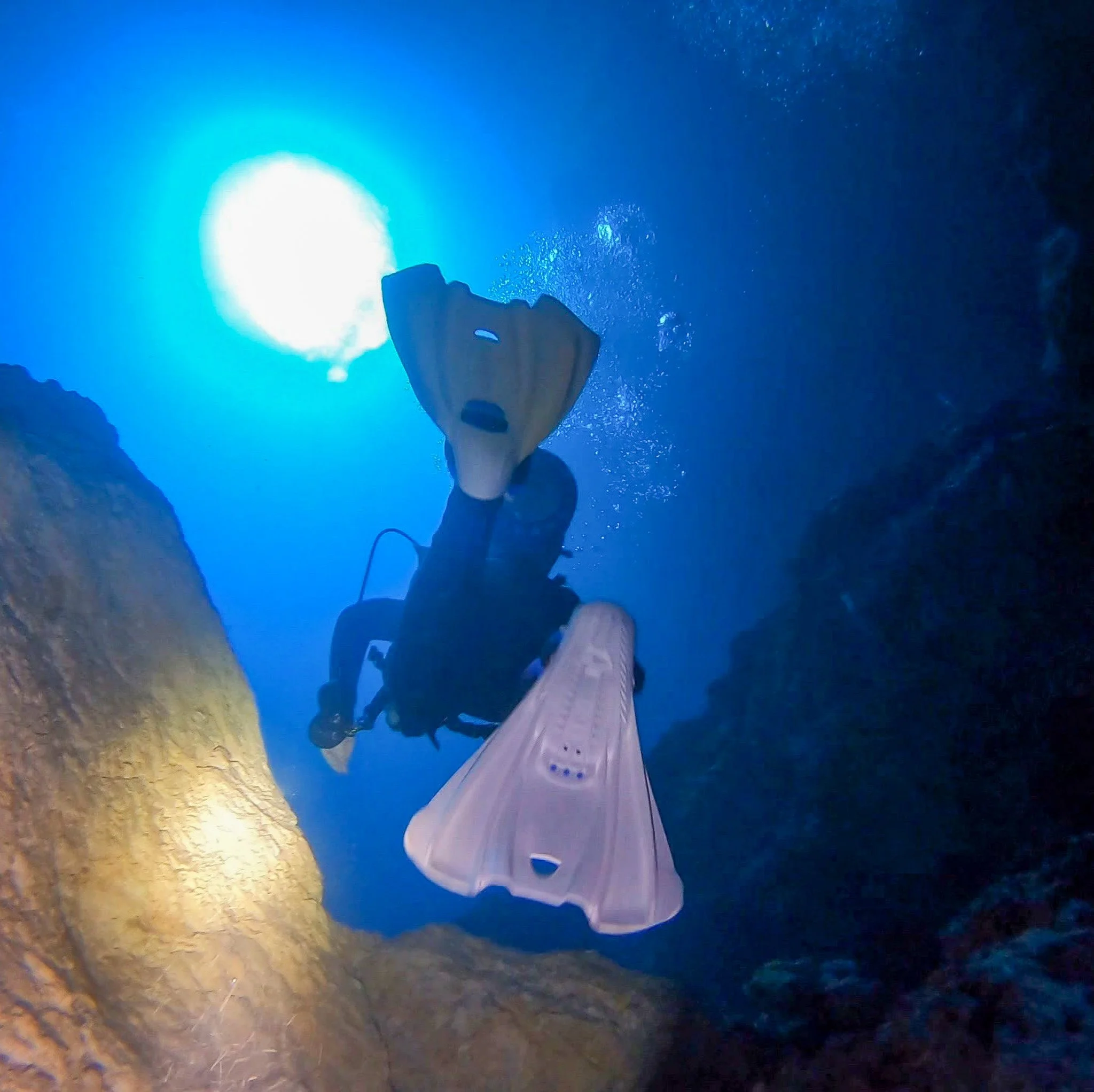
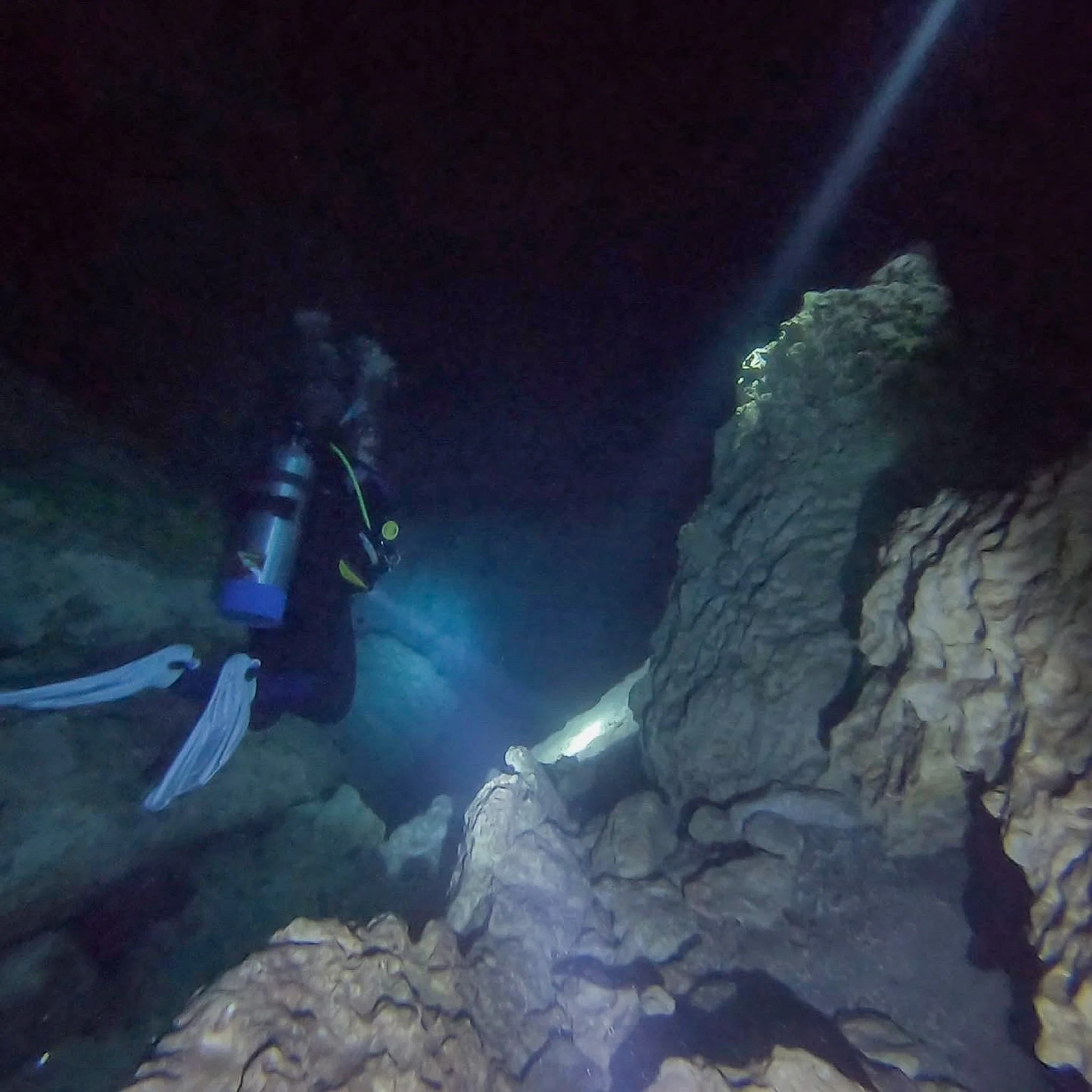
Once you make your way below the surface, you'll find two platforms at varying depths - these are perfect for skills review and practice. There are also ancient rock formations throughout the cavern. Take your time exploring the various swim-throughs and underwater passages, keeping your eyes peeled for prehistoric fossils. One of my favorite things is to also find the small opening where the spring feeds into the cavern and feel the force of the water coming in — a very cool experience.
My Top Recommendations for the Best Visit
Arrive Early — Devil's Den is popular, especially on weekends. Scuba diving is available on a first-come, first-served basis. Arriving at opening helps you avoid crowds and gives you the best chance at calmer, clearer water before snorkelers crowd the main platform and the surface.
Book Ahead — Reservations are required for snorkeling.
Rent or Bring the Right Gear — Full scuba gear rental is available on-site. If you're bringing your own scuba equipment, make sure it's been recently serviced. The water is cool year-round, so a wetsuit is recommended — most divers opt for a 3mm to 5mm wetsuit depending on personal tolerance.
Look for Fossils — The walls and floor are embedded with prehistoric bones and artifacts. Keep your eyes open as you explore — you may spot ancient fossils pressed into the limestone. You cannot remove anything, but spotting them is a thrill.
Don't Rush the Exit — After your dive, take a few minutes to explore the opening from the top and appreciate the light filtering down into the spring. The view of the underground spring from above is just as striking as the one from below.
Book as Part of a Florida Springs Trip — Devil's Den pairs perfectly with Blue Grotto (just minutes away) and an overnight in Cedar Key. As a travel advisor, I can help you build a custom Florida springs itinerary around your dive schedule.
What to Expect at Devil's Den
The Dive Environment
Devil's Den is classified as a cavern dive — not a full cave dive, similar to cenote diving in Mexico. The main diving area sits within the natural light zone of the opening above, meaning there is always ambient light visible. No overhead environment certification is required for the standard cavern area, which makes it accessible to open-water-certified divers. The maximum depth at Devil's Den reaches approximately 54 feet, though most recreational divers stay in the 20–35 foot range. Devil's Den is fed by an underground river, so water levels can fluctuate, which can impact maximum depths.
The surface diameter of the spring opening is relatively small — which contributes to the dramatic, cathedral-like atmosphere inside.
Water Conditions
The water temperature holds steady at 72°F regardless of the season — refreshing in the summer heat and noticeably warm relative to outside air on cold winter mornings. Visibility in the crystal-clear waters is consistently excellent, often exceeding 30 feet in ideal conditions, which is part of what makes Devil's Den such a great dive site. There is no current to contend with, making navigation simple and relaxed — it's also a popular certification dive site for new divers for this very reason.
Facilities & On-Site Services
Devil's Den is a full-service dive destination. On-site amenities include equipment rental (full scuba gear and snorkel gear), changing rooms, restrooms, picnic areas, and cabins and camping directly on the property.
What to Bring
Diver Certification card — required for all scuba divers
Wetsuit — a 3mm or 5mm suit is recommended; the 72°F water feels cold on extended dives. This is the one I use.
Underwater camera — the light filtering through the overhead opening creates stunning photo opportunities.
Waterproof phone case - the perfect way for snorkelers to get photos from inside the cavern
Snorkel gear — if you prefer to stay at the surface, this is a good intro set
Cash or card for entrance fees, rentals, and any merchandise or gift shop purchases
Water and snacks — there is no restaurant on-site. Grills are available in the picnic area
Towels and dry clothes for after your dive
Sunscreen — you won't need it in the cavern but you'll want it post dive
So, Is It Worth It?
As a certified diver who returns to Devil's Den regularly, I think so! Devil's Den is one of those rare sites that lives up to the expectation. You won't be mesmerized by an abundance of sea life here, but this natural wonder delivers an experience you won't find anywhere else. The combination of ancient fossil beds, crystal-clear spring water, and the dramatic geological setting makes every visit feel like a step back into prehistoric Florida. I find this site especially great for divers who want to test gear, brush up on skills, and just get some quality time in the water between bigger dive trips — particularly for those within driving distance.
More Florida Travel Guides
FAQs
Can you snorkel at Devil's Den?
Yes! Snorkeling is available and very popular at Devil's Den. Non-certified visitors can enjoy the cavern from the surface with basic snorkel gear. Rentals are available on-site, so you don't need to bring your own. It's a great option for families or those accompanying divers who aren't certified. A few rules apply: all snorkelers must be at least 6 years old and strong swimmers — flotation devices are not permitted. All snorkelers must have a reservation.
Where should I stay near Devil's Den?
The most convenient option is to camp directly at Devil's Den — they offer cabins, tent camping, and RV sites with full hookups, making it easy to dive first thing in the morning.
For those who prefer a bed, Gainesville is the nearest city with a full range of hotels, about 30 miles away. If you're looking for something more unique that oozes Old Florida charm, a vacation rental in Cedar Key is a great choice (and where we always stay).
→ Check out my guide to Cedar Key for more on this unique island destination.
Can I Night Dive at Devil's Den?
Yes — night dives are offered by appointment only. All divers must be advanced certified or diving with a dive instructor. For more information on night dive reservations and rates, visit the Devil's Den website directly.
Are there other similar dive sites nearby?
There are! Devil's Den sits in the midst of several Florida springs. Some excellent nearby options include:
Blue Grotto (Williston) — Just minutes away, Blue Grotto is another privately operated spring with a beautiful underwater cave system and a submerged platform. I haven't personally visited, but my in-laws reported reduced visibility due to significant sediment disturbance at this location.
Ginnie Springs (High Springs)— A full spring park with multiple dive sites, including The Ballroom (open to open-water certified divers) and the Devil's Eye and Devil's Ear cave systems (cave-certified divers only). Also popular with snorkelers and families interested in river tubing. Check out my guide to diving Ginnie Springs for more on this site.
I have not personally been to the below sites, but they are consistently recommended for scuba diving.
Ichetucknee Springs State Park (Fort White) — Known for tubing and snorkeling along a pristine spring-fed river, perfect for a relaxed surface experience.
Troy Spring State Park (Branford)— Features the remains of a Civil War-era steamboat resting on the spring floor — a unique freshwater wreck dive.
Manatee Springs State Park (Chiefland)— A beautiful spring system where you may encounter manatees during the cooler months.
Do I need cave diving certification?
No — standard open water certification is sufficient for the main cavern area at Devil's Den. The site is designed for cavern diving, which stays within the natural light zone and does not require an overhead environment certification. However, a legal guardian must accompany any diver under 18. Certified divers looking to progress into true cave diving at nearby sites can pursue additional training through local dive instructors.
What is the entrance fee, and is there a deposit?
Entrance fees vary by activity — scuba diving, snorkeling, and camping are each priced separately. A non-refundable deposit is required when making a reservation, so be sure of your plans before booking. Pricing can change seasonally, so check the Devil's Den website directly for current rates. Note that walk-in and advance reservation pricing may differ, and a small service fee may apply for online bookings.
Is Devil's Den good for first-time divers?
Devil's Den is an excellent site for first-time certified divers. The absence of current, the consistent visibility, and the enclosed environment make it far less intimidating than an open ocean dive. The site is also a popular location for certification dives. All divers must be paired with a dive buddy.
Are there manatees at Devil's Den?
Manatees are not found at Devil's Den itself, but the broader region offers excellent manatee encounters. Manatee Springs State Park, about 20 miles away, is a reliable spot during the cooler months when manatees seek the warmth of spring water. The Crystal River area, further west on the Gulf Coast, is arguably Florida's premier destination for swimming with manatees.
What is the best time of year to visit?
Devil's Den is open year-round, and the spring's constant 72°F water temperature means the underwater experience doesn't change much with the seasons. Cold winter mornings create the iconic steam effect at the surface opening — visit between December and February if you want that atmospheric shot. Summer brings larger crowds, but the warmer outside temperatures make the cool spring water feel especially refreshing. Weekdays are generally much less crowded than weekends regardless of the season.
How much time should I plan for my visit?
Plan for a minimum of a half day at Devil's Den. Between check-in, gearing up, time in the water, and rinsing your gear post-dive, a half day goes quickly — and that's before you factor in a second tank.
Are there showers and restrooms on site?
Yes — restrooms with showers and changing areas are located near the cavern entrance and office.
Hi, I’m Jess
I’m here to help you plan epic adventures. If you’re looking for authentic travel guides that mix luxe lodging and incredible dining with out of this world hikes and adventures, you’re in the right place.


Your complete guide to the best time to visit the Isle of Skye